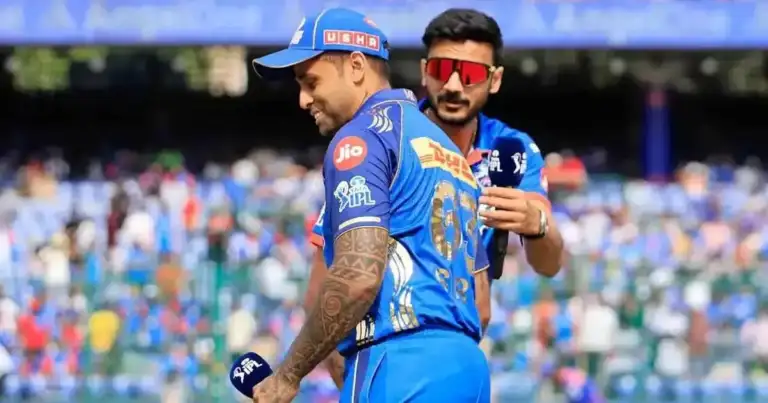

The truth, as they say, always finds a way to wriggle free, and in the high-stakes world of the IPL, it often comes with a sting. Hardik Pandya wasn’t sidelined by a mysterious “niggle” or a sudden tactical masterstroke; he was given a very public, very deserved slap on the wrist by the league for a persistent problem: a slow over-rate. It wasn’t some grand chess move by the Mumbai Indians; it was a one-game ban, plain and simple, forcing Suryakumar Yadav into the captain’s hot seat.
Indeed, Hardik Pandya found himself warming the bench for the crucial Delhi Capitals game, a move that the Mumbai Indians initially tried to brush off as a minor “niggle.” But “niggle” is often code for “we’d rather not admit the real reason.” The unvarnished truth? It was a slow over-rate ban from the IPL, a consequence of repeated infractions. In his stead, Suryakumar Yadav stepped up, leading the Mumbai Indians to a decisive victory, a performance that undoubtedly raised a few eyebrows and sparked considerable debate among the fanbase.
This wasn’t about a dip in performance or a strategic reshuffle; it was about penalties and accountability. Yadav, already a proven leader as India’s T20I captain, was the obvious, almost inevitable, choice to fill the void. Now, with his penance paid, Hardik is set to return for the next high-octane clash against the Gujarat Titans, but the questions surrounding his leadership and the team’s transparency refuse to fade.
The Unvarnished Truth Behind Hardik’s Absence
The Mumbai Indians’ initial narrative of Hardik Pandya suffering from a “niggle” felt less like an explanation and more like a flimsy veil. It was a thinly veiled attempt to sidestep the uncomfortable reality: their captain had incurred a one-match suspension. This wasn’t a sudden, isolated incident; it was the culmination of repeatedly flouting the IPL’s stringent slow over-rate regulations.
This isn’t some shadowy conspiracy or a dramatic twist of fate. It’s a straightforward application of the rules, rules that Hardik Pandya, unfortunately, failed to adhere to. The IPL’s commitment to timely matches is non-negotiable, and Hardik’s past transgressions finally caught up with him, leaving the Mumbai Indians in a rather awkward position.
Suryakumar Yadav: A Glimpse into the Future?
When the call came, Suryakumar Yadav answered with the calm assurance of a seasoned leader. He’s hardly a rookie when it comes to captaincy, having commendably led India in T20 Internationals. His track record speaks volumes: a remarkable 17 wins and only 4 losses, including a dominant 4-1 series victory over England.
Even Hardik himself, in a moment of perhaps forced magnanimity, acknowledged Surya as the “ideal choice.” This endorsement, coupled with Yadav’s composed leadership during the victory against the Delhi Capitals, inevitably sparks a tantalizing question: Was this a mere stand-in, or a subtle audition? Is the BCCI, or perhaps even the Mumbai Indians management, exploring Surya’s potential for a more permanent leadership role? While this one-off captaincy might appear insignificant on the surface, it has inadvertently shone a harsh spotlight on the mounting challenges and growing scrutiny surrounding Hardik Pandya’s leadership.
Hardik’s Tumultuous Return and Fan Discontent
Hardik Pandya’s much-hyped return to captaincy has, to put it mildly, been a baptism by fire, bordering on a full-blown inferno. The Mumbai Indians‘ dismal performance in 2024, culminating in them finishing dead last and earning the ignominous “wooden spoon,” has ignited a furious backlash from the fanbase. Many feel a profound sense of betrayal, especially given that his appointment came at the expense of the beloved and highly successful Rohit Sharma.
Beyond the team’s performance, Hardik’s persistent injury struggles are a looming shadow. The recurring “niggles,” particularly his well-documented back issues, raise serious questions about his long-term fitness and ability to consistently lead from the front. This latest “niggle” explanation, now exposed as a ban, only exacerbates these concerns. Can he truly remain on the field, and can he shoulder the immense responsibility of captaincy without constant physical setbacks?
“Hardik needs to step aside. It’s funny to have two World Cup-winning captains under an unproven captain like Hardik. He’s a good player, but he’s not captaincy material yet.” – Kris Srikkanth, Former India Selector
The sentiment among fans is palpable, often expressed through the trending chant of “HardikOut” across social media platforms. The online world is awash with memes and scathing commentary, reflecting a widespread belief that his captaincy is less about merit and more about a perceived loyalty play, a calculated move after he left the Gujarat Titans for the top job at MI. Now, that gamble appears to be backfiring spectacularly.
The Folly of the “Niggle” Deception
The official narrative of a “niggle” is a classic, albeit often transparent, PR maneuver. It’s a deliberately vague term designed to protect both the player’s image and the team’s internal dynamics, conveniently sidestepping any admission of disciplinary issues. However, in the age of instant information and savvy sports journalism, such flimsy excuses rarely hold water. The internet knows, seasoned sports reporters know, and the fans, most importantly, know: it was a ban.
Why the elaborate charade? Perhaps it was an attempt to shield Hardik from further public scorn, or to maintain a facade of team unity. But the irony is, it achieved the exact opposite. The lack of transparency only fueled fan cynicism and deepened the sense of distrust. A straightforward admission of the ban for slow over-rates would have been far more palatable. The truth, however unpalatable, is always a better strategy than a transparent falsehood.
The Road Ahead: Uncertainty and Opportunity
Hardik Pandya is slated to return for the next fixture, but the air is thick with unresolved questions. Will his fitness hold up under the relentless pressure? Can he somehow galvanize a struggling team and reverse their fortunes? Or will the recurring “niggles” and the persistent issue of slow over-rates continue to cast a long shadow over his captaincy and the Mumbai Indians‘ season?
Suryakumar Yadav, meanwhile, has had a taste of leadership, and he proved unequivocally that he possesses the mettle for the job. Online polls suggest a staggering 70% of fans now advocate for Surya to be instated as the full-time captain, a resounding endorsement that cannot be ignored. The Mumbai Indians, after all, have a storied history of making bold, even ruthless, captaincy changes. Recall Rohit Sharma’s ascent in 2013, taking the reins from the legendary Ricky Ponting and subsequently leading the franchise to multiple titles. They are not a team afraid to make the tough, unpopular, but ultimately necessary calls.
Is this merely a minor setback for Hardik’s captaincy, a temporary bump in a long road? Or is it the beginning of the end, a precursor to a more significant leadership overhaul? The whispers are growing louder, the fans have made their preferences clear, and the IPL’s rules have delivered their own unequivocal statement. Hardik Pandya now faces a critical juncture, needing to not only clean up his act on the field but also redefine his leadership persona, both on and off the pitch.
Source: Google News