
Let’s not mince words: yesterday wasn’t just a loss for the Arizona Diamondbacks; it was a financial and reputational catastrophe. Getting absolutely shellacked 13-1 by the Milwaukee Brewers at American Family Field wasn’t merely an ugly scoreline; it was a public unraveling of a franchise that seems to have forgotten the basic tenets of professional baseball. This wasn’t a bad game; it was a stark, expensive reminder that the money isn’t buying performance, and the future looks bleak if this continues.
Ryne Nelson: A Sunk Cost on the Mound, A Drain on the Books
The Diamondbacks’ pitching rotation is a mess, and Ryne Nelson is Exhibit A in their growing portfolio of questionable investments.
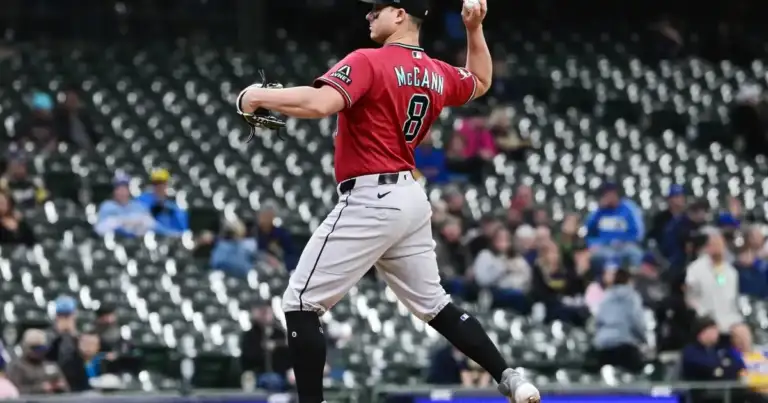
He didn’t just have a bad outing; he was an absolute disaster, surrendering 7 earned runs on 8 hits in a paltry 3.0 innings of work. Nelson, now saddled with an abysmal 0-4 record, looked completely outmatched.
He served up 2 home runs and walked 2, demonstrating a startling lack of command that no amount of analytics could possibly sugarcoat. This isn’t just a “rough patch”; it’s a flashing red light on his long-term viability and, more importantly, his financial value to the franchise.
How much more can ownership pour into a pitcher who can’t get out of the third inning? Every start like this depreciates his trade value, impacts future arbitration hearings, and makes his roster spot look like a dead weight on the payroll.
This isn’t about some fancy sabermetric projection; it’s about a professional pitcher failing to execute fundamental pitches, costing the team games, and ultimately, costing the organization money. Decisions on his future, and the significant capital tied to it, are no longer looming; they are screaming for attention.
Offensive Anemia: Where’s the Return on Investment?
While Nelson was busy turning the mound into a batting cage, the Diamondbacks’ offense was doing its best impression of a minor league lineup. They scraped together a measly 5 hits all game.
Lourdes Gurriel Jr. managed a solo shot – a single, solitary run – but that was the extent of their “firepower” against a solid, yet hardly unhitTable, Freddy Peralta.
One run. Against a team that knows how to put runs on the board. It’s an embarrassment.
This offensive black hole raises serious, uncomfortable questions about the Diamondbacks’ roster construction and, critically, their return on investment. Are they getting enough bang for their buck from their “sluggers”? It’s not about launch angles or exit velocity in a spreadsheet; it’s about professional hitters performing when it counts.
This kind of anemic performance directly translates into dwindling ticket sales, stagnant merchandise revenue, and a general apathy that poisons the well for any franchise.
Fans pay good money to see runs scored, not a clinic in futility. This isn’t a game for statisticians; it’s a business built on performance.
Brewers: A Masterclass in Money Well Spent
On the flip side, the Milwaukee Brewers offered a refreshing, if painful for Arizona, lesson in how to build a competent, winning machine. Freddy Peralta was stellar, going 6.0 innings, giving up just 1 earned run and striking out 8 batters.
Peralta isn’t just “earning his keep”; he’s solidifying his position as a cornerstone piece, boosting his trade value exponentially and justifying every penny of his contract. This is what you pay an ace for: reliability, dominance, and a clear path to victory.
Their offense was a clinic in aggressive, effective hitting. Willy Adames had a monster night, going 3-for-5 with a massive grand slam and 5 RBI. Christian Yelich added 2 hits and 3 RBI, while Rhys Hoskins started the scoring with a decisive solo home run.
These are the players the Brewers have invested heavily in, and they delivered in spades. This isn’t luck; it’s smart scouting, shrewd contract negotiations, and a clear understanding of what it takes to put a competitive product on the field.
That’s how you build a winning team, justify those hefty contracts, and ensure the turnstiles keep spinning.
The Ugly Truth: Torey Lovullo and the Hot Seat
A 13-1 drubbing isn’t just a bad game; it’s a glaring symptom of a much deeper, systemic problem. The complete lack of competitive fire from the Diamondbacks was palpable.
There was no hustle, no fight, no sense of urgency – the very unwritten rules of baseball that separate professionals from amateurs. When your starting pitcher is shelled and your lineup is silent, the finger inevitably points to the coaching staff.
Are Manager Torey Lovullo and his staff putting these players in the best position to succeed, or are they simply watching the ship sink? Are they motivating their veterans, or has the clubhouse gone soft?
This kind of performance, devoid of basic pride and effort, puts managers and pitching coaches squarely on the hot seat. Fans won’t tolerate a team that rolls over and quits.
More importantly, ownership certainly won’t tolerate a team that consistently loses money because it can’t compete. The business of baseball demands accountability, and right now, the Diamondbacks are failing on all fronts.
The D-backs need to figure out what they’re doing, and fast. This blowout wasn’t just a loss; it was a loud, expensive wake-up call that demands immediate, decisive action before this franchise becomes a permanent fixture in the league’s financial basement.
Source: Google News