
Here we go again. The Washington Nationals, ever the scavengers of Major League Baseball’s discard pile, have officially inked former Mets reliever Max Kranick to a minor league deal. This isn’t a shrewd move; it’s a desperate, predictable roll of the dice by a franchise seemingly content to sift through the league’s refuse for a flicker of misplaced potential. It’s the kind of low-risk gamble that has become synonymous with clubs perpetually stuck in rebuild purgatory, hoping to strike gold where others have already panned out.
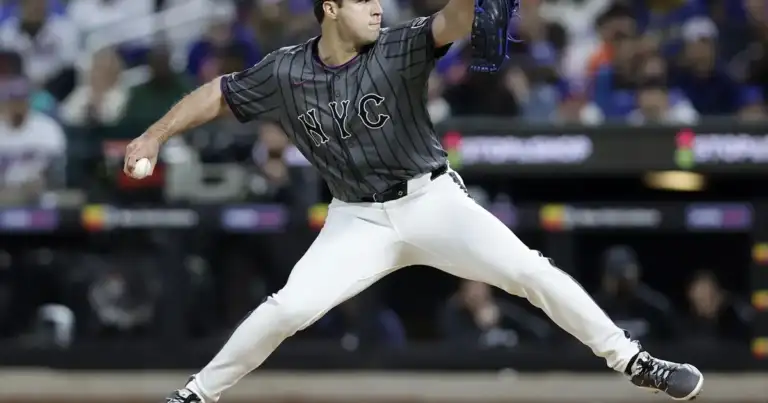
Kranick, a 28-year-old right-hander, found himself a National just two days after the New York Mets unceremoniously cut him loose on April 28, 2026. He was a mere footnote, a throw-in, in the colossal Pete Alonso trade back in December 2025 – a transaction that clearly didn’t yield the Mets anything of value in this particular arm. His brief tenure with their Triple-A Syracuse affiliate this season was nothing short of disastrous, highlighted by a ghastly 9.00 ERA across a paltry 6.0 innings. If that doesn’t scream “expendable,” I don’t know what does.
The Endless Rebuild Cycle: A Costly Illusion
From the Nationals’ perspective, this is business as usual for a perpetually rebuilding franchise. They’re constantly on the prowl for forgotten talent, the kind of project analytics departments salivate over. Kranick’s raw stuff – a mid-90s fastball and a curveball – still holds a certain allure for those who believe every arm can be “fixed.” Washington’s pitching coaches are now tasked with the Sisyphean labor of unlocking what countless others, including the Mets, couldn’t.
For the Mets, his release was a swift, pragmatic decision. His abysmal performance, coupled with the ever-present need for minor league roster flexibility, made him an easy target for the chopping block. Mets fans won’t be shedding any tears; Kranick was barely a blip on their radar, a forgotten piece of a larger trade that, ironically, was supposed to signal their own competitive ambitions. The modern game treats players like commodities, and Kranick was simply a depreciating asset.
Kranick, on the other hand, receives a much-needed lifeline, a fresh start in a new organization. His career has been a cruel saga of injuries, most notably Tommy John surgery, which sidelined him for two full seasons. This is his opportunity, perhaps his last, to prove he still belongs in professional baseball, to show he can pitch at a high level without his body betraying him. But how many “last chances” can a player get before the reality sets in?
The True Price of “Potential” in the Modern Game
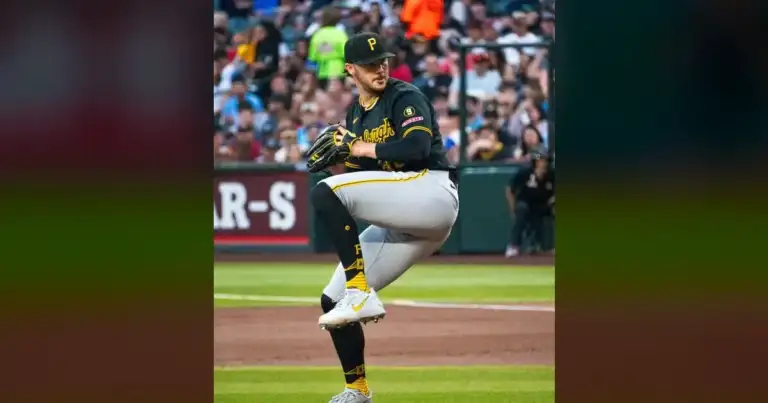
Kranick hasn’t seen consistent MLB action since 2021 with the Pittsburgh Pirates, where he posted a forgettable 6.28 ERA over 34.1 innings in 9 games. Missing all of 2022 and 2023 due to surgery isn’t just a red flag; it’s a giant, waving crimson banner. He returned in 2024, but clearly, he’s not the same pitcher who once showed flashes of promise. The physical toll on these athletes is immense, and recovery is never a guarantee of return to form.
Yes, this is a minor league contract, so the immediate financial impact on the Nationals’ balance sheet is negligible. It’s the cost of doing business for a team stuck in Washington’s unenviable position – throwing darts at a board, hoping one miraculously sticks. But the cost isn’t just monetary. It’s the allocation of valuable coaching resources, a roster spot that could go to a more reliable prospect, and the continued erosion of fan faith in a consistent, winning strategy.
But how many times can a franchise chase “potential” before they realize they’re merely hoarding castoffs? Analytics preaches this kind of high-volume, low-cost acquisition strategy, believing in the power of statistical outliers and “hidden value.” Yet, sometimes, a bad stat line isn’t just a temporary blip or an analytical puzzle to solve; it’s simply a bad stat line. It’s a fundamental truth the data-obsessed often conveniently overlook.
Fan Scrutiny and the Ghost of Mets Past
Nationals fans, bless their long-suffering hearts, are lukewarm on this signing, at best. It’s just another name in the ceaseless minor league churn, another face in the crowd of hopefuls. The online chatter is telling, reflecting a deep-seated skepticism that comes from years of similar moves. As one fan sarcastically quipped on social media:
“Just like they did with Lovelady he has been quite good for Washington this year.”
Another, perhaps more cynical, added:
“Oh great, another Mets reliever! Are we just collecting their rejects now?”
This isn’t a blockbuster trade; it’s a low-key gamble on a guy who couldn’t get outs in Triple-A. The hope is to catch lightning in a bottle, again. But hope is not a strategy. The online chatter about Kranick’s July 2025 flexor tendon surgery – a mere nine months ago – further underscores the deep concern. A pending physical for a pitcher with such a recent, significant injury history is no small thing. It’s a stark reminder of the brutal physical demands of modern baseball and the precarious nature of a pitcher’s career.
Mickey’s Take: The Same Old Song and Dance
Honestly, this is just more of the same tired song and dance. Teams chasing velocity and spin rates from pitchers who can’t stay healthy, who’ve already been through the grinder. They bring them in, try to “fix” them with their latest analytical wizardry, and then, more often than not, cut them loose again. It’s a soul-crushing cycle that wears down players, frustrates traditionalists like me, and ultimately, does little to build a sustainable winner.
Kranick gets a lifeline. Good for him; I genuinely hope he makes the most of it. But let’s not pretend this is some genius, under-the-radar acquisition. It’s a desperate swing by a team that needs arms, any arms, to fill out its minor league affiliates. They’re hoping a guy who couldn’t get it done for the Mets, a team that also prides itself on pitching development, suddenly turns into an ace in Washington. It rarely works out that way, and it certainly doesn’t adhere to the unwritten rules of building a cohesive, competitive roster.
It’s a strategy that ultimately sacrifices the integrity of the game for a fleeting, statistically improbable return. And that, my friends, is a losing proposition for everyone involved, especially the fans.
Source: Google News