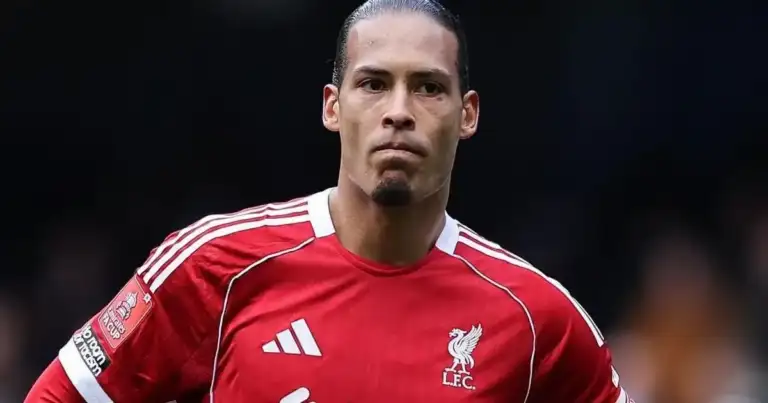

The hallowed grounds of Anfield, once a fortress of unyielding spirit, have been desecrated. Virgil van Dijk, the colossus meant to embody Liverpool’s iron will, has delivered a gut-wrenching confession: his team “gave up” in their humiliating 2-1 FA Cup defeat to Championship minnows Blackburn Rovers. This isn’t honesty; it’s a public execution of the club’s very soul, a desperate plea from a captain drowning in a sea of mediocrity.
Liverpool’s Capitulation: Van Dijk’s “Gave Up” Confession Exposes Rot
Virgil van Dijk dropped a bombshell. He admitted Liverpool “gave up” in their FA Cup exit against Blackburn Rovers. This isn’t leadership; it’s a public surrender, a white flag waved for all the footballing world to see.
The football world is reeling. Liverpool fans are absolutely livid. Their captain just laid bare the team’s mental fragility, carving it into stone for future generations to mock. This isn’t just a loss; it’s an indictment of an entire culture.
The Hard Facts: FA Cup Humiliation and Its Financial Fallout
The date was April 3rd, 2026. Liverpool, fourth in the Premier League, faced Championship side Blackburn Rovers. The match ended Blackburn Rovers 2 – 1 Liverpool. It was a shocking upset, a gash on the club’s proud history that will fester for years. Darwin Núñez scored first for Liverpool in the 23rd minute, providing a fleeting moment of false hope. But Blackburn, with the audacity of a true giant killer, equalized from the spot through Sammie Szmodics just before halftime. The dagger came in the 78th minute from Kyle McFadzean, sealing Liverpool’s fate and igniting a firestorm.
Van Dijk’s post-match comments were blunt, almost brutally so. He said:
“We started well, scored a good goal, but then we conceded and it felt like we gave up. That’s unacceptable for a club like Liverpool.”This statement didn’t just light a fire; it detonated a bomb, exposing deep cracks in the team’s psyche and, more importantly, in the club’s financial stability.
This isn’t just about pride. It’s about cold, hard cash. Advancing to the FA Cup semi-finals would have netted Liverpool an extra £1 million in prize money. That money is now gone, vanished into the ether of a humiliating defeat. The early exit means lost revenue from broadcasting rights, merchandising opportunities, and the invaluable brand boost that deep cup runs provide. For Blackburn, this unexpected windfall is a financial lifeline. For Liverpool, it’s a costly failure, a direct hit to the balance sheet. The club’s valuation, already under scrutiny, takes a significant blow when they underperform on such a public stage. How can Fenway Sports Group (FSG) justify their asset’s worth when its on-field performance is so utterly devoid of passion and professionalism?
The Betrayal: Fans Are Not Amused, They Are Incensed
The public reaction is savage. Liverpool fans feel not just disappointed, but utterly betrayed. Social media is ablaze with a fury rarely seen. On Reddit’s r/LiverpoolFC, the backlash is brutal. One thread, with 2,000 upvotes and counting, rages:
“VDJ basically admitting we’re done—’gave up’ like it’s a team therapy session, not a pro squad. This isn’t leadership; it’s a cop-out designed to deflect blame from a squad that clearly lacks heart.”
This isn’t seen as honest introspection. It’s a cowardly deflection, a cheap excuse from players who are paid astronomical sums to compete, not capitulate. Fans expected more fight. They expected more leadership. They got a pathetic excuse. On X, the memes are flying, each one a testament to the depth of fan anger: “Van Dijk’s scripted this to force Klopp’s ghost back—PR stunt to guilt fans into loyalty while Haaland feasts.” This cynicism shows the profound disillusionment. They see through the veneer of PR-speak to the rotten core beneath.
The Leadership Vacuum: Where Do We Go From Here?
Van Dijk’s comments highlight a crisis of leadership that goes far beyond the captain’s armband. Is this truly what a captain does? Publicly throw his team under the bus, exposing their mental frailties to the world? Or is he, in a desperate, misguided attempt, trying to spark a reaction? Either way, it’s a dangerous game, one that risks fracturing an already fragile locker room.
Other players must feel utterly exposed, their professional pride shredded. Their captain just told the world they lack mental fortitude, that they simply folded under pressure. This creates internal friction, a toxic environment that undermines team morale and makes the coaching staff’s job impossible. The “togetherness” narrative, once the bedrock of this club, is dead, buried under a pile of embarrassing defeats. Fifteen losses this season scream disarray, not drama. Fans bailing early from matches is a symptom, not the cause. This isn’t elite theater; it’s a club in freefall, and the management, from top to bottom, is complicit.
The Real Problem: Beyond the Pitch, Lies the Boardroom
This isn’t just about one game. It’s about the entire structure, a crumbling edifice built on past glories. The “transition” talk is nonsense, a smokescreen for managerial ineptitude and financial parsimony. It’s an aging core, a squad mentally checked out, and, most damningly, FSG penny-pinching while rivals invest heavily. Liverpool’s aura, once radiating invincibility, is now ash, scattered by the winds of indifference and poor decision-making.
The money men at the top need to take a long, hard look in the mirror. The club’s valuation depends on results, on ambition, on winning trophies. Not on public admissions of surrender. This humiliating exit exposes the raw truth: the club is not operating at the elite level it once was. The salary cap implications for future transfers will be massive. Top players want to win; they want to join a club with a winning mentality, not one whose captain openly admits to “giving up.” Who would commit their prime years to such an organization?
What’s Next for Liverpool? A Prolonged Decline?
This defeat casts a dark shadow over Liverpool’s season, threatening to engulf any remaining hope. Their push for European qualification is now in serious doubt, and the mental scars from this game will linger, poisoning the atmosphere. The coaching staff faces immense pressure, an unenviable task of addressing this perceived mental fragility, restoring belief, and somehow mending a fractured team spirit.
The future looks bleak. This “apology” only fuels the fire; it doesn’t extinguish it. The fans deserve better. The club deserves better. This is a business, a multi-million-pound enterprise, and right now, Liverpool is failing its shareholders, its supporters, and its own storied legacy. The question remains, a chilling whisper in the hallowed halls of Anfield: Can Liverpool recover from this public admission of weakness, or is this the beginning of a prolonged, agonizing decline into irrelevance?
Source: Google News