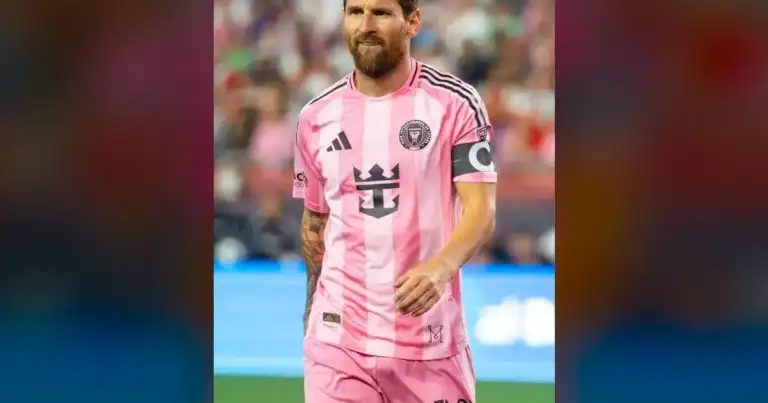

The roar of the crowd, the flash of cameras, the unmistakable genius of Lionel Messi – it all converged on April 4, 2026, as Inter Miami christened their gleaming new Freedom Park Stadium with a dramatic 2-1 victory over bitter rivals Orlando City SC. Messi, the maestro himself, delivered the winning blow, sending a sold-out crowd of 25,000 into a frenzy. It was a spectacle, a meticulously choreographed triumph, but as a seasoned observer of the global game, I can’t help but ask: is this truly a new dawn for MLS, or merely another dazzling illusion masking deeper, more complex realities?
A Grand Opening, or a Convenient Diversion?
The stage was set like a Hollywood blockbuster. Inter Miami CF, battling their fiercest foes, Orlando City SC, in the inaugural match at the magnificent Freedom Park Stadium. The air crackled with anticipation, not merely for the derby, but for the grand unveiling of a $350 million privately financed coliseum.
And then, as if scripted by the gods of football, Lionel Messi, the global icon, found the back of the net. He sealed a 2-1 victory for Miami, sending the 25,000-strong sell-out crowd into a delirium that reverberated through the very foundations of the league.
This wasn’t just a game; it was a statement. Luis Suárez, the old warrior, had already equalized before Messi’s sublime 68th-minute winner. It’s a colossal win for Inter Miami, undoubtedly, and a monumental boost for MLS’s global credibility. Everyone involved, from ownership to groundskeepers, is undoubtedly basking in the glow of self-congratulation. But from my vantage point, having witnessed countless such “moments” across continents, I’m peering beyond the confetti and the celebratory champagne. What are we truly celebrating, and what are we conveniently overlooking?
The Cold Hard Facts: A Closer Look at the Scorecard
Let’s dissect the action, shall we? Duncan McGuire of Orlando City, clearly not one for sentimentality, dared to spoil the party early, finding the net in the 35th minute. But the old warhorse, Suárez, with the predatory instinct of a seasoned striker, hit back just before halftime, in the 43rd.
Then, the inevitable, the sublime: Messi, with a left-footed strike born of pure genius after a silky one-two with his old Barcelona compatriot, Sergio Busquets. Textbook, clinical, and utterly devastating for the opposition.
- Final Score: Inter Miami CF 2 – 1 Orlando City SC
- Goal Scorers:
- 35′ Duncan McGuire (Orlando City SC)
- 43′ Luis Suárez (Inter Miami CF)
- 68′ Lionel Messi (Inter Miami CF)
- Attendance: 25,000 (Sold Out)
- Stadium Cost: Approximately $350 million, entirely private funding.
Messi’s individual statistics for the night were, as expected, nothing short of stellar: 1 goal, 3 shots (2 on target), 2 key passes, and a remarkable 88% pass accuracy. Suárez, not to be outdone, contributed 1 goal, 4 shots (2 on target), and 1 assist. And orchestrating it all from midfield, Busquets pulled the strings with 1 assist and an impressive 92% pass accuracy. On paper, it was a flawless performance, a dream debut for a dream stadium. But what narratives, what underlying currents, are being swept under the pristine new turf?
The Messi Phenomenon: A Blessing or a Burden for MLS?
The “Messi Effect” is not a myth; it’s a quantifiable force of nature. It draws eyeballs, injects capital, and catapults MLS onto the global stage. We’ve seen Apple TV+ subscriptions skyrocket, and resale tickets for this historic opening match soared into the thousands of dollars.
Inter Miami co-owner David Beckham, a man who knows a thing or two about star power, gushed, “This is a dream come true.” Messi himself, ever the humble titan, called it “a special night.”
“This is a dream come true. To see Freedom Park open, with our incredible fans, and to witness Leo score the winning goal… it’s everything we envisioned and more. This is for Miami, this is for our fans, and this is just the beginning.” – David Beckham, Inter Miami Co-owner
“It was a special night. To score the first winning goal in our new home, in front of our supporters, it gives us great confidence for the season ahead. The atmosphere was incredible.” – Lionel Messi, Inter Miami Captain
This is an astronomical investment, make no mistake. Jorge Mas, another co-owner, boldly declared, “Freedom Park is more than just a stadium; it’s a commitment to this city.” But as any globetrotting journalist will tell you, commitments always come with a price, and someone, somewhere, always ends up paying it. Is Miami truly ready for the seismic shifts this kind of “progress” inevitably brings?
The Unseen Costs of Progress: Who Truly Benefits?
While Miami revels in its shiny new soccer temple, what about the less glamorous, more inconvenient truths? A $350 million stadium is undeniably a boon for the club’s balance sheet. It’s projected to generate hundreds of millions in economic activity for Miami-Dade County.
But let’s be brutally honest: who truly reaps the rewards? Is it the local communities, or a select few at the top? New stadiums, as I’ve observed in countless cities from London to Rio, inevitably bring increased traffic, amplified noise, and immense pressure on existing local infrastructure. Are the surrounding neighborhoods genuinely prepared for this influx? Will the rising tide of soccer fame genuinely lift all boats, or will it merely accelerate gentrification, pushing out the very residents who can no longer afford the price of this new “progress”? This is a critical question, often conveniently ignored in the euphoria of celebration.
And let’s broaden our gaze to the league itself. While MLS undoubtedly receives a colossal credibility injection from Messi and this state-of-the-art facility, what about the other teams? The clubs in smaller markets, those without a global superstar to headline their brand? They struggle to attract comparable investment and media attention. Is the “Messi Effect” inadvertently creating a two-tier league? A handful of mega-clubs monopolizing the spotlight and the revenue, while others slowly fade into obscurity? Is this truly sustainable growth, or a dangerous imbalance?
MLS’s Moment of Truth: A Sustainable Future or a Fleeting Fantasy?
Many are hailing this as MLS’s definitive coming-of-age moment. A world-class stadium, a world-class player, all coalescing into a compelling narrative of ascendancy. But is this growth truly sustainable? Or is it a temporary bubble, inflated by the singular, unparalleled genius of one man?
History offers both hope and caution. David Beckham’s arrival in Los Angeles undeniably sparked a similar surge in interest and paved the way for future expansion. But Messi’s impact is arguably even more profound, more immediate, and more globally resonant. The real challenge, the existential question for MLS, is how to sustain this unprecedented hype. What happens when Messi, inevitably, hangs up his boots? Will the league have cultivated enough genuine, organic growth, enough deep-rooted fan loyalty, to maintain this stratospheric level of interest? Or will this glorious chapter simply become another glittering footnote in his legendary career, leaving MLS to grapple with a significant void?
This is not merely about soccer; it’s a microcosm of urban development, economic disparity, and the relentless, often ruthless, pursuit of profit in professional sports. Miami got its dream opening. Messi delivered, as he always does. But as I pack my bags for the next global sporting spectacle, I urge everyone to keep their eyes wide open to the bigger picture, to question the narratives, and to demand more than just dazzling spectacles.
It was a magnificent victory for Inter Miami, a historic night for the club. But the true test for MLS and the city of Miami, the real challenge of building a lasting legacy beyond the immediate glow of a superstar, is only just beginning. The world is watching, and so am I.
Source: Google News