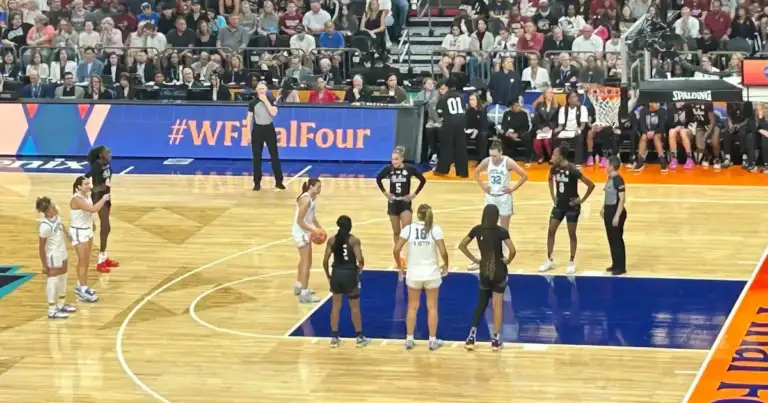
The silence from Audi Brooks herself? Deafening. Her team, the #3 seed Oregon Ducks, confirmed her return for the Sweet Sixteen game against the #2 seed Iowa Hawkeyes in March Madness 2026. Coach Graves is “thrilled,” but the real story, the one whispered in locker rooms and debated on sports talk shows, is what’s truly simmering beneath the surface. This isn’t just about a “minor” ankle sprain; it’s about the relentless, often brutal, pressure put on young women in college sports, and whether Audi Brooks’ return, just days after injury, is a triumphant comeback or a calculated risk.
Is Audi Brooks truly “100% cleared and ready to go,” as the official line claims, or is this a championship dream pushing a phenomenal athlete past her physical limits? The Ducks, without Audi Brooks, have a shaky 1-2 record, a stark contrast to their dominant run with her. The stakes are astronomically high, with the final score of this pivotal game yet to be written, but the human cost is already being tallied.
The Unseen Pressure on Audi Brooks: A Star Under Siege
Audi Brooks is a bona fide superstar, a force of nature on the court. Her season averages—a staggering 23.5 PPG, 6.8 APG, 4.2 RPG, and 2.1 SPG—don’t just speak for themselves; they scream “Naismith Player of the Year finalist.” But here’s the cold, hard truth: when the Oregon Ducks have played without her, their record plummets. That’s not just a statistic; it’s a crushing burden for one player to carry.
- Audi Brooks suffered a “minor” ankle sprain in the second round, an injury that often sidelines players for weeks, not days.
- Coach Kelly Graves, in a move that raised eyebrows across the league, confirmed Audi Brooks full practice participation on March 22nd.
- Audi Brooks was then declared “100% cleared” just days before the Sweet Sixteen showdown. Coincidence? Or necessity?
The optics are crystal clear, glaringly so. The team needs her. The fans demand her. The networks salivate over her star power. But at what cost to the athlete, to her long-term health, to her very body? This isn’t about criticizing the Ducks or Brooks; it’s about asking the tough, uncomfortable questions that everyone else is too afraid to voice. It’s about demanding accountability for the welfare of these young women.
The “Grit and Glory” Narrative: A Dangerous Double-Edged Sword
You know the drill. Mainstream media will inevitably paint this as a “grit and glory” story. Audi Brooks, the warrior, fighting through pain, sacrificing her body for her team, for the dream. It’s a compelling narrative, tailor-made for highlight reels and tear-jerking montages. But let’s pull back the curtain on this feel-good façade. This narrative, while inspiring on the surface, normalizes pushing athletes past their physical and mental breaking points. It’s a dangerous precedent.
We’ve seen it before, haven’t we? Paige Bueckers at UConn, though she ultimately missed significant time, faced immense pressure. Kiana Williams played through injury for Stanford, lauded for her toughness. These women are fierce, undeniably so, but they are not invincible. This narrative, while seemingly uplifting, can also cultivate an insidious environment where players feel not just encouraged, but obligated, to play hurt, to ignore their body’s screams for rest.
Is it truly fair to ask a player to put her body on the line, potentially risking career-ending or long-term debilitating injuries, for the fleeting glory of a tournament run? The pressure to perform in March Madness isn’t just immense; it’s suffocating. This isn’t just a game; it’s a make-or-break moment for many, a potential launchpad for professional careers. But at what personal expense?
Iowa’s Challenge: Adjusting to the Star’s Unexpected Return
The Iowa Hawkeyes, led by their own phenomenal star point guard, now face a completely different beast than they had prepared for. Coach Lisa Bluder, ever the professional, gave the standard coach-speak, saying they “always prepare for the best version.” But let’s be brutally honest. Brooks’ sudden, almost miraculous, return changes absolutely everything. It’s a tactical earthquake.
Iowa’s defensive strategy, meticulously crafted over days, will need a complete, frantic overhaul. They were undoubtedly planning for an Oregon offense without its primary playmaker, its engine, its heart. Now, they face a fully loaded Ducks squad, firing on all cylinders. This adds not just an extra layer of drama to the Sweet Sixteen matchup, but a palpable sense of urgency and chaos for the Hawkeyes.
The betting lines have already shifted dramatically, reflecting the seismic impact of Brooks’ return. Fans are buzzing, social media is alight, and the anticipation is at a fever pitch. This is exactly what the NCAA wants: star power, high stakes, and nail-biting finishes that drive ratings through the roof. But for the athletes involved, it’s a high-pressure cooker, where bodies and careers are forged or broken.
The Business of Star Power and the Neglected Question of Player Welfare
Let’s not mince words: Audi Brooks drives viewership. She sells tickets. She makes March Madness 2026 appointment television, a must-watch spectacle. This is the cold, hard business of women’s college basketball, and the NCAA profits immensely from these extraordinary athletes. Their faces, their talent, their drama – it’s all meticulously packaged and sold.
But where, exactly, is the line between capitalizing on star power and genuinely protecting player welfare? What was the precise nature of Brooks’ “minor” ankle sprain? What was the exact, detailed recovery protocol? What medical advice was given, and by whom? These crucial details are almost always kept under lock and key, shrouded in secrecy, leaving fans and journalists to speculate.
We need, no, we demand more transparency. Athletes deserve to know the full, unvarnished risks. Coaches and medical staff walk an incredibly fine line, often pressured by the immense financial and reputational stakes. Is the short-term gain of a tournament run truly worth the potential long-term health issues for a young woman’s body, for her future?
The Unanswered Questions and the Lingering Human Cost
How will Brooks’ ankle truly hold up under the relentless, unforgiving intensity of a Sweet Sixteen game, a brutal test of endurance and agility? Will she be able to maintain her incredible scoring output, her dazzling assists, or will she be visibly limited, hobbled by an injury that was supposedly “minor”? These are not small questions; they are the elephant in the room, the unspoken fear.
The human cost of this relentless, often cutthroat, pursuit of championships is too frequently overlooked, dismissed as collateral damage in the quest for glory. These are not just athletes; they are young women with futures, with lives, beyond the hardwood. Their health, their well-being, their long-term physical integrity should be paramount, non-negotiable.
The story of Audi Brooks‘ return is inspiring, yes, to her fierce determination. But it also serves as a stark, chilling reminder of the immense, often exploitative, pressure placed on these athletes. Let’s hope, truly hope, that her return is genuinely safe, and not just for the sake of the game, not just for the ratings. We need to demand better, much better, for our women athletes. Anything less is a disservice to their incredible talent and sacrifice.
Source: Google News