
Duke’s Epic Meltdown: A Choke for the Ages
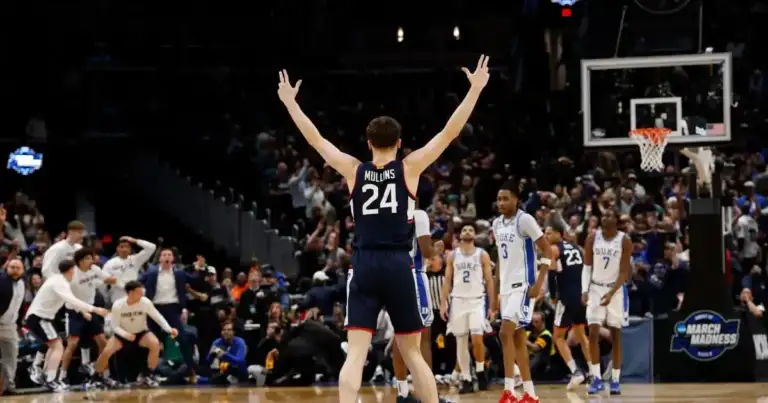
Let’s not mince words: Duke blew a staggering 19-point first-half lead. Against UConn, no less – a team universally respected for its championship pedigree. To be up by that much, against that caliber of opponent, and then to fold under pressure? That’s not just a bad game; it’s a pattern, a painful echo of past failures that must haunt the halls of Cameron Indoor Stadium. The final score, UConn 73, Duke 72, doesn’t even begin to tell the story. UConn freshman Braylon Mullins didn’t just hit a shot; he launched a 35-foot logo three-pointer with a mere 0.4 seconds left on the clock. That wasn’t just a dagger; it was a seismic event, a program-defining moment that will be replayed in highlight reels and Duke fans’ nightmares for years to come. Consider this chilling statistic: Duke became the first No. 1 seed ever to squander a 15-point halftime lead in the Elite Eight. One hundred thirty-four times, top seeds in that exact position held on to advance. Duke, with all its talent and tradition, couldn’t. What does that tell you about their mental makeup when the stakes are highest? It screams a fundamental flaw. Unsurprisingly, social media erupted. The term “script” was thrown around, not as a conspiracy theory, but as a desperate attempt to rationalize such an improbable collapse. Others simply, and perhaps more accurately, declared that Duke “sold bad.”It’s easy to see why the frustration boiled over. Duke had the game firmly in hand. Then, with a mere 10 seconds left, they committed a baffling, unforced turnover, essentially handing UConn the ball and the opportunity to snatch victory from the jaws of defeat. That isn’t championship basketball; that’s a catastrophic failure of execution and composure.Duke blew it. Again. Some things never change. #MarchMadness
— Patrick Queen (@Patrickqueen_) March 27, 2024
UConn’s Relentless Drive: A Masterclass in Mental Toughness
UConn is cut from a different cloth. They don’t just win; they dominate with an unshakeable belief in their process and each other. Their victory over Duke wasn’t just another notch in the win column; it was a resounding statement, a clinic in mental toughness that separated the contenders from the pretenders. Their coach, Dan Hurley, articulated it perfectly after the game:“Our guys just believe. They believe in the system, they believe in each other, and they believe in what we’re building here. It’s not just about talent; it’s about heart and relentless effort. That’s our DNA.”And there it is, the stark contrast. While Duke often appears to be a collection of individual talents, UConn operates as a cohesive, unyielding unit. They play with a palpable heart, an unwavering belief, and a refusal to crack under pressure. That, ultimately, is what separates them from a program that, for all its accolades, seems to buckle when the lights are brightest. UConn has now won an astonishing 11 consecutive NCAA Tournament games by double digits. Let that sink in for a moment. Their average margin of victory during this dominant run is a staggering 18.5 points. They aren’t just winning; they are dismantling opponents, a true March Madness machine.
The Weight of Expectations: Is Duke’s Model Broken?
Duke consistently recruits the absolute best talent in the nation, often relying on the “one-and-done” freshmen model. Kids like Cayden Boozer, a phenomenal talent, are drawn to the Duke mystique. But does this high-octane, constantly revolving door of talent actually hinder their ability to win when it matters most in March? The court of public opinion certainly seems to think so. Memes are flying, and fans are increasingly labeling players like Boozer and other Duke stars as “overhyped busts” when they fail to deliver a championship. It’s harsh, yes, but it reflects a deep-seated frustration with a program that consistently underperforms relative to its talent. This latest collapse marks Duke’s fifth Elite Eight loss in the last ten years. They were a top-3 seed in eight of those tournaments. The pattern is undeniable: they consistently fall short of the Final Four, despite being perennial favorites. Is it the immense pressure that comes with wearing the Duke jersey? Is it the inherent lack of cohesion and continuity that often plagues teams reliant on a constant influx of new, young faces? Whatever the root cause, it’s a systemic issue that desperately needs addressing. Duke keeps landing generational talent, yet they aren’t winning championships. That, my friends, is a fundamental problem that can no longer be swept under the rug.Breaking the Droughts: Hope for the Underdogs
While the UConn-Duke showdown captivated the nation, it wasn’t the only story unfolding. Other teams, often overlooked, made history too. NC State and Clemson both broke significant Final Four droughts, reminding us of the enduring magic and unpredictability of March Madness. For NC State, it was a 41-year wait, an eternity for a program with such a rich history. For Clemson, their first Final Four appearance since 1980, demonstrating decades of perseverance. These are the narratives that truly inspire, proving that dedication, grit, and a little bit of luck can indeed pay off. NC State’s star player, DJ Burns Jr., perfectly encapsulated the raw emotion:“This is surreal. We’ve talked about this moment since we were freshmen, even before that. To finally get over that hump, for our school, for our fans… it means everything. We did it for everyone who believed.”This isn’t just about basketball; it’s about community, legacy, and the fulfillment of lifelong dreams. These players will forever be etched into the lore of their respective universities, heroes who ended the curse and delivered moments of pure, unadulterated joy. These Cinderella stories are the lifeblood of college basketball, giving hope to every underdog and proving, unequivocally, that anything can happen when the ball tips off.
The “So What” Factor: More Than Just a Game
For us regular folks, these games transcend mere scores and statistics. They are compelling narratives of triumph and heartbreaking defeat, powerful showcases of extreme dedication and the relentless pursuit of excellence. They offer profound insights into what it takes to succeed, and sometimes, what causes even the best to stumble. UConn’s sustained success is a masterclass in the power of a unified team, demonstrating the idea that the whole is truly greater than the sum of its parts. Duke’s perennial struggles, conversely, serve as a stark reminder that raw talent, without mental fortitude and flawless execution, is often not enough to reach the pinnacle. Beyond the emotional highs and lows, reaching the Final Four carries immense financial implications. It provides an invaluable boost to a university’s brand, directly translating into increased donations, a surge in merchandise sales, and enhanced academic applications. We’re talking anywhere from $10-20 million in tangible and intangible benefits for a school. For the players themselves, the stakes are equally high. A deep tournament run means bigger NIL (Name, Image, Likeness) deals, significantly more visibility on a national stage, and a greatly improved shot at a professional career. For many, it’s a life-altering opportunity. But what about the “losers”? What about the seniors who played their last college game, their dreams dashed in a single moment? Their stories, often overlooked in the clamor for champions, matter just as much. They poured their hearts and souls into the game, sacrificed countless hours, and pushed their bodies to the limit. Their journey, even without a trophy, is a testament to the human spirit and deserves recognition.What’s Next for Duke?
Duke needs to engage in some serious soul-searching. Their recruiting model, their mental conditioning, their in-game execution – something is fundamentally misaligned when it matters most. Will this latest, most spectacular choke job finally impact their future recruiting efforts? Top-tier players, after all, aren’t just looking for a prestigious name; they want to win championships. UConn, on the other hand, is riding an unprecedented wave of success. Can they sustain this dynasty? The pressure to repeat is immense, but they appear uniquely equipped to handle it. They believe, and that belief has become their most potent weapon. March Madness, at its core, is about belief. It’s about heart. Duke had the talent, undoubtedly, but UConn possessed the unwavering grit. And that, unequivocally, is why UConn is moving on, and Duke, once again, is going home.Source: Google News