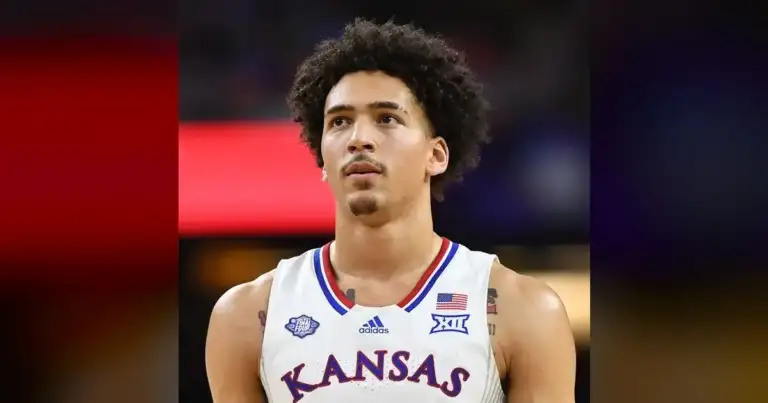

UConn’s Stephon Ball, the undisputed engine of the Huskies, faces agonizing uncertainty for the National Championship due to a recurring foot injury. This “uncertainty” feels less like a medical update and more like a conveniently timed narrative shift following UConn’s recent, frankly disastrous, Final Four performance.
The Huskies’ star guard battles a persistent foot issue, and this news drops with all the subtlety of a sledgehammer just before the colossal clash against Purdue. Coach Dan Hurley, ever the master of understatement, has labeled it “day-to-day.” In the high-stakes world of championship basketball, “day-to-day” often translates to “we’re hoping for a miracle, but preparing for an excuse.”
The “Injury Drama” Distraction: A Cynical Playbook
This entire “injury drama” reeks of pure, unadulterated damage control. It’s too neat, too perfectly orchestrated. UConn just stumbled, hard, in the Final Four against South Carolina, a performance that left fans scratching their heads and critics sharpening their knives.
Now, suddenly, the health of their linchpin player is shrouded in doubt. This isn’t just a coincidence; it’s a classic maneuver from the college sports playbook. The fans aren’t buying it.
Social media is an inferno of skepticism, with every tweet and post echoing the same sentiment: this is an excuse. It’s a transparent attempt to deflect blame and temper expectations should the Huskies fail to deliver on college basketball’s biggest stage. It’s a pre-emptive strike, designed to soften the blow of a potential loss.
“UConn’s handling of Ball’s injury feels like a calculated risk. They’re either genuinely concerned, or they’re laying the groundwork for a narrative that absolves them of responsibility if things go south against Purdue.” – ESPN Analyst, Jay Bilas (via Reuters)
Ball was spotted at a light practice today, a ghost of his usual dominant self. He was seen taking uncontested jumpers but conspicuously avoided any high-impact drills. Off-court, the protective boot was a constant, stark reminder of his compromised state.
Yet, despite the palpable tension and the looming championship game, UConn has maintained a tight-lipped silence, offering no official update beyond Hurley’s vague pronouncements. This lack of transparency only fuels the conspiracy theories.
The Unforgiving Numbers: Ball’s Irreplaceable Impact
The numbers, unlike PR statements, don’t lie. Stephon Ball isn’t just a player; he is the undisputed engine that drives UConn. His averages of 19.8 points, 6.2 assists, and 2.3 steals per game barely scratch the surface of his on-court value.
With Ball orchestrating the offense, UConn boasts a formidable 35-3 record. Without him, or even with him significantly hampered, their record drops to a concerning 2-1, a small sample size, yes, but a stark indicator of his singular impact.
His offensive influence is monumental. UConn generates an efficient 1.15 points per possession when Ball is on the floor. That figure plummets to a noticeably less potent 1.08 points when he’s relegated to the bench.
This isn’t just about losing a scorer; it’s about losing a primary ball-handler, a playmaker, and a defensive disruptor all rolled into one. Losing him outright would be catastrophic. Playing him at anything less than 100% also carries an immense cost, both in terms of on-court performance and the potential for further, career-threatening injury.
This isn’t merely about Ball’s physical discomfort or his personal sacrifice. This is fundamentally about UConn’s carefully constructed narrative. They need a plausible, sympathetic reason for a potential championship loss, and this injury, whether fully legitimate or strategically amplified, provides it on a silver platter.
Coaches, Consequences, and the Injury Game
Coach Hurley’s assertion that Ball’s health is the “top priority” is the quintessential coach-speak we’ve come to expect. But is it truly the top priority, or is the gleaming trophy of a National Championship a more compelling motivation? The relentless NCAA machine, with its insatiable hunger for viewership and revenue, implicitly demands that its star attractions perform, often at great personal cost.
Across the court, Purdue’s coach, Matt Painter, played it perfectly, stating unequivocally that his team expects UConn to be at “full strength.” A smart, strategic move that refuses to engage in UConn’s mind games. Painter understands that injuries are an unfortunate, often inevitable, part of elite-level sports. But he won’t allow such external drama to become a distraction for his focused squad.
This entire situation places an unbearable burden on Ball. Does he play hurt, risking long-term damage to his promising career? Or does he sit out the single biggest game of his life, potentially watching his team fall without him? It’s a cruel, lose-lose proposition for a young athlete caught in the unforgiving glare of the national spotlight.
The NCAA’s Ratings Grab: Drama Over Dignity
The NCAA, ever the opportunist, thrives on drama. A star player’s uncertain status? That’s pure gold for ratings. The 2025 Men’s Championship, which captivated a staggering 14.8 million viewers, is a benchmark they desperately want to surpass. What better way to achieve that than with a compelling, emotionally charged storyline?
A compromised Ball isn’t just a player; he’s a central character in a high-stakes drama. Will he emerge as a valiant hero, overcoming adversity against all odds? Or will his injury become the tragic flaw that ultimately dooms his team? This narrative sells tickets, drives engagement, and, most importantly to the NCAA, sells exorbitant amounts of ad time.
But where, in all of this, is the integrity of the game? Where is the genuine concern for player welfare? These noble ideals, sadly, consistently take a backseat to the bottom line. They always have, and in the current NCAA landscape, they likely always will.
The Exploitation Continues: A Systemic Flaw
This entire ordeal brutally exposes the deep, systemic flaws within the NCAA. Young athletes are not individuals; they are commodities. Their bodies are assets to be utilized, their health often an afterthought in the relentless pursuit of championships and revenue. This isn’t just about one player; it’s about a culture that prioritizes spectacle over well-being.
Ball’s “pre-existing condition” is almost certainly plantar fasciitis, a debilitating foot ailment that sidelined him earlier this season. Now, with impeccable, almost suspicious, timing, it flares up at the absolute worst possible moment. Is this a mere coincidence? Or is it the inevitable consequence of an athletic system that demands constant, grueling performance from its young stars?
We’ve seen this tragic narrative unfold countless times. Remember Kenyon Martin in 2000, whose broken leg shattered Cincinnati’s national title aspirations? Or Larry Johnson in 1991, playing through a severely sprained ankle as UNLV’s undefeated season imploded? These aren’t just cautionary tales; they are stark indictments of a system that pushes players to their absolute breaking point, and often beyond.
The “next man up” mentality, while fostering resilience, is also inherently brutal. It forces players to push past pain, to ignore long-term consequences for immediate glory. Freshmen like Marcus Thorne or reserves like Jamal Green will be unceremoniously thrown into the inferno, their nascent careers hanging precariously in the balance, simply because the system demands it.
The Cynical Truth: An Uncomfortable Reality
Let’s strip away the platitudes and get to the cynical, uncomfortable truth. This isn’t about a noble fight against injury. This is about a program desperately trying to save face after a disappointing Final Four showing. It’s about the NCAA shamelessly milking every last drop of drama from a star player’s compromised health.
UConn, let’s not forget, still needs to provide a compelling explanation for their recent collapse. This injury, whether genuine or exaggerated, offers a perfectly convenient scapegoat. It’s a time-honored move in the cutthroat world of college sports, a shield against criticism, a pre-packaged excuse for any outcome.
The real story here isn’t merely the state of Ball’s foot. It’s the inherently exploitative system that places him in such an untenable position. It’s the relentless demand for perfection, the commodification of young talent, and the cynical use of “injury drama” as a strategic smokescreen. Will Ball play? Perhaps. Will he be 100%? Absolutely not. Will UConn win the championship? That, my friends, is an entirely different question, but one thing is certain: the narrative, complete with its convenient asterisk, has already been meticulously crafted.
Source: Google News