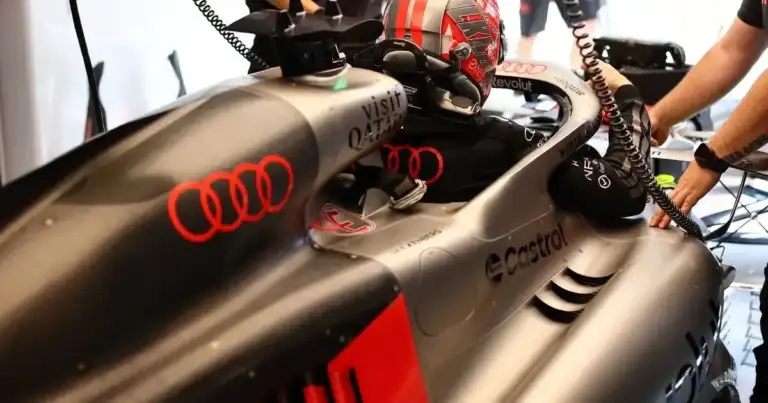

Forget the hype, folks. Audi just pulled a move in Formula 1 that screams either calculated genius or pure, unadulterated terror. They’re locking down their 2026 power unit. No performance upgrades. None. This isn’t just a strategy; it’s a gut-punch to anyone expecting them to hit the ground running.
The German powerhouse confirmed it earlier this week. Their F1 engine for the 2026 season is sealed tighter than a vault. Zero performance tweaks are on the menu. This isn’t some rumor; it’s a cold, hard fact straight from the top.
Every single resource is getting yanked from the 2026 project. They’re throwing everything they’ve got at the 2027 season instead. The initial 2026 design? It’s going to run as is, a glorified placeholder. Reliability is the new god, and collecting data is the only prayer.
Audi’s Big Gamble: Long Game or Early Surrender?
Audi Sport is spinning this as a “calculated long-term strategy.” They’re trying to tell us their commitment to F1 is solid. Like they’re playing chess while everyone else is playing checkers. But let’s be real, is this a masterstroke or a desperate scramble to hide a dumpster fire?
Oliver Hoffmann, the CEO of Audi Sport, tried to put a brave face on it. He said:
“We will consolidate our 2026 package. Maximum development will go into the crucial 2027 evolution.”
Then there’s Adam Baker, the Head of the F1 Project, nodding along like a bobblehead. He’s got “faith” in this fixed 2026 unit. They’re aiming for a “significant step forward for 2027,” apparently fueled by what they learn from getting thrashed on track. Call me cynical, but “real-world data” often means “we screwed up and need to figure out why.”
This whole narrative reeks of corporate spin. It sounds like confidence, sure, if you’re listening to PR departments. But to anyone with half a brain and a history in combat sports, it sounds like a cover-up for a unit that’s already dead on arrival. Either way, 2026 is going to be a brutal, soul-crushing year for the team. Sauber, soon to be Audi, will be strapped into a glorified test mule, not a race car. They’ll be cannon fodder, plain and simple.
Sauber: The Ultimate Guinea Pig
Make no mistake, the Stake F1 Team Kick Sauber is about to become the biggest sacrificial lamb in modern F1 history. They’re the ones who will be running this frozen Audi power unit in 2026, before officially transforming into the full Audi works team in 2027. That’s not a transition; it’s an execution.
Team Principal Andreas Seidl, bless his heart, publicly toed the corporate line. He declared they are “fully aligned with Audi’s strategy.” What else is he going to say? “My team is doomed to a year of misery”? His focus for 2026 is “chassis optimization.” That’s code for trying to polish a turd. They’ll be trying to wring every last microsecond of performance out of a chassis, knowing the engine bolted to it is a dead weight.
This isn’t just a cap on Sauber’s 2026 season; it’s a concrete lid. Their competitiveness has a definitive, unyielding ceiling. They aren’t a contender; they’re a laboratory experiment. Forget podiums, forget wins. They’ll be lucky to consistently scrape into the points. This team will be a development platform, a moving target for their rivals to shoot at, while Audi gathers data for a future that may or may not ever come.
Rivals Are Circling Like Sharks
You think the other teams aren’t smelling blood in the water? Mercedes, Ferrari, Red Bull Powertrains, and Honda aren’t just watching; they’re salivating. They see a gaping chasm opening up in 2026, a golden opportunity laid bare by Audi’s bizarre decision.
My gut tells me most rivals are already convinced Audi is struggling. Their initial 2026 unit isn’t just weak; it’s a disaster. It’s probably heavier than a fully loaded freight train, underpowered like a lawnmower, and about as reliable as a politician’s promise. They’re not conserving resources; they’re being forced to because their initial design is fundamentally flawed. It’s a retreat, not a strategic repositioning.
A few optimists might try to spin it as a bold, risky strategy. They’ll argue Audi is smart to avoid costly, incremental upgrades, instead aiming for one massive, game-changing leap in 2027. This isn’t just a gamble; it’s a high-stakes, all-or-nothing bet on a future that is anything but guaranteed. And if they lose, the fallout will be catastrophic.
Either way, the established teams just got a massive head start. 2026 is going to be a clear run for them. Audi will be playing catch-up from day one, and they’ll be doing it with one hand tied behind their back.
The Cold, Hard Cash Play
Let’s talk brass tacks: F1 power unit development costs an obscene fortune. We’re talking hundreds of millions of Euros annually, vanishing into the abyss of R&D. Halting 2026 upgrades doesn’t just free up cash; it unleashes a torrent of serious money.
This freed-up R&D budget isn’t just going into 2027; it’s being redirected to salvage what might be a sinking ship. It allows for a more comprehensive redesign, a desperate attempt at better optimization. This isn’t just a “calculated financial move”; it’s a brutal, cynical business decision. Invest big later, they say, rather than throwing good money after bad now. But what if “later” is too late?
Is this shrewd money management, or a desperate scramble to avoid financial ruin on top of technical failure? My money’s on the latter. Only the roar of the engines in 2027 will truly reveal the truth, but the smell of fear is already in the air.
History’s Cruel Echoes
F1 has seen this song and dance before, and it rarely ends well. New engine manufacturers often stumble, or worse, crash and burn. Remember Honda’s disastrous return with McLaren from 2015-2017? It was a three-year parade of humiliation. Reliability was a joke, and performance was nonexistent. They were a punchline, not a competitor.
Audi is clearly terrified of repeating that nightmare. They’re trying to establish a stable, reliable baseline, hoping to avoid the pitfalls that swallowed Honda whole. They want to crawl before they walk, and then maybe, just maybe, push for performance in 2027. This isn’t just different from past aggressive developments; it’s a stark admission of weakness, a clear lack of confidence in their current capabilities.
It’s a cautious approach, alright. I’d call it cowardly. Others might call it strategic, but that’s just a fancy word for playing it safe when you should be swinging for the fences. It means they won’t just fail to hit the ground running; they’ll be dragging themselves through the dirt, begging for mercy.
The Fans Get the Raw Deal
For the legions of fans eager to see Audi challenge for wins, prepare for bitter disappointment. 2026 will be a slow, painful crawl. The Audi-powered Sauber team won’t be front-runners; they’ll be backmarkers, or, if they’re lucky, struggling in the mid-pack. Don’t expect fireworks; expect fizzles.
This decision is a brutal sacrifice of short-term excitement for a supposed “stronger long-term foundation.” It’s corporate speak for “we need more time because we’re not ready.” It sets up a “big bang” narrative for 2027, but will the fans have the patience to endure a year of mediocrity, or will they simply tune out?
This move lays bare the monstrous hurdles of entering F1, both technical and financial. Audi is betting its entire F1 future on 2027. They need that bet to pay off spectacularly, or this whole audacious, expensive venture could go up in smoke, leaving nothing but a smoldering wreck and a lot of red faces in Germany.
Audi has made their bed, and it’s a lumpy, uncomfortable one. 2026 won’t just show if they can build a champion; it will expose whether they’ve built a bust. And if they fail, the combat sports world will be here to pick over the wreckage, because in F1, just like in the cage, you either come to fight, or you get left behind.
Source: Google News