
The roar died, not gradually, but in a sudden, brutal gasp. At NRG Stadium, on June 25th, 2026, the dream of a nation, Iran, was not merely put on hold; it was violently ripped away, torn to shreds by the cold, digital hand of VAR. The score, a hard-fought 1-1 against Egypt, now stands as a monument to what could have been – a 2-1 victory, a historic passage to the World Cup knockout stages, snatched in the dying seconds.
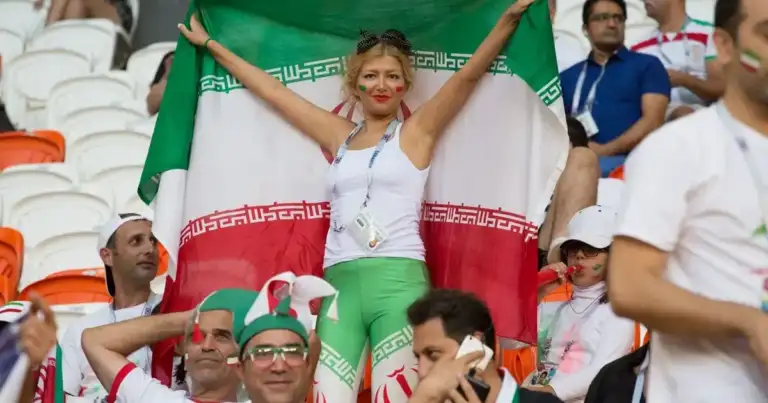
Shojae Khalilzadeh’s header in the 90+4th minute was more than a goal; it was a thunderclap. This bullet fired from the jaws of defeat detonated pure ecstasy across the entire Iranian bench and through every soul in the stadium draped in red, white, and green.
They had done it! A 2-1 triumph over Egypt would have guaranteed their historic passage to the Round of 16 for the very first time. The roar was deafening, a primal scream of joy, raw and visceral.
But this is the modern World Cup, a spectacle increasingly governed by unseen forces. In 2026, no celebration, no matter how fervent, is truly safe until the dreaded VAR screen grudgingly flashes its green light – or, as Iran discovered, its chilling red.
The Millimeter That Crushed a Nation
The ninety minutes leading up to that fateful moment were a masterclass in tension. It was a cagey, breathless affair that saw two nations battling for their very World Cup existence.
Egypt, spearheaded by the relentless Mohamed Salah, had drawn first blood in the 58th minute. His clinical finish seemed to deflate the Iranian faithful.
But Iran, tenacious as a desert lion, refused to yield. In the 79th, their talismanic striker, Sardar Azmoun, clawed them back into the fight, his equalizer igniting a flicker of hope. Both teams, locked in a brutal Group F struggle, were playing with their World Cup lives on the line.
Then came Khalilzadeh’s header, a moment of pure, unadulterated, fleeting joy.
And then, the sickening, soul-crushing wait. The referee, a puppet on VAR’s digital strings, was instructed to consult the monitor.
The replays, slowed to an agonizing crawl, dissected every frame with the cold precision of a surgeon. “A marginal offside,” they would declare. A shoulder? A toe? A phantom whisper of a shirt sleeve?
Who among us, watching in real-time, could discern such a minuscule fraction? After a review that stretched into an eternity, stealing precious seconds and the raw emotion of the game, the verdict was delivered: no goal.
The score reverted to a crushing 1-1. Egypt, granted a reprieve from the digital gods, erupted in relieved celebration, securing their passage.
Iran, however, was left stunned, devastated. Their destiny was ripped away by a technological hair’s breadth, a ghost in the machine.
Coach Amir Ghalenoei’s face, usually stoic, was a mask of profound disappointment. His words, delivered with raw emotion, echoed millions back home: “The margins were too fine, the decision too harsh. This isn’t football.”
Khalilzadeh himself, the hero turned villain by an algorithm, was visibly broken. The weight of what might have been crushed him into the turf.
For Iran, football offers more than just a game. It is a rare, potent balm for a nation often buffeted by geopolitical storms. It’s a chance for collective pride, for profound unity, for global recognition. This transcends endless political machinations.
This was supposed to be their moment, their glorious breakthrough onto the world stage. Instead, it became their agony, a collective heartbreak broadcast globally.
VAR: Fairness or Football’s Robot Overlord?
The VAR debate has not merely “raged” for years; it has become a festering wound on the beautiful game. This incident isn’t just another “chapter” – it’s a screaming indictment.
Supporters, those puritanical apostles of digital perfection, parrot the tired mantra that it ensures “fairness.” They claim it corrects “clear and obvious errors.”
But I ask you, how clear, how obvious, is a marginal offside? It demands a labyrinth of lines and angles drawn across a pixelated freeze-frame, visible only to a handful of officials. What has become of the “spirit of the game”? The raw, spontaneous, unfolding drama once defined football.
VAR doesn’t just correct errors; it actively sucks the very soul out of the celebration. It replaces the primal scream of spontaneous joy with the chilling, anxious anticipation of a bureaucratic review.
Egypt’s coach, Rui Vitória, naturally lauded his team’s resilience, his voice tinged with relief. He accepted the VAR decision as “correct” – for them, it was correct, a crucial benefit that propelled them into the next stage.
But for Iran, it’s not just a gut punch; it’s a brutal, existential reminder. In the cold, hard calculus of modern football, human passion, grit, and Herculean effort can be negated. They are rendered meaningless by the dispassionate, unfeeling logic of a machine interpreting lines on a screen.
One team’s triumph, another’s profound injustice – all thanks to the same system.
Let’s be brutally honest: this isn’t just about a single, agonizing goal. It’s about a staggering $13 million. That is the guaranteed prize money for simply advancing to the Round of 16.
For a football federation like Iran’s, this isn’t ‘pocket change’. It’s a colossal, transformative sum, operating in a challenging global landscape. It’s the lifeblood that fuels grassroots development, supports fledgling youth academies, and provides essential infrastructure. This money offers crucial stability for years to come.
That historic first, that surging tide of national pride – all of it, vaporized. This happened based on a decision that, to the naked human eye, was utterly indistinguishable from legitimate play. It’s a financial penalty as much as a sporting one, a double blow to the heart and the purse.
The beauty of football used to be its fluidity, its imperfections, its human drama. VAR, in its relentless pursuit of millimeter-perfect ‘justice,’ often delivers only clinical heartbreak.
The Red Marker Verdict: FIFA’s Calculated Chaos
Let’s cut through the sanitized corporate rhetoric. VAR isn’t merely about ‘fairness’; it is, at its core, about control.
FIFA, that monolithic global football empire, seeks to minimize controversies. They want to avoid anything that might tarnish its pristine, curated global spectacle. Such controversies could raise uncomfortable questions about referee integrity. More critically, they could jeopardize colossal sponsorships and broadcasting deals.
So, FIFA imposes a system that ostensibly eliminates some human errors. Yet, it simultaneously births a new hydra of problems. These include interpretive errors, soul-destroying stoppages, and the gut-wrenching reality of goals disallowed. These reasons are utterly invisible to anyone but a computer-aided official squinting at pixels.
The hypocrisy, my friends, is not just glaring; it’s blinding. VAR was trumpeted as the harbinger of clarity. Yet, it routinely fuels more furious debate about its application, its glacial speed, and its devastating impact on the game’s emotional core.
For Iran, this wasn’t just a football match; it was a national lifeline. It was a precious moment of unity and potential triumph in a world too often divided. That lifeline was brutally severed by a technology championed by an organization. FIFA clearly values its meticulously curated corporate image above all else.
This happens even if it means sacrificing the raw, visceral, human drama that made us fall in love with this beautiful game. This wasn’t just an offside call. It was a brutal, clinical demonstration that in the high-stakes, hyper-commercialized world of modern football, emotion and human endeavor often take a backseat to technological precision. This holds true no matter how marginal, no matter how devastating.
So I ask you, FIFA, at what cost this ‘perfection’? For Iran, their World Cup dream now lies shattered. It is tangled in the cold, unfeeling wires of a system that promises absolute justice but often delivers only profound, soul-crushing anguish. Is this truly the future we want for the beautiful game?
Source: Google News