
The sacred fabric, woven with the very essence of footballing divinity, has spoken. Pelé’s legendary 1970 World Cup final jersey, a hallowed relic of the beautiful game, didn’t just go up for auction – it detonated the sports memorabilia market, selling for an astronomical £7.1 million ($9 million USD) on June 1st, 2026. This wasn’t merely a transaction; it was a thunderclap, reaffirming the King’s eternal dominion and sending shockwaves through the very foundations of sports finance.
This legendary Brazil No. 10 jersey, worn during the 1970 FIFA World Cup Final, commanded its staggering price after a brutal, week-long online and telephone bidding war. Sotheby’s orchestrated the gladiatorial process, a silent war of wills that saw fortunes laid bare.
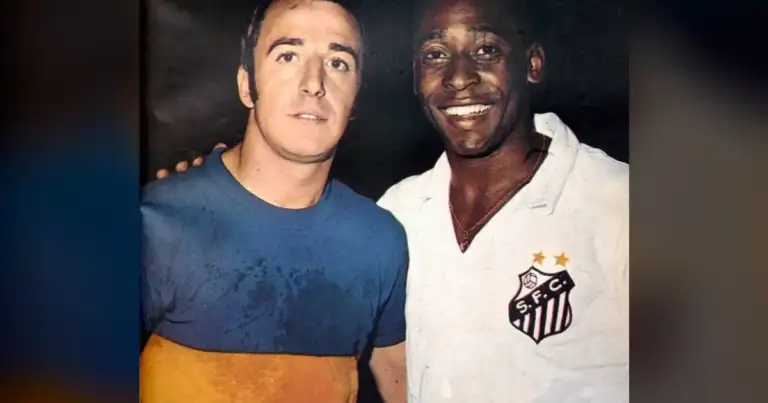
For over five decades, this sacred cloth, a direct exchange with Italian defender Roberto Rosato after that glorious final, had been a treasured heirloom within his family. Now, it vanishes into the gilded cage of a private collector from the Middle East, their identity shrouded in secrecy – a familiar, frustrating refrain for those who believe such artifacts belong to the world, not just a vault.
The Price of Immortality
The hammer fell, not just exceeding, but utterly obliterating its pre-sale estimates of £4 million to £6 million. This wasn’t just a new record; it was a declaration. Pelé’s jersey didn’t just edge out Diego Maradona’s infamous “Hand of God” jersey from 1986; it firmly re-established the hierarchy at the very summit of footballing lore. The King reigns supreme, even in the afterlife of memorabilia.
Brahm Wachter, Sotheby’s Head of Modern Collectables, didn’t mince words, declaring it a “relic” – and rightly so. He articulated what every true believer feels: this fabric represents “the pinnacle of his career.”
While the price is astonishing, it underscores Pelé’s unique place in the global imagination. This isn’t just about football; it’s about a cultural icon who transcended sport and became a symbol of joy and excellence.
Dr. David Goldblatt, Football Historian
The 1970 World Cup itself was not merely a tournament; it was an apotheosis. Brazil’s vibrant, attacking football, a symphony of skill and audacity, didn’t just captivate the planet – it redefined the sport.
Pelé, in his final World Cup, was the maestro, leading them to a dominant, almost effortless 4-1 victory over Italy in Mexico City. He didn’t just score the opener; he opened the floodgates of glory, and his assist for Carlos Alberto’s legendary fourth goal remains a masterpiece of collective genius, etched forever in the annals of football.
More Than Just a Football Jersey?
But let’s cut to the chase, shall we? Is this sacred Pelé jersey now the undisputed king of all sports memorabilia? Not yet, but it’s breathing down the neck of greatness. What is undeniable, however, is its ironclad reign as the most expensive football jersey in history. A new benchmark has been set, a new standard for the beautiful game’s relics.
Yet, the brutal reality of the global memorabilia market dictates that the ultimate crown still rests elsewhere. That coveted title belongs to Michael Jordan’s 1998 NBA Finals jersey, a testament to basketball greatness that fetched a staggering $10.1 million in September 2022. Even a Babe Ruth 1914 baseball card, a sepia-toned ghost from a bygone era, commanded $7.2 million. This isn’t just about sports; it’s about the cold, hard numbers that define legend in the modern age.
Make no mistake, though: Pelé’s jersey now stands as the second most expensive jersey from any sport, ever. This isn’t just a statistic; it’s a thunderous roar reaffirming his monumental, unassailable global appeal. It’s a stark, undeniable declaration of the colossal historical weight of the 1970 World Cup – a tournament that transcends generations and continues to command reverence, and now, unimaginable wealth.
Museum or Private Vault? The Great Debate
The emotional impact of this sale, for any true devotee of the beautiful game, is nothing short of gut-wrenching. It is a bittersweet symphony of celebration and profound loss.
We hail Pelé’s immortal legacy, yes, but we also lament, perhaps even rage against, the vanishing of such a treasure from public view. As a spokesperson for Pelé’s family once poignantly stated, “Pelé always believed in sharing the joy of football.” How ironic, then, that his most iconic symbol now sits behind closed doors.
Yet, here we are: this irreplaceable piece of history, a beacon of sporting excellence, disappears into the abyss of a private collection. It will not grace the hallowed halls of a museum for the masses to behold, to inspire, to connect with.
Even Dr. Goldblatt, the historian, could only lament, “It’s a shame it won’t be in a public museum.” This isn’t just a shame; it’s a systemic failure.
Where are the governing bodies – FIFA, national federations, even governments – in this gilded race? Should they not, with the immense resources at their disposal, be mandated to acquire these sacred artifacts for the public good? Is the legacy of our sporting gods simply a commodity for the ultra-rich?
Or are we to simply accept that private ownership, the exclusive domain of the privileged few, is a “legitimate” part of this high-stakes collecting world? This isn’t merely about the obscene amounts of money changing hands. This is about heritage, about legacy, about the very soul of the sport.
The Memorabilia Boom Explodes
This record-shattering auction isn’t just a data point; it’s a siren call, confirming what insiders have known for years: the sports memorabilia market isn’t merely “on fire” – it’s a raging inferno, consuming everything in its path. This is no longer the quaint domain of hobbyists; it is a serious, cutthroat asset class where high-net-worth investors, seeing tangible assets as the new gold, are not merely pouring money in, but flooding it, reshaping the very economics of sporting legacy.
Consider this chilling fact: the top three most expensive jerseys from any sport, period, have all exchanged hands within the last four years. This is not a coincidence; it is a calculated, deliberate surge, a testament to a market that has matured into a financial behemoth. It reflects a voracious appetite for rare athletic artifacts, transforming heroes into investments.
Pelé’s jersey now stands as the ultimate, undeniable symbol of this accelerating, almost terrifying, trend. This sale, then, is far more than a wealthy individual acquiring a piece of cloth. It is a seismic event, a brutal revelation of the profound cultural significance of sports, and the enduring, almost mystical power of legends like Pelé.
More critically, it is a stark, unsettling declaration: that history, that legacy, that the very soul of the beautiful game, is now irrevocably commodified. And the chilling question remains: what price will we ultimately pay for allowing our shared heritage to be locked away, one record-breaking auction at a time?
Source: Google News