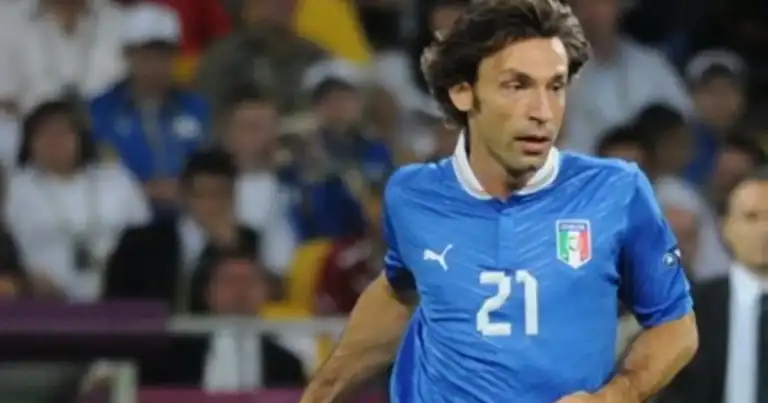

The very soul of Italian football hangs precariously in the balance, teetering on the edge of a precipice forged by audacious gambles and questionable financial maneuvers. Andrea Pirlo, a legend on the pitch, has officially seized the reins of the Azzurri, a move that screams of desperate nostalgia rather than calculated strategy. Simultaneously, Serie A champions Inter Milan are locked in a gladiatorial battle for Cristian Romero, a pursuit that threatens to either solidify a dynasty or plunge the club into fiscal chaos. These are not mere headlines; these are seismic shifts, the tremors of which will define the trajectory of Italian football for a decade.
Forget boring play-by-play; this is about the power, the money, and the raw, unfiltered ambition that fuels the beautiful, brutal game. The stakes for both club and country are monumental, threatening to either elevate Italy to new heights or condemn it to an agonizing purgatory.
Pirlo’s Coronation: A €10 Million Gamble with Italy’s Future
The appointment of Andrea Pirlo to lead the Italian national team is not merely a gamble; it is a sacrilege, a reckless throw of the dice with the Azzurri’s sacred legacy. His coaching career dossier reads less like a blueprint for success and more like a cautionary tale: a disastrous, short-lived stint at Juventus, where he failed to impose any discernible tactical identity, followed by more modest, largely uninspiring roles. To entrust the national team, a beacon of national pride and a multi-million-euro enterprise, to such an unproven commodity is an act of managerial folly.
Leading the Azzurri is not just a job; it is a sacred, all-consuming duty. The pressure from 60 million passionate fans is a unique, suffocating beast. Italy demands excellence, not experiments born of wistful longing for past glories. The Italian Football Federation (FIGC) has reportedly handed Pirlo a three-year contract worth an estimated €3.5 million per season, a significant financial commitment for a coach still learning the very rudiments of his craft. Compare this to the reported €5 million annual salary of his predecessor, Roberto Mancini, who, let us not forget, delivered European glory. This isn’t just a step backward; it’s a blind leap into the unknown, a move rooted in romanticism, not sound footballing logic or a coherent strategic vision.
What does this mean for the team’s identity? Will Pirlo, the elegant maestro of old, attempt to impose his often-ineffective, possession-based philosophy on a squad that craves tactical steel and decisive leadership? The national team needs a proven winner, a tactical mastermind capable of navigating the treacherous waters of international competition. The financial implications of this gamble are staggering. Missing another World Cup cycle, as Italy tragically did in 2018 and 2022, could cost the FIGC an estimated €50-70 million in prize money, lost sponsorship deals, and reduced broadcasting revenue. This decision isn’t just about football; it’s about the economic health and global standing of Italian football. The Azzurri faithful deserve more certainty, more accountability, and less wishful thinking from their leadership.
Inter’s Romero Chase: A €65 Million Bet on the Brink
Inter Milan’s relentless, almost obsessive, pursuit of Cristian Romero is equally baffling and, frankly, financially irresponsible given their precarious balance sheet. Romero is, undeniably, a top-tier defender, a formidable rock at Tottenham Hotspur. But his price tag, rumored to be in the region of €65 million, is astronomical and raises serious questions about Inter’s long-term fiscal strategy. This isn’t just about adding quality; it’s about gambling with the club’s solvency.
Inter are already the reigning Serie A champions, boasting a formidable defense anchored by the likes of Alessandro Bastoni and Stefan de Vrij. Their backline is strong, cohesive, and effective. So, why the intense focus on another central defender at such an exorbitant cost? This chase signals a massive financial outlay that would strain Inter’s already scrutinized resources, potentially pushing them to the very limits of Financial Fair Play (FFP) regulations. A blockbuster deal for Romero, who reportedly earns €5 million per season at Spurs and would demand closer to €7-8 million per season on a five-year deal at Inter, would amortize at a staggering €13 million per year on the club’s books, not including his wages.
The writing is on the wall: this suggests a potential, perhaps even inevitable, departure of another key player to balance the books. Who is Inter prepared to sacrifice? Is it the dynamic Denzel Dumfries, valued at around €30 million? Or, more shockingly, could it be the beloved, homegrown talent Alessandro Bastoni, who could command upwards of €70 million in the transfer market? Are Inter truly building a dynasty with strategic, calculated moves, or are they making another impulsive, expensive acquisition that could destabilize squad harmony and stunt the development of younger talent? The transfer market is not merely a battlefield; it’s a fiscal tightrope walk where one misstep can lead to catastrophic consequences. Inter must justify this monumental investment, not just on the pitch, but in the boardroom, where the numbers tell a far more brutal story.
The High Stakes of Italian Football: A Reckoning Awaits
Both of these scenarios vividly highlight the volatile, often unpredictable, and frequently emotionally charged nature of Italian football. Management decisions, particularly at the highest levels, are too often driven by sentimentality or short-term gains, rarely by cold, calculated financial prudence or long-term strategic vision. Pirlo’s appointment is a romantic notion that willfully ignores his uneven, frankly unimpressive, coaching record. Inter’s chase for Romero is an aggressive, high-risk play that could either solidify their dominance or, more likely, destabilize their carefully constructed squad and push them closer to FFP sanctions.
Fans across Italy watch these power struggles with bated breath, for this is more than just sports; it is a way of life, an intrinsic part of their cultural identity. The future of the Azzurri and the reigning Serie A champions hangs precariously in the balance, swayed by decisions that carry immense weight and affect millions of passionate supporters. Italian football, with its rich history and demanding fanbase, deserves clarity, strong leadership, and, above all, financial accountability.
The coming seasons will undoubtedly reveal the true, unvarnished cost of these choices. Failure is not an option when the very soul and financial health of Italian football are on the line. The drama, my friends, is far from over; it has only just begun its most perilous act. Will these gambles pay off, or will they leave Italian football to lament what could have been, buried under the weight of its own hubris and fiscal folly?
Photo: Wikimedia Commons (query: Andrea Pirlo)
Source: Google News