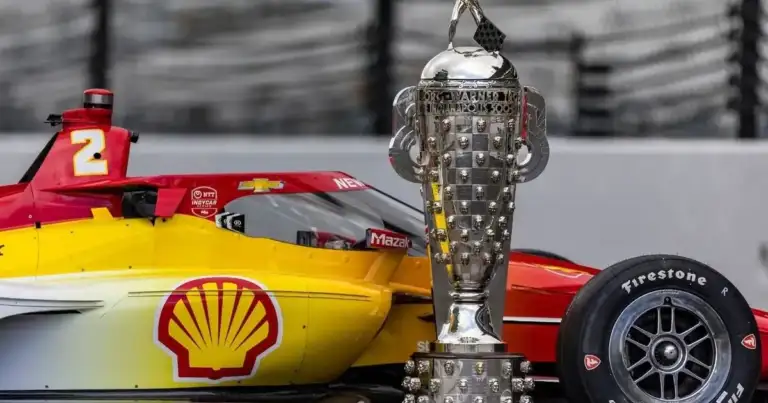
The roar of the Indianapolis 500 crowd turned to a collective gasp as Felix Rosenqvist snatched victory from David Malukas. The margin? A mere 0.0003 seconds. This wasn’t just a win; it was a legend, a whisper of a breath etched into racing history.
This was the kind of finish that makes you question everything you thought you knew about speed, precision, and the fine line between glory and gut-wrenching defeat. It was a visceral reminder of the raw, unscripted drama that only elite sports can truly deliver, a display of human will pushed to its absolute limits.
The Closest Race Ever Run
The 110th running of the Indianapolis 500 on Sunday, May 24, 2026, will forever be synonymous with Felix Rosenqvist. Piloting his machine for Meyer Shank Racing, Rosenqvist executed a late-race maneuver that will be replayed for decades, passing Arrow McLaren’s David Malukas on the penultimate lap. The official margin, an astonishing 0.0003 seconds, didn’t just break records; it obliterated them, making the previous closest finish of 0.043 seconds in 1992 seem like an eternity.
From the moment the green flag dropped, tension at the Indianapolis Motor Speedway was palpable. A sell-out crowd rose to its feet as the final laps unfolded, millions more watching worldwide. Malukas, a formidable talent, seemed destined for his maiden Indy 500 victory, having led most of the second half.
He was the picture of control, carving through turns with unwavering confidence.
But Rosenqvist was writing a different script. He played a dangerous game of chess, meticulously saving fuel in earlier stages, biding his time. This calculated patience allowed him to unleash a ferocious charge when it mattered most.
On Lap 199 of 200, Rosenqvist drafted past Malukas on the front straight, emerging from Turn 4 like a phantom. He seized the lead, holding it against Malukas’s desperate final-lap counterattack.
This historic triumph marks Rosenqvist’s first Indianapolis 500 title, a career-defining moment. For Meyer Shank Racing, it’s their second, building on Helio Castroneves’ 2021 win. This wasn’t just a race; it was a masterclass in strategy, nerve, and audacious belief.
Rosenqvist’s win was over 140 times closer than any Indy 500 before it. This number speaks to a level of precision and drama that feels almost supernatural.
- Winner: Felix Rosenqvist (Meyer Shank Racing)
- Second Place: David Malukas (Arrow McLaren)
- Margin of Victory: 0.0003 seconds (new record, over 140 times closer than previous record)
- Key Play: Lap 199, Rosenqvist’s high-speed draft pass on Malukas, executed with surgical precision.
- Rosenqvist’s Laps Led: 35 (including the crucial final two)
- Malukas’s Laps Led: 58 (the most of any driver, highlighting his dominant performance)
The Profound Human Cost of Victory and Defeat
A finish this tight doesn’t merely alter the record books; it carves deep, indelible marks into the souls of the men in those cockpits. The mental and physical toll is immense, an ordeal forged over 500 miles of relentless speed and danger. Rosenqvist, still buzzing from the impossible triumph, described it simply as “the most intense 200 laps of my life.”
The intense concentration required for 500 miles pushes drivers to their absolute mental limits. That final dash, the split-second decisions made at over 200 mph, the constant battle against centrifugal force and the screaming engine – it all takes a heavy toll. Champions like Rosenqvist aren’t just physically drained; they’re mentally exhausted, needing significant recovery time after such a profound psychological ordeal.
“I honestly don’t know what to say. I just pushed, pushed, pushed. I saw David’s car, and I thought, ‘This is it, this is my chance.’ To win by that margin… it’s unbelievable. My heart is still pounding. This is what you dream of your entire life.”
— Felix Rosenqvist, moments after his historic win
Physically, these gladiators endure extreme G-forces that contort their bodies, scorching cockpit temperatures that bake them, and dehydration that saps their strength. Every muscle is tensed, every nerve firing, until that checkered flag waves. Post-race, immediate medical checks are standard, followed by a regimen of rest, proper nutrition, and light activity – a critical, often unseen, part of their recovery.
And then there’s David Malukas. The sting of coming so agonizingly close must be gut-wrenching, a hollow ache that lingers. Imagine leading the most laps, feeling victory’s sweet embrace within your grasp, only to lose by an invisible margin, a fraction of a blink.
This kind of near-miss doesn’t just hurt; it haunts. It replays in the quiet moments, a constant “what if” echoing in the mind.
“It hurts, man. It really hurts. We had it. We led so many laps. Felix just had that extra little bit at the end. I gave it everything. I’m proud of my team, but this one will sting for a while. It’s a tough pill to swallow.”
— David Malukas, his voice thick with emotion
Malukas will undoubtedly face introspection, processing this profound disappointment. He may work with sports psychologists to channel raw emotion into future motivation, transforming pain into ambition.
This performance, despite the loss, confirms his status as a top-tier contender, a driver destined for greatness. This near-miss, though brutal, will likely be the forge for future triumphs.
Life After the Checkered Flag: A New Reality
For Felix Rosenqvist, winning the Indy 500 isn’t just a trophy; it’s an immediate, seismic shift in his entire world. He’ll be plunged headfirst into a whirlwind of media appearances, sponsor obligations, and celebratory events, his schedule packed tighter than a race engine. Balancing the demands of recovery with his new duties as a champion will be a challenge unto itself, a new kind of endurance test.
This victory isn’t just about pride; it’s a monumental boost to his marketability. Beyond the estimated $3 million to $4 million in prize money – a life-changing sum for many – new endorsement deals are not just likely, they’re inevitable. His public profile will skyrocket, requiring a new level of personal and professional management.
For Meyer Shank Racing, this victory isn’t merely a feather in their cap; it solidifies their position as a formidable force in IndyCar. It’s a resounding validation of their strategic genius, their meticulous preparation, and their driver’s extraordinary talent. The increased sponsorship interest and financial windfall are a massive boon for the team’s future, allowing them to invest further, innovate more, and chase even greater glories.
“Felix drove a phenomenal race. His patience, his fuel saving, and then that final charge… it was perfect. This team works so hard, and to get our second Indy 500 win, especially in such historic fashion, is incredible. We dreamed of this, but to see it unfold like that… it’s beyond words.”
— Michael Shank, Co-owner, Meyer Shank Racing, beaming with pride
This race transcends mere sport. It’s a raw, unfiltered display of human endurance, precision, courage, and the relentless pursuit of greatness.
It’s a story reminding us that in life, just as on that hallowed oval, every millisecond, every inch, every decision, can make all the difference. What will you do with your 0.0003 seconds?
Source: Google News