











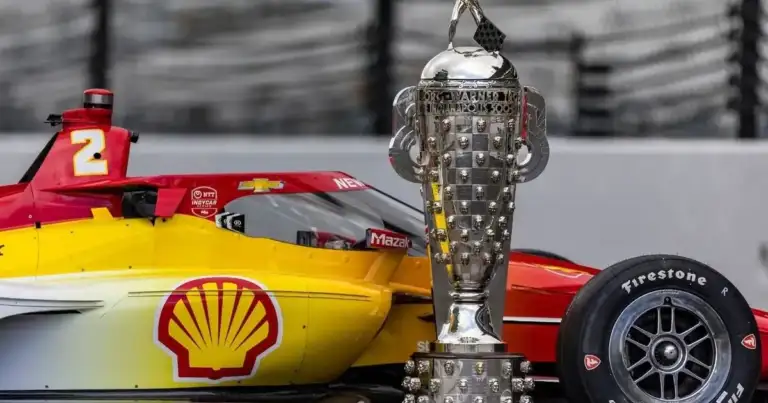

Forget the pretty paint jobs and the smiling drivers. This weekend, as engines scream across Monaco, Indianapolis, and Charlotte, the real power play isn’t on the track. It’s already been decided in Shell’s labs.
This isn’t just slapping stickers on race cars; it’s the hidden, brutal force behind every victory lap, every photo finish, and every shattered dream. Shell’s engineers deliver the winning edge in fuel and oil, cementing dominance before the green flag even drops.
This weekend is a triple crown of motorsports insanity. The Monaco Grand Prix, the Indianapolis 500, and the Coca-Cola 600 all run on the same damn day. Shell’s technical partnerships are front and center in all three. This isn’t just sponsorship money; it’s raw, unadulterated performance on the track, a ruthless pursuit of every fraction of a horsepower.
The Secret Weapon: Fueling Ferrari and Penske
At Monaco, every fraction of a second is a lifetime. Ferrari needs every atom of power. Shell’s mad scientists didn’t just work with Ferrari; they practically lived in their engine bays, forging a secret weapon.
They optimized Shell V-Power race fuel and Shell Helix Ultra lubricants with surgical precision. The focus: maximizing power at low speeds, where Monaco’s tight corners demand instant, explosive acceleration.
They also enhanced thermal management, preventing the hybrid power unit from melting down under relentless pressure. Charles Leclerc and Carlos Sainz confirm Shell isn’t just a partner; they’re the silent co-pilot in their pursuit of glory.
“Monaco is all about precision and maximizing every bit of performance. Our partnership with Shell is crucial for that, knowing we have the best fuel and lubricants pushing the engine to its limits.” – Charles Leclerc
Over in Indy, Team Penske is chasing another Indy 500 win, a prize that defines careers. Shell and Pennzoil power their machines, transforming them into land-based rockets. Practice and qualifying sessions were intense, a brutal ballet of speed and precision.
Shell’s technical support wasn’t just helpful; it was the damn backbone of their assault on the brickyard. Josef Newgarden, Scott McLaughlin, and Will Power all sing the praises of Pennzoil Ultra Platinum full synthetic motor oil.
This oil doesn’t just lubricate; it’s a liquid shield, defying physics to keep those engines screaming for 500 brutal miles. Shell’s trackside engineers aren’t just watching from the pit wall, sipping coffee.
They’re dissecting every millisecond of real-time data, whispering secrets into Penske’s ear that turn a good run into a legendary one. They fine-tune fuel mapping, optimize lubricant usage, and extract maximum efficiency and power from those roaring Chevrolet engines. What separates the legends from the also-rans? The brutal ability to push harder, longer, when everyone else is fading. That’s the Shell advantage.
NASCAR’s longest race, the Coca-Cola 600, isn’t just a race; it’s a soul-crushing, engine-busting test of ultimate durability. Shell-Pennzoil partners with Team Penske’s NASCAR squad, providing the unseen edge to Joey Logano, Ryan Blaney, and Austin Cindric.
Shell’s team doesn’t just optimize fuel consumption strategies; they’re playing chess at 200 mph. They squeeze every drop of power while wrapping those engines in an invisible, bulletproof vest for the extended distance. Pennzoil racing oil handles extreme heat and pressure that would turn lesser oils into sludge.
“The Coca-Cola 600 tests everything. Shell and Pennzoil are more than just sponsors; they’re technical partners who help us manage fuel, keep the engine cool, and ultimately give us a shot at the win.” – Joey Logano
Logano, a past winner, knows the score better than anyone. “Every drop of fuel and every ounce of oil counts in a 600-mile race,” he declared. “Shell and Pennzoil give us that edge.” That’s not just marketing speak; that’s the cold, hard truth of motorsports, straight from the mouth of a champion.
The Unseen War: Billions in the Balance
Shell’s annual investment in motorsports R&D isn’t just massive; it’s a declaration of war. It’s estimated in the tens of millions of dollars – a war chest deployed with surgical precision, not charity. This isn’t a hobby; it’s a proving ground, a brutal arena where innovation is forged under fire.
Their V-Power race fuels aren’t off-the-shelf; they’re custom-made, delivering up to 1-2% more power. In F1, where milliseconds define legends, 1-2% isn’t a gain; it’s a goddamn miracle.
Pennzoil’s lubricants reduce engine friction, translating directly into better horsepower and fuel economy. This is crucial for endurance races like the Indy 500 and Coca-Cola 600, where every bit of efficiency keeps you in the fight. Their rivals? They’re just watching Shell’s taillights disappear.
These wins don’t just look good on a trophy shelf. They scream Shell’s technical muscle to the world, reinforcing their brand and driving consumer product sales. For teams like Ferrari and Penske, Shell isn’t just a logo; it’s a competitive weapon, a tangible advantage that separates them from the pack. Fuel efficiency, raw power, engine reliability—it all adds up to victory. And in motorsports, victory is everything.
The Green Shift: Powering the Future
But here’s the kicker, the ultimate challenge: the future. Shell’s deep technical support is a clear advantage today, but motorsports is pushing hard for sustainability. How will Shell adapt its race-winning formulas to meet future environmental regulations without sacrificing the very performance that defines their dominance? This isn’t just a challenge; it’s a tightrope walk over an abyss.
Shell is already pouring money into this, developing advanced sustainable fuels. Biofuels and synthetic fuels are the target, aiming to meet future F1, IndyCar, and NASCAR mandates for reduced carbon emissions. But let’s be clear: victory still matters most. No team wants to lose speed for green credentials alone.
Formula 1 will use 100% sustainable fuels in 2026. Shell is Ferrari’s main partner in this transition, working on next-gen fuel formulations. These must maintain, or even boost, performance while being environmentally responsible.
It’s a brutal balancing act, but Shell thrives on brutal. IndyCar already uses sustainable ethanol blends, and Shell’s Pennzoil engineers constantly optimize lubricants to work efficiently with these evolving fuels. Engine durability and performance are non-negotiable.
NASCAR’s fuel rules are different, but Shell’s broader R&D helps the sport’s green goals, reducing waste and improving resource use across the board.
The core focus for Shell remains performance retention. Sustainable fuels cannot compromise power output. Reliability and efficiency are still king, the absolute demands partner teams have for victory. Shell isn’t just striving; they are actively fighting to achieve this balance. It’s a massive undertaking, but the stakes are too high to fail. Too much glory, too much money, too much dominance is on the line.
“This weekend is a culmination of months, even years, of research and development. Our teams work hand-in-hand with Ferrari and Penske to deliver bespoke formulations that are precisely tuned for the unique demands of Monaco, Indianapolis, and Charlotte. It’s about finding those critical marginal gains that make the difference between winning and losing.” – Dr. Maeve Campbell, Shell Motorsport Technology Manager
From the track, this cutting-edge technology flows down to us, the everyday consumer. The same principles of efficiency and engine protection apply. Shell V-Power fuels and Pennzoil lubricants hit gas stations worldwide, a direct result of pushing limits in the most brutal proving grounds on Earth.
This weekend isn’t just about races; it’s about Shell’s relentless, unyielding pursuit of excellence. They’re not just winning races; they’re shaping the very future of motorsports, one sustainable, high-performance drop at a time.
So next time you fill up, remember: you’re not just buying gas. You’re fueling the future, forged in the brutal proving grounds of motorsports, where Shell doesn’t just race – it dictates. Good luck to anyone trying to keep up.
Source: Google News


