
Forget the highlight reels and the breathless pronouncements. When Konnor Griffin, the Pittsburgh Pirates’ top prospect, put on his historic show last Tuesday, he didn’t just etch his name into the High-A record books; he slapped a colossal, potentially crippling price tag on his future. This isn’t a heartwarming tale for the scrapbook; it’s a cold, hard calculation that just landed squarely on the Pirates’ already tight budget.
On Tuesday, May 20, 2026, Griffin, playing for the High-A Greensboro Grasshoppers, did something unprecedented, if not entirely wise. He became the youngest player in High-A history to hit for the cycle and pitch a scoreless inning in the same game. The Grasshoppers managed to beat the Peoria Chiefs 8-4, a footnote to the real story brewing in the front office.
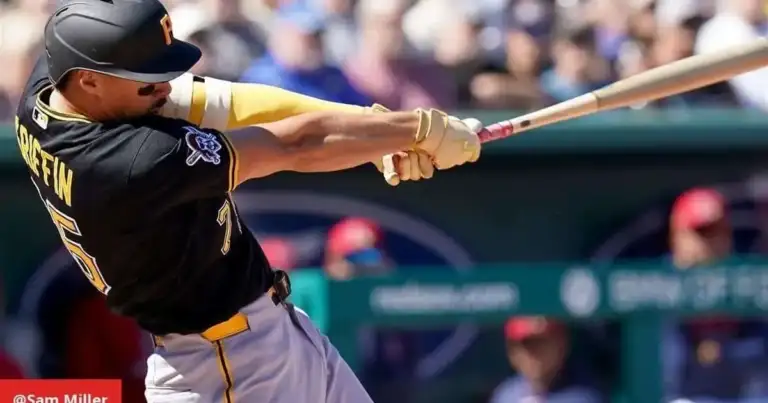
Griffin, primarily a shortstop, went 4-for-5 at the plate. He didn’t just hit; he annihilated the ball: a home run, a triple, a double, and a single, driving in 2 RBIs and scoring 3 runs.
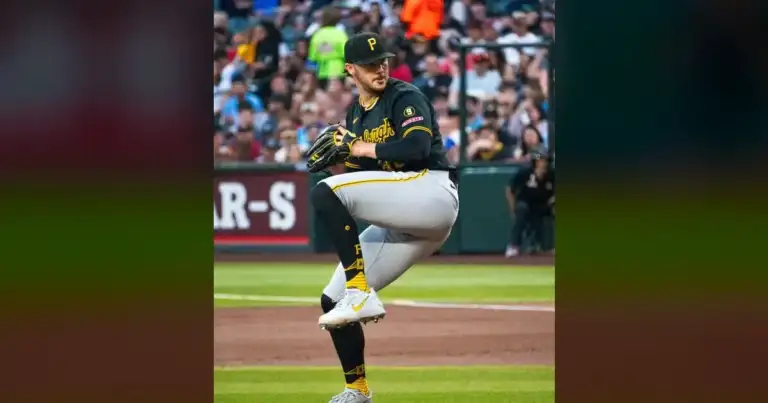
Then, as if to prove he’s a glutton for punishment, he sauntered to the mound in the 8th inning. He pitched a flawless frame, allowing no hits, no runs, no walks, and striking out two batters. A “hell of a show,” as some might say, but every circus act eventually sends you the invoice.
The Two-Way Temptation: A Costly Gamble
This “two-way player” craze is nothing more than a siren song for the analytics geeks, those spreadsheet warriors who think they’ve discovered a new species. They see a “unicorn,” a rare talent who can do it all. I see a massive headache, a medical bill, and a roster spot crisis waiting to happen.
Let’s be brutally honest: how many true two-way stars have actually succeeded long-term in the big leagues? One, maybe two, in a century?
Even those exceptions, like the current phenom in Anaheim, come with their own set of unprecedented management challenges and injury scares. This isn’t a blueprint for success; it’s a lottery ticket with terrible odds.
Developing a player to hit at an elite level, even just one position, is hard enough. Developing a pitcher, with all the biomechanical minutiae and injury risks, is equally brutal.
Trying to do both? That’s not innovation; it’s a recipe for burnout, physical breakdown, or, worse, a career-altering injury before the kid even sniffs arbitration.
The wear and tear on a young arm and body, especially one being pushed to perform two fundamentally different, high-stress tasks, is immense. The Pirates aren’t just managing a “delicate balance”; they’re walking a tightrope over a chasm, and their history with player development and injury prevention isn’t exactly stellar.
So, I ask, is this truly a sustainable model for a franchise to invest millions in, or just another flashy gimmick cooked up in a lab, destined to leave everyone disappointed and holding the bag?
The unwritten rules of baseball, the ones that valued specialization and preserving players’ bodies, used to dictate common sense. Now, every prospect with a halfway decent arm and a pulse at the plate gets thrown into this “two-way experiment,” driven by the desperate hunt for the next “unicorn.”
It’s not just a risk; it’s a dereliction of duty by player development staff who should know better.
Pirates’ Pinstripe Predicament: The Money Ball
Now, let’s talk brass tacks, the actual currency of this league. The Pittsburgh Pirates are not, and have never been, known for opening their wallets.
Their entire business model is built on identifying, developing, and then, invariably, trading away talent before it becomes too expensive to keep.
Konnor Griffin’s historic performance didn’t just accelerate that timeline; it put it into overdrive. Every cycle he hits, every scoreless inning he pitches, every highlight-reel play he makes, adds another zero to his future contract demands and another layer of anxiety to the Pirates’ notoriously frugal front office.
Sure, he’s years away from arbitration, let alone the open market of free agency. But the clock, as any shrewd general manager knows, starts ticking the precise moment a player flashes this kind of transcendent, multi-faceted talent.
His agent isn’t just sharpening his pencil; he’s already drafting the opening salvo of a nine-figure negotiation. The Pirates aren’t facing a “classic dilemma”; they’re facing their own, self-imposed financial straitjacket.
Do they, for once, commit a monstrous, franchise-altering sum to a prospect with immense, but undeniably risky, potential? Or do they stick to their predictable script, grooming him into the ultimate trade chip, cashing out before they ever have to truly pay up?
History, that inconvenient truth-teller, tells us exactly what the Pirates will do. They’ll ride the hype train as long as it’s cheap, let him develop, and then, if he maintains this unsustainable trajectory, they’ll move him for a “package of prospects” that will likely underperform.
It’s the Pittsburgh way, a business model masquerading as player development. This isn’t about loyalty, or building a championship team; it’s about the cold, hard bottom line.
Griffin’s once-in-a-generation performance just made him one of the most valuable, and therefore most expendable, assets in their entire organization, for better or, more likely, for worse.
A Glimmer of Hope or a Gimmick?
Of course, Griffin himself offered the usual platitudes, sounding like any wide-eyed kid momentarily oblivious to the financial storm he’d just conjured.
“It’s surreal,” he told reporters. “I just went out there trying to help the team win, and everything just clicked. To do it in front of our home crowd… it’s a night I’ll never forget.”
His manager, Callix Crabbe, predictably piled on the praise, as if his job depended on it.
“Konnor is a special, special talent,” Crabbe gushed. “We’ve seen flashes of this potential, but to put it all together like he did tonight, at his age, in High-A… it’s a testament to his work ethic and belief.”
Sure, the kid’s got talent. Nobody with a functioning pair of eyes is denying that.
But raw talent, no matter how spectacular, doesn’t always translate into sustained big-league success, especially when you’re attempting to defy a century of baseball wisdom and master two fundamentally different, physically demanding crafts.
The pressure on Griffin, now saddled with the “unicorn” label and the weight of a franchise’s hopes (and financial calculations), will be immense. The pressure on the Pirates to develop him properly, without pushing him past the breaking point, will be even greater – a task they’ve historically struggled with.
So, let’s be clear: this isn’t just a feel-good story about a kid making history. This is the opening salvo in a potential blockbuster contract negotiation, a high-stakes development gamble that flies in the face of baseball tradition, and a philosophical debate about whether modern analytics are truly improving the game or simply creating unsustainable expectations.
The Pirates have a raw, uncut gem on their hands, but knowing their track record, the real question isn’t if they’ll cut and polish it, but when they’ll decide it’s shiny enough to trade for a prospect package that keeps their payroll comfortably low.
It’s going to be a long, fascinating, and almost certainly frustrating road ahead for everyone involved, particularly for Konnor Griffin, who just became the most valuable commodity in a system designed to sell off its best assets.
Source: Google News