
Another weekend, another multi-million dollar demonstration of the Washington Nationals’ baffling incompetence behind the plate. The team’s catching situation isn’t just dire; it’s a financial anchor dragging down a franchise desperate to rebuild, a colossal, self-inflicted wound bleeding cash and wins.
Against the Phillies this past weekend, the Nationals suffered a humiliating 7-3 loss on Sunday, a defeat underscored by their catchers’ abysmal performance. They went a dismal 1-for-12 at the plate, striking out multiple times with not a single extra-base hit to show for their efforts. This isn’t a slump; it’s a season-long catastrophe, a monument to poor front office planning.
Manager Dave Martinez, bless his heart, is trying to put a brave face on this ongoing disaster. After Sunday’s drubbing, he trotted out the usual platitudes, attempting to spin a narrative of effort over results.
We need more production from every spot in the lineup, and that includes behind the plate. Our guys are working, but the results aren’t there consistently enough. We have to keep grinding and find ways to get better.
— Dave Martinez, Manager, May 10, 2026
But “grinding” won’t magically make a bad contract disappear or a struggling player suddenly perform. The results simply aren’t there, and they haven’t been all season.
The Cost of Catastrophe
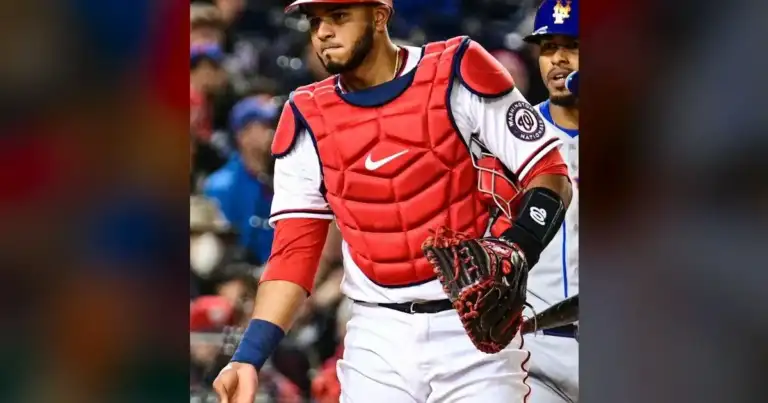
The problem, as anyone with eyes and a basic understanding of a balance sheet can see, starts and ends with Keibert Ruiz. The Nationals, in their infinite wisdom, signed him to an obscene eight-year, $50 million extension in 2023.
This year, Ruiz is hitting a pathetic .198, with an on-base percentage of a truly terrible .255. Two home runs in 32 games? That’s not a catcher; that’s a roster spot filler on a minor league squad. And he’s making $50 million.
His backup, Riley Adams, is somehow even worse, batting .165 with a .220 OBP. The combined OPS from Nationals catchers doesn’t just rank among the bottom three in all of MLB; it’s practically subterranean. This isn’t how you build a winner; it’s how you sabotage a rebuild before it even begins.
And let’s not pretend it’s just the bat. Ruiz’s defensive metrics have plummeted. His caught-stealing percentage is down to a miserable 18%, turning opposing teams’ baserunners into sprinters on an open track.
This isn’t just about offensive futility; it’s about a complete lack of impact behind the plate, a fundamental breakdown of the catcher’s primary duties. The unwritten rules of baseball dictate that a catcher’s primary job is to manage the game, call pitches, and stop baserunners. Ruiz is failing on multiple fronts.
Stuck with a Lemon?
The fan base, bless their patient souls, is rightly furious. Social media is ablaze with calls of a “catching catastrophe” and a “black hole” in the lineup.
They accuse the front office of being “asleep at the wheel.” Frankly, they’re being kind. This isn’t just bad; it’s an institutional failure.
The Albatross Contract
Given Ruiz’s struggles and that albatross of a contract, the obvious question arises: will the Nationals try to offload him? The answer is brutally simple: they can’t.
His $50 million deal, inked in 2023 and running through 2030, is an anchor. Trading him means eating a gargantuan chunk of that salary, a financial hit no sane team would willingly take for this level of production.
His market value is in the gutter; they’d get next to nothing in return, likely having to attach other valuable assets just to clear his salary. This contract isn’t just a monument to poor foresight; it’s a financial straitjacket, crippling any flexibility for years to come.
The Rebuild’s Roadblock
General Manager Mike Rizzo usually preaches patience, a virtue I admire in baseball. But this isn’t about patience; it’s about stubbornness, about a front office refusing to admit a multi-million-dollar blunder.
The minor league system, predictably, offers no immediate salvation. Any competent replacement would have to be acquired from outside, an admission of failure in player development and contract negotiation.
Acquiring a better catcher wouldn’t just provide stability for a young, impressionable pitching staff; it would be a tacit admission that Rizzo made a colossal mistake on Ruiz’s contract. That’s a bitter pill, one that impacts not just future financial flexibility but slows the entire, already glacial, rebuild process. It’s a classic case of pride costing a franchise dearly, prioritizing the ego of the front office over the actual success of the team on the field.
Ruiz himself, perhaps hoping to deflect from his woeful bat, talks about focusing on defense. “It’s frustrating when the hits aren’t falling,” he told local media. “I know I can hit.”
With all due respect, Mr. Ruiz, knowing you can hit and actually doing it are two entirely different things. The results simply aren’t there, and wishing won’t make it so. This isn’t a slump you can just “work through” when your contract demands performance, not platitudes.
It’s frustrating when the hits aren’t falling, but I’m focused on my defense and helping our pitchers. I know I can hit, and I’m working every day to get back to where I need to be.
— Keibert Ruiz, Catcher, May 9, 2026
So, the Nationals are stuck. They’re shackled to a long-term contract for a player who isn’t performing, cannot be easily traded, and whose position should be a cornerstone, not a black hole.
This isn’t just a bad situation; it’s a self-inflicted wound, a financial and strategic blunder that will haunt this franchise for years, delaying any hope of contention. And for what? A few extra years of control on a player who clearly wasn’t worth the gamble.
The unwritten rules of baseball dictate you pay for performance, not potential that never materializes. The Nationals, it seems, missed that memo entirely.
Photo: Joe Glorioso | All-Pro Reels / All-Pro Reels
Source: Google News