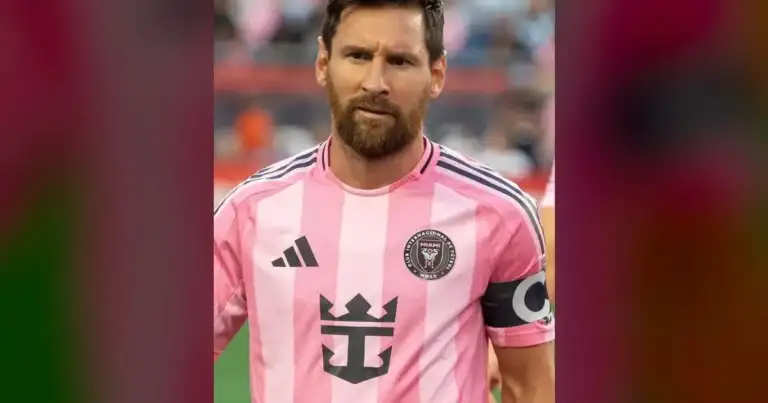

The gladiatorial contest is over, but the wounds remain. Lionel Messi has finally, unequivocally, spoken about the suffocating weight of his legendary Cristiano Ronaldo rivalry, admitting the constant, relentless comparisons were a burden – a beautiful burden, perhaps, but a burden nonetheless. This wasn’t just football; it was a decade-long, intense trial, and Messi now reveals the brutal psychological toll of that unrelenting scrutiny, a price few of us can truly comprehend.
Speaking with raw candor to Marca on May 7, 2026, the Inter Miami maestro pulled back the curtain on a duel that defined an era. He didn’t just ‘state’; he confessed, “It was a beautiful rivalry, one that enriched football, but sometimes it felt like people were always comparing us, rather than appreciating what each of us brought to the game individually.”
Both titans are now undeniably in the twilight of their careers, Messi gracing MLS pitches and Ronaldo commanding the Roshn Saudi League. Make no mistake: their physical separation does not mean the war for legacy has ended. It has merely moved to a different battlefield.
The GOAT Debate: An Eternal, Profitable Flame?
With Messi and Ronaldo now operating in entirely different footballing ecosystems, the naive question whispers: does this statement finally signal the end of the “GOAT” debate? Or does it merely reframe it for the digital age, a fresh narrative for future generations to dissect and monetize? The answer, unequivocally, is a thunderous NO to the former, and an emphatic, undeniable YES to the latter. To believe the debate is over is to fundamentally misunderstand the business of modern sports and the insatiable hunger of its audience.
Their divergent career paths are not just undeniable; they are a strategic repositioning. Messi now commands the burgeoning market of MLS with Inter Miami, a brand ambassador as much as a player. Ronaldo, meanwhile, plies his trade in Saudi Arabia’s Roshn Saudi League, a pioneer in a league desperate for global recognition.
The direct, high-stakes clashes that once captivated billions – the Champions League finals, the El Clásicos – are gone, erased from the fixture list. This removes the primary, real-time stage for the weekly head-to-head battles we once lived for, the moments where one goal, one assist, one moment of magic could tilt the entire narrative.
But does absence truly make the heart grow fonder, or merely stir the embers of argument hotter?
Both players are not simply “enjoying” the final stages of their careers; they are meticulously curating their legacies. Every touch, every goal, every public utterance is a calculated move in the chess game of history. The active, direct competition for individual accolades against each other has indeed ended. But they are not just writing their final chapters; they are carving their final monuments, separate yet forever linked by the unbreakable chain of comparison.
Fans Never Forget, Media Never Relinquishes Control
Despite their geographical separation, the “GOAT” debate remains a deeply ingrained, almost sacred, part of football fan culture. Supporters continue to champion their preferred player with a ferocity that borders on tribalism. This isn’t just fandom; it’s identity, a badge of honor worn by millions, a constant source of engagement for platforms and pundits.
Just cast your gaze upon the online battlefield, a digital coliseum where the rivalry rages unabated. Messi stans flood timelines, mercilessly mocking Ronaldo’s recent one-on-one flop against Al-Qadsiah’s keeper. That viral YouTube clip didn’t just “rack up” views; it exploded, garnering over 1 million views in mere hours.
They caption it with biting sarcasm: “Age catching up, CR7? Messi’s still cooking in MLS.” This isn’t just banter; it’s a strategic deployment of content designed to diminish one legend while elevating another, generating clicks and ad revenue for countless platforms.
But the Ronaldo diehards, ever vigilant, swiftly counter-attack. They point to his audacious Piers Morgan teaser, a masterclass in brand management. “Messi better than me? I don’t agree… I don’t want to be humble,” he declared, a gauntlet thrown down even from the Saudi desert. For his legions of fans, it wasn’t just a statement; it was the ultimate mic drop, a defiant assertion designed to settle the debate in his favor, to re-energize his base, and to remind the world of his unshakeable self-belief.
The media, a ravenous beast, has always played its part, not merely reporting but actively fueling this narrative relentlessly for over a decade. It drove viewership, generated clicks, and provided endless fodder for debate shows.
Messi’s recent comments are not just a personal reflection; they are fresh content, a new vein of gold for an industry built on the back of this very rivalry. It allows for retrospective pieces on the rivalry’s monumental impact and its enduring legacy, ensuring the conversation, and the associated revenue, never truly dies.
The Burden of Unrivaled Greatness: A Price Tag
Messi’s explicit desire for individual appreciation is not merely a wish; it’s a profound articulation of the psychological cost incurred by living under the shadow of constant comparison. His comments directly address the “comparison” aspect, indicating a yearning for the narrative to evolve, to move beyond a simplistic, direct head-to-head. Is it too much to ask for an athlete of his caliber to be judged on his own merits, rather than perpetually measured against a single rival?
“It was a beautiful rivalry, one that enriched football, but sometimes it felt like people were always comparing us, rather than appreciating what each of us brought to the game individually. We both wanted to win, and that pushed us, but the constant comparison… it’s a lot.”
This statement offers a poignant, almost heartbreaking, look at the human element behind a rivalry that has been elevated to mythical status. It’s clear he cherishes the challenge, the competitive fire that Ronaldo ignited within him. But it’s equally clear he yearns for a legacy defined solely by his own unique, unparalleled brilliance, unburdened by the tyranny of perpetual “who’s better?” debates. This isn’t about ego; it’s about the fundamental desire for individual recognition after a career of sacrificing self for the collective, and for the narrative.
The numbers, those cold, hard arbiters of greatness, do not lie, yet they settle nothing. Messi boasts a staggering 8 Ballon d’Ors to Ronaldo’s 5. Ronaldo, the Champions League king, has 5 UEFA Champions League Titles against Messi’s 4.
Both have shattered the 800 career goals mark, a feat once thought impossible. These are not just statistics; they are colossal monuments to their unparalleled dominance, each highlighting a different, yet equally valid, path to immortality. But do these figures end the debate, or merely provide more ammunition for the next generation of online warriors?
A Legacy Reframed, Not Resolved: The Business of Immortality
The historical context for future debates is not merely rich; it’s an inexhaustible goldmine. Their careers will forever be intertwined in the very fabric of football history, providing endless material for future generations to endlessly debate their relative merits. The active rivalry might be over on the pitch, but the discussion, the arguments, the passionate defenses – that is far from it. It’s a perpetual content generator, a never-ending wellspring of engagement for sports media, social platforms, and fan communities alike.
This rivalry isn’t dead; it has simply transcended the pitch, evolving into a myth, a cultural phenomenon. The “GOAT” debate will rage on, not in the direct clashes of titans, but in the digital arenas of fan lore, forever twisting and reshaping the narrative. The players, in their twilight years, may have moved on to new leagues and new challenges, seeking a measure of peace. But the argument? That, my friends, is eternal, and eternally profitable for everyone but the legends themselves.
Source: Google News