
Jimmy Fallon’s bizarre antics at the Miami Grand Prix weren’t just a cringe-worthy footnote; they were a blaring siren, an undeniable sign of Formula 1’s grotesque American invasion. This wasn’t merely an awkward interview; it was a painful, public dissection of F1’s soul, leaving an indelible stain on the paddock that still haunts true fans.
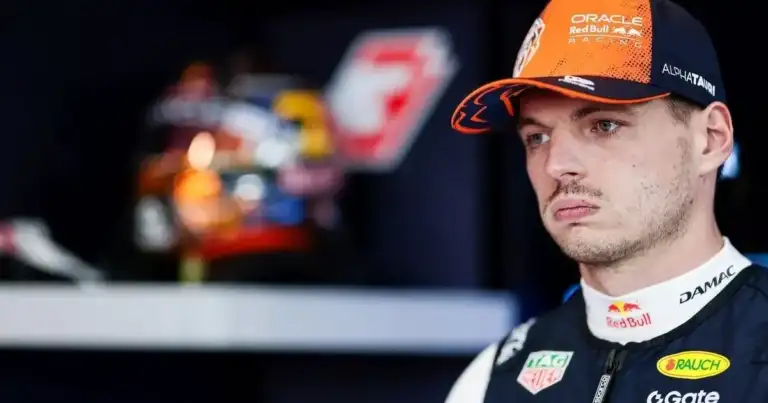
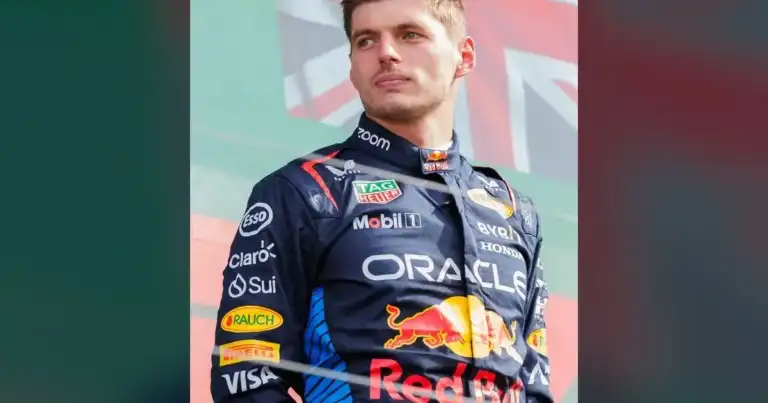
The incident, a cultural car crash in slow motion, unfolded during the 2024 Miami Grand Prix. Late-night host Jimmy Fallon, a man whose comedic relevance has long since peaked, attempted to interview three-time F1 World Champion Max Verstappen.
What transpired was a masterclass in tone-deaf celebrity intrusion: Fallon attempted a high-five mid-conversation, a gesture Verstappen visibly recoiled from, his expression a perfect blend of confusion and polite disdain. It was pure, unadulterated second-hand embarrassment, broadcast globally.
Fallon’s blunders continued, a relentless assault on the sport’s dignity, with rising star Isack Hadjar. Despite the undeniable presence of cue cards, Fallon mangled Hadjar’s name repeatedly, a disrespectful gaffe that spoke volumes about his utter lack of preparation. Hadjar, a young man of immense talent and composure, finally shut it down, delivering an icy, unscripted line that instantly became legendary, a defiant stand against the encroaching tide of vapid entertainment.
“Don’t do that again.”
The clips of these bizarre interactions have, predictably, resurfaced this weekend, just as the 2026 Miami Grand Prix gets underway. Social media platforms are not merely buzzing; they are in a full-blown meltdown, a digital inferno of renewed outrage. Fans are tearing Fallon apart online, and frankly, he deserves every bit of it.
The American Cringe Invasion: A Paddock Poison
The public reaction is nothing short of a savage online roast, a collective howl of disgust. Reddit’s r/formula1 threads, usually a bastion of technical analysis and passionate debate, are now awash with users branding Fallon a “drunken clown” and a “Late Night reject crashing a paddock.”
The memes are endless, Fallon’s butchering of names now a symbol of everything purists despise about F1’s new direction. One viral sentiment, with over 5,000 upvotes, declared Fallon “proving US celebs ruin F1 purity.” This isn’t just about Fallon; he is a symptom, a visible pustule on a much larger, more insidious problem.
F1 purists on X/Twitter are howling about “Liberty Media’s celeb cancer,” and they are not wrong. This is a calculated, cynical move to “Americanize” the grid, to dilute the sport’s rich, complex heritage into a digestible, lowest-common-denominator spectacle.
This is for the Netflix bros, the casual viewers who wouldn’t know a DRS zone from a pit stop, not for the dedicated fans who have bled for this sport through decades of early mornings and late nights.
The sport’s icons, these elite athletes who risk their lives for milliseconds, deserve real journalism, incisive questions, and genuine respect. They do not deserve Fallon’s giggling, his sloppy posing, or his shade-tent grilling.
His complete lack of prep was not just insulting to the drivers; it was a profound insult to the very essence of the sport itself. It was a slap in the face to every mechanic, engineer, and strategist who pours their life into this pursuit of perfection.
F1’s Sellout Soul: The Price of Celebrity
The whispers of conspiracy theorists, suggesting the entire “irk” was kayfabe – staged for viral clips – might seem outlandish, but they tap into a very real anxiety.
They argue it was a desperate ploy to boost Fallon’s relevance post-NBC irrelevance, a cynical manipulation by F1 to milk the drama for engagement. “Hadjar’s shutdown? Scripted gold for 2026 hype,” snarked one viral post with 20,000 likes.
While the claims of staging feel like a stretch, the sentiment behind them is undeniably potent. Fans see Fallon not as an anomaly, but as a harbinger.
He represents F1’s desperate, undignified chase for new eyeballs, a frantic scramble for relevance in a crowded entertainment landscape. The sport is selling its soul, piece by agonizing piece.
Miami’s glitzy, artificial hellhole already feels less like a race track and more like a pop-up circus for the ultra-rich. Adding these kinds of celebrity fumbles, these manufactured moments of “authenticity,” merely reinforces that feeling.
It cheapens the entire spectacle, eroding the hard-won gravitas of Formula 1. This isn’t just about a bad interview; it’s about the very soul of Formula 1.
The sport is losing its edge, its raw, competitive authenticity, sacrificing its core appeal for the fleeting, hollow flash of Hollywood. What was once an exclusive, high-octane battle of engineering and human will is being transformed into a glorified reality show, a backdrop for B-list celebrities to parade their waning stardom.
The Real Cost of the Paddock’s Poison
Consider the contrast: on one side, you have Max Verstappen and Isack Hadjar—champions, elite athletes, paragons of focus and discipline. On the other, a comedian whose primary skill seems to be laughing at his own jokes.
These drivers dedicate their lives to mastering machines capable of 200 mph, pushing the boundaries of human endurance and technological innovation. They are not props for a comedian’s tired bits.
They are not there to provide fodder for viral content or to validate a fading celebrity’s ego. They are there to race, to compete, to win. Their presence demands respect, not ridicule.
The integrity of the sport is not some abstract concept; it is embodied in the quiet dignity of a driver refusing to play along with a host’s ill-conceived stunt. It is reflected in the collective groan of millions of fans who recognize a cheapening of their beloved sport.
When F1 allows such blatant disrespect, it sends a clear message: the spectacle, the celebrity, the “buzz” now outweigh the sport itself. This is a dangerous precedent, a slippery slope that threatens to turn the pinnacle of motorsport into just another forgettable segment on a late-night talk show.
Where Do We Go From Here? A Reckoning for F1
F1 needs to decide, unequivocally, what it wants to be. Is it a serious, high-stakes competition where human and mechanical limits are pushed to their breaking point? Or is it a celebrity playground, a backdrop for manufactured drama and superficial glamour?
The current path, paved with the likes of Jimmy Fallon, suggests the latter. And the fans, the lifeblood of this sport, are not merely unhappy; they are furious, disillusioned, and on the verge of abandoning a sport that seems to have abandoned them.
The painful truth is clear: Fallon’s antics were not just a low point; they were a glaring expose of a deeper rot within the sport’s identity. F1 must slam the brakes on this celebrity invasion, and it must do so now, before it’s too late.
The integrity of the sport, its very soul, is on the line. To allow this trajectory to continue is to condemn Formula 1 to become just another reality show, a hollow shell of its former glory.
Is that truly the legacy Liberty Media wishes to leave? Or will they finally listen to the roar of the true fans and reclaim the purity of the paddock?
Source: Google News