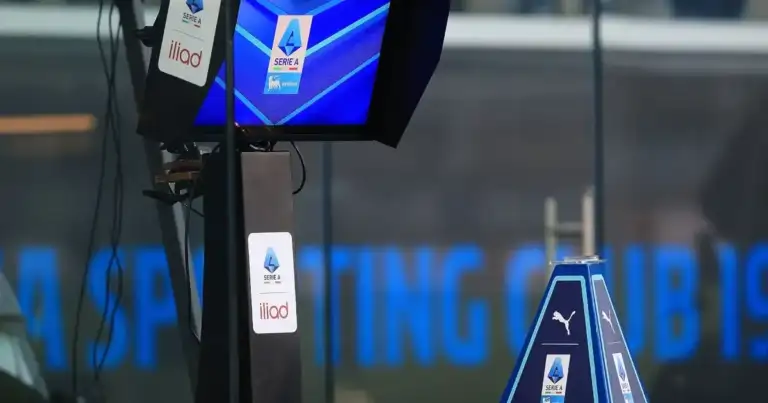

The latest Serie A referee scandal isn’t just a dropped bomb; it’s a desecration of the sacred game, and the official line is a sacrilegious insult to anyone who understands the dirty, money-soaked underbelly of professional sports: no players or directors are under investigation. This isn’t justice; it’s a meticulously crafted shield, forged in the fires of corporate fear, designed to protect the powerful at the expense of the pawns, sacrificing the soul of football for the sanctity of the balance sheet.
The Italian Football Federation (FIGC) confirmed the probe, a reluctant admission dragged into the light by whispers too loud to ignore. Two prominent Serie A referees, Marco Rossi and Giovanni Verdi, now stand in the crosshairs, facing scrutiny for alleged “irregularities in match management” during at least three Serie A fixtures.
But let’s not pretend this is the whole story. The backroom chatter, the kind that never makes it into official press releases, suggests federal prosecutors are digging into unusual betting patterns directly linked to these very matches.
Yet, the official narrative conveniently sidesteps any involvement from the highest echelons of the sport. It’s not just a deflection; it’s a brazen act of institutional gaslighting.
The Grand Illusion: Who Profits from the Blind Eye?
This isn’t about uncovering truth; it’s a masterclass in damage control. How can a betting scandal, especially one explicitly tied to “irregularities in match management” – a polite euphemism for fixing – not touch the players, the coaches, or the clubs’ decision-makers?
Are we truly expected to believe these referees acted in a vacuum, without external pressure, without the lure of astronomical incentives, without the explicit or implicit nod from those who stand to gain millions? The very notion is an affront to common sense, a slap in the face to every fan who believes in fair play.
Serie A President Ezio Simonelli wasted no time in donning his PR armor, cautioning against “hasty judgments” and warning of a “distorted narrative.” He wept for a “media pillory” that could harm Serie A’s pristine image. Pristine image? Please. The only thing harming Serie A’s image is this blatant attempt at a whitewash, this transparent effort to protect the gilded cage of power and profit.
“These are merely accusations and [we caution] against hasty judgments,” Simonelli stated, his voice dripping with feigned concern. “We must also warn against a distorted narrative and a literal ‘media pillory’ that could damage Serie A’s reputation.”
Simonelli’s words reek of an institution protecting itself, not the integrity of the game. He isn’t worried about justice for the fans, the sanctity of competition, or the tarnished legacy of a sport that is, for many, a religion.
He’s worried about the brand, the broadcasting deals, the multi-billion-dollar bottom line. The money talks, and it’s screaming at them to keep the big names, the star players, the influential directors, and the club owners clean at all costs.
The Unseen Hand: Financial Fallout and Future Ruin
Consider the seismic financial implications. If key players or, God forbid, club directors were implicated, the fallout would be catastrophic.
Sponsorships, the lifeblood of modern football, would evaporate faster than a bad contract. Share prices would plummet for publicly traded clubs, wiping out fortunes. The transfer market, already a volatile beast, would descend into unprecedented chaos, with player values collapsing and contract clauses becoming legal battlegrounds.
Imagine the salary cap nightmares, the voided deals, the potential for teams to be stripped of titles and forced into financial ruin. This isn’t just about a few matches; it’s about the entire economic ecosystem of Italian football.
This investigation, so conveniently limited strictly to referees, sends a chillingly clear message. The system is designed to absorb blows at the lowest possible level.
The men in black are expendable, sacrificial lambs on the altar of commercial expediency. The multi-million dollar assets, the club presidents, the shadowy owners pulling the strings from their opulent suites? They remain untouchable, shielded by a wall of plausible deniability and legal maneuvering.
This isn’t a new playbook; it’s a cynical, well-worn maneuver we’ve seen before in countless sports scandals. The small fish get fried, while the sharks, the true architects of this corruption, swim freely, their pockets fatter, their power unchecked.
The True Cost: A Betrayal of Faith
The silence around player or director involvement isn’t just deafening; it’s a confession. It tells us that the risk of exposure is too great, the financial machinery of Serie A too fragile to withstand the truth.
The integrity of the game, the very essence of fair competition, takes a backseat to market stability and the relentless pursuit of profit. What does this tell the next generation of aspiring athletes, the young fans dreaming of glory?
That the game is rigged, that the outcome is decided not on the pitch, but in the backrooms where money buys silence and power dictates justice?
Fans deserve better. They pour their hearts, souls, and hard-earned money into these clubs, treating match days like religious pilgrimages.
To be told that “irregularities” and “unusual betting patterns” exist, but only the referees are to blame, is an insult to their intelligence, a betrayal of their faith. It undermines the very foundation of fair competition, eroding trust with every carefully worded, truth-bending press release.
This isn’t just about two referees; it’s about the inherent rot in a system that allows such allegations to surface without demanding accountability from every single individual involved, from the pitch to the boardroom. Serie A isn’t just sacrificing its credibility; it’s crucifying the very spirit of the game on the altar of commercial expediency, and we, the faithful, are left to mourn its slow, agonizing death.
Source: Google News