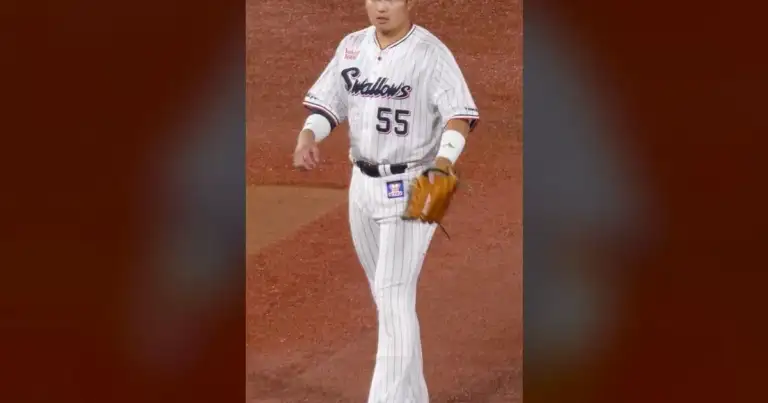

The incessant chatter about Munetaka Murakami already “tearing up MLB” for the Chicago White Sox is enough to make a man spit out his coffee. Has the internet finally melted what little common sense remains?
Let’s get one thing straight: he’s not a White Sock. Not yet, anyway.
He’s still crushing baseballs in Japan, keeping the faithful of the Tokyo Yakult Swallows on their feet, where he belongs, for now. Any talk of an “absurd MLB debut” for the Pale Hose is pure, unadulterated fantasy. It’s cooked up by wishful thinkers on social media who wouldn’t know a salary cap from a sake cup.
The Hard Reality on the Diamond
Murakami just smacked his 5th home run of the 2026 NPB season on April 20th, 2026 against the Hiroshima Carp. He’s still building his legacy and cementing his market value.
He is dominating in Japan, not trying to save a struggling American franchise from its own myriad of self-inflicted wounds. This isn’t some minor league call-up for a cup of coffee.
This is a global talent, a generational slugger, still playing for his home club and honing his craft. His current dominance isn’t just for show.
It’s the foundation for a future contract that will redefine his financial landscape. To ignore that and focus on a phantom MLB career is to miss the entire point of how this business operates.
The Money, The Machine, & The Waiting Game
Forget the fabricated White Sox highlight reels. The real story, the only story that matters to the men in the corner offices, is the colossal payday waiting for Murakami when he finally comes stateside.
We’re talking a potential contract in the eye-watering $200-$300 million range. That isn’t pocket change; it’s a franchise-altering investment.
This burden on the luxury tax rolls only a handful of clubs are truly willing to bear. The Swallows aren’t just letting him play for pride; they’ll snag a hefty posting fee that will line their coffers.
This isn’t just a feel-good story for a fan base starved for a winner; this is big business. It’s a high-stakes negotiation where every swing of the bat adds another zero to the final offer.
MLB scouts are watching his every move, tallying his value. His 2022 Triple Crown season—a ridiculous .318 average, 56 home runs, and 134 RBIs—is the benchmark.
That’s the kind of production teams pay top dollar for. It’s the kind of production that makes general managers sweat over their budgets.
Fan Hype vs. Hard Truth: A Desperate Delusion
I’ve seen the online chatter, the digital echo chamber. White Sox fans are “buzzing with cautious hype,” dreaming of a “rebuild savior.”
They’re talking about “three bombs in three games” like it’s already happened, like some algorithm spit out a perfect scenario. This is what happens when a fan base is desperate, isn’t it?
They latch onto a rumor, a possibility, and through sheer force of will, turn it into reality. This ignores the game’s economics.
The team, as any honest observer will tell you, is still “0-3 sweep by Brewers” bad. One player, no matter how good, isn’t fixing that overnight.
He’s not a magic wand to erase years of mismanagement. The “under-the-radar heist” narrative? That’s just noise, the kind of drivel you hear from armchair GMs.
There’s nothing “under the radar” about a player of Murakami’s caliber. Every front office worth its salt knows his name, his numbers, and his potential impact.
They’re just waiting for the right time—and the right price—to make their move. This won’t be some mythical, stealthy acquisition.
The Cold, Hard Business of Baseball
When Murakami does get posted, it will be a seismic event. Expect a feeding frenzy among the league’s financial heavyweights.
Teams like the White Sox, who consistently struggle for impact bats and have a history of questionable spending, would be foolish not to be in the mix. But let’s be clear.
This isn’t about hustle, grit, or any other romanticized notion of the game anymore. It’s about the financial muscle to outbid competitors.
It’s about how much luxury tax a team owner is willing to swallow. How much profit margin are they willing to sacrifice for a shot at a championship?
The unwritten rules of loyalty, of developing talent from within, seem to vanish when a $200 million bat becomes available. The Swallows know they’re nurturing a future MLB superstar.
They benefit from his star power and on-field production now, but they also know the clock is ticking. Losing a player of his caliber will sting, even with a massive posting fee.
It’s an inevitable cost of doing business in today’s globalized game.
Stop Dreaming, Start Watching the Real Game
Fans should take my advice: enjoy Murakami’s “historic show” where it’s actually happening. Appreciate it in Nippon Professional Baseball.
Appreciate the pure baseball talent on display, the raw power and skill, without the distraction of speculative trade rumors. The constant “when will he come to MLB?” narrative overshadows his current achievements.
It diminishes the game he’s playing now. Let the man play his game.
When the time is right, when the money is right, and when the posting process is complete, he’ll make his move. Until then, the White Sox faithful need to temper their expectations.
They need a heavy dose of reality. Dreaming of a slugger who isn’t even on the roster won’t fix their problems.
Nor will it conjure a World Series trophy. The business of baseball moves slow, deliberately, and with ruthless calculation, especially when hundreds of millions are on the line. Anything else is just noise.
Source: Google News