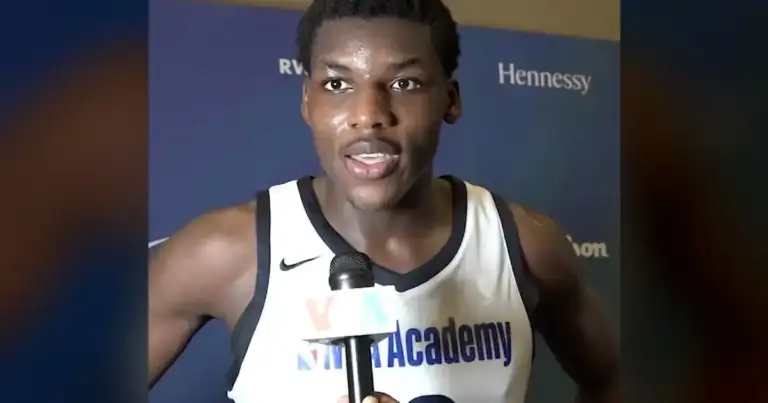

Florida big man Rueben Chinyelu isn’t just ‘testing the waters’ for the 2026 NBA Draft; he’s orchestrating a masterclass in leverage. This isn’t a tentative dip into professional possibility; it’s a strategic declaration designed to amplify his market value, whether that’s in the NBA or, more likely, back on the Gainesville hardwood.
This is the modern college hoops playbook distilled to its essence. Elite players like Chinyelu wield the draft process as a potent tool to inflate their Name, Image, and Likeness (NIL) deals or cement a more dominant role on their college roster. Chinyelu’s official declaration on April 20, 2026, confirmed by the University of Florida, provides him the invaluable opportunity to work out for NBA teams, gather direct feedback from scouts, and, crucially, understand his true professional ceiling – all without sacrificing his collegiate eligibility.
The Draft Gambit: A Calculated Power Play
Chinyelu’s decision to declare, even if only to withdraw later, surprises precisely no one. He’s fresh off a breakout 2025-26 season where he didn’t just play in the paint for the Gators; he owned it. He has until the NCAA’s withdrawal deadline, typically late May or early June, to pull his name out of consideration, leaving ample time to gauge his stock.
This “test the waters” maneuver isn’t merely a formality; it’s a high-stakes information-gathering mission. It offers professional feedback, giving Chinyelu a direct pipeline to what NBA scouts demand he improve. The public reaction is a collective, cynical shrug, with fans branding it “NIL fishing season: Chinyelu edition.” They’re not wrong.
One Reddit user perfectly encapsulated the prevailing sentiment: “Smart move, get that feedback without burning the bridge—dude’s a beast on boards but raw as hell offensively.” This isn’t just an echo; it’s the roar of a crowd that sees this as performance art for financial and positional leverage.
Chinyelu himself, ever the diplomat, sounded hopeful on social media:
Gator Nation, thank you for your unwavering support. After much consideration and prayer, I’ve decided to declare for the 2026 NBA Draft while maintaining my college eligibility. This is a dream come true, and I’m excited to learn and grow through this process. I will keep all options open and make the best decision for my future. Go Gators!
— Rueben Chinyelu (via Instagram, April 20, 2026)
Head Coach Todd Golden, a seasoned player in this modern era of college basketball, predictably offered full support, playing his part in the strategic dance:
We fully support Rueben in exploring his professional opportunities. He had a fantastic season for us, showing his hard work and dedication. We will assist him in every way possible to gain valuable feedback from NBA teams, and we look forward to seeing how this process unfolds for him.
— Florida Head Coach Todd Golden (via University of Florida press release, April 20, 2026)
Everyone says the right things, but the underlying motive couldn’t be clearer: maximize value, by any means necessary.
Chinyelu’s Metrics: NBA Potential vs. Collegiate Reality
Chinyelu’s stats from the 2025-26 season aren’t just impressive; they scream NBA-level athleticism and defensive prowess. He played and started 34 games, averaging a robust 28.5 minutes per contest. His impact was undeniable and statistically significant:
- Points Per Game: 13.8 – Solid, but not primary scorer territory.
- Rebounds Per Game: 9.7 (led SEC) – Elite, a true glass cleaner.
- Blocks Per Game: 2.1 (ranked top 5 in SEC) – Demonstrates rim protection and timing.
- Field Goal Percentage: 62.5% – Highly efficient around the basket, indicative of a high-percentage finisher.
He recorded 10 double-doubles, including a career-high 22 points and 15 rebounds against a formidable Kentucky squad in February 2026. These numbers paint a picture of a physically dominant big man. His size, explosive athleticism, and defensive instincts are precisely what NBA scouts covet in a modern center.
However, the analytical lens reveals areas of significant concern. His free-throw percentage was a dismal 58.0%, a glaring red flag for any professional prospect. Furthermore, his offensive versatility remains largely undeveloped, with a limited post-game and no discernible perimeter shot.
Early mock drafts, while acknowledging his raw tools, consistently place him as a potential late first-round or, more realistically, an early second-round pick. This is not a guaranteed lottery selection; it’s a gamble, and Chinyelu knows it.
The Gators’ Frontcourt Conundrum: A High-Stakes Game
For Coach Golden and the Gators, Chinyelu’s declaration creates immediate and acute uncertainty. If he were to stay in the draft, Florida would lose its leading rebounder and shot-blocker – a gaping hole in the frontcourt that would necessitate an aggressive, potentially desperate, dive into the transfer portal for a replacement center. This isn’t just about finding another body; it’s about replacing an elite, proven SEC talent.
The situation complicates recruiting efforts immensely. Florida must prepare for his potential departure without over-recruiting, a delicate balancing act. If he returns, a crowded roster could create new problems, but that’s a problem most coaches would gladly embrace.
The upside, however, is immense. If Chinyelu does come back, he wouldn’t just be a player; he’d be a preseason All-SEC candidate, the undisputed cornerstone for a Gators team eyeing a deep NCAA Tournament run. A dominant junior season could rocket his draft stock even higher for 2027, potentially pushing him into that coveted lottery territory.
The cynical take here is the most accurate: Chinyelu is playing a supremely smart game. He gets free, high-level workouts and invaluable professional feedback. He doesn’t burn his college eligibility.
He learns his precise market value from the NBA’s decision-makers. Armed with that data, he uses it to either secure a draft spot he’s comfortable with or, more likely, to command an even bigger NIL bag if he returns to Florida as a more polished, highly sought-after commodity.
The Unvarnished Reality of Modern College Hoops
Let’s be unequivocally clear: this isn’t about loyalty; it’s about business. Chinyelu is maximizing his short-term and long-term earnings potential, a right afforded to him by the evolving landscape of college athletics. Why wouldn’t he take full advantage?
He is a physically imposing big man with the tools to develop into a strong defensive anchor in the NBA. He understands his offensive game needs significant polish. The combine and individual team workouts will provide an unvarnished assessment of exactly where he stands against the best prospects, data he can then leverage.
This process highlights the increasingly professionalized, transactional landscape of college athletics. Players are no longer just ‘amateurs’ in the traditional sense; they are strategic assets, making calculated, data-driven moves for their careers.
Rueben Chinyelu’s declaration is more than just a draft entry; it’s a clear, resounding signal that he’s not just playing basketball—he’s playing the system. And he’s playing it to win. The question isn’t if he’ll get paid, but how much, and by whom?
Source: Google News