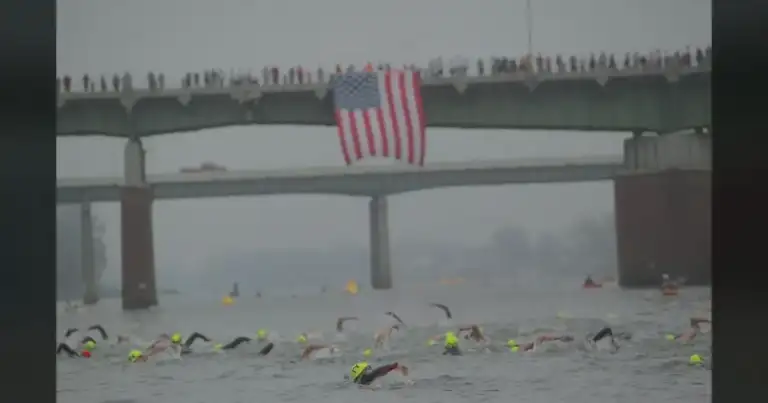

Another athlete is dead. In The Woodlands, what should have been a triumph of human spirit at the IRONMAN Texas triathlon turned into a somber investigation when a participant died during the swim portion. This isn’t just a tragic headline; it’s a brutal, cold splash of reality, shattering any illusion that “enhanced safety protocols” make these extreme events foolproof.
The Inherent Dangers of Open Water
This tragedy in The Woodlands rips through the carefully constructed narratives of safety surrounding these massive endurance events.
Just recently, organizers of the Gulf Coast Triathlon, near Galveston, touted overhauled water safety and medical response protocols. This came after several participants experienced severe medical distress *last year*, though thankfully, no fatalities.
They added 20 lifeguards, five rescue kayaks, and a “red flag” system. Dr. Elena Rodriguez, medical director for the Gulf Coast Triathlon, was quoted by the Houston Chronicle saying:
“The ocean is dynamic, and our response must be equally agile.”
Sounds good on paper, doesn’t it? But the Gulf of Mexico, or a lake in The Woodlands, doesn’t care about your press releases. It doesn’t care about your carefully crafted talking points.
The simple truth is, open-water swimming is a beast. Cold water shock, hypothermia, sudden cramps, and the sheer terror of being in a congested mass of flailing bodies are not minor inconveniences. Visibility is often terrible, and rescue is complicated by hundreds, sometimes thousands, of competitors.
For all the talk of advanced first-aid kits and AEDs on rescue craft, seconds matter when someone goes down in the water. Every tick of the clock is a fight for life, and in these conditions, those seconds can disappear faster than you can yell for help.
Profit Versus Protocol
Across Texas, the Parks and Wildlife Department reportedly pushes for more rigorous safety planning. They’re sharing “best practices,” as if best practices can stop a heart attack or a panic attack mid-stroke.
The legal and ethical implications of participant injuries, let alone fatalities, are a constant headache for organizers. They’re under immense pressure to minimize liabilities, protecting their bottom line from lawsuits and reputational damage.
The unspoken truth is that the spectacle, the sheer scale of these events, often takes precedence over individual safety.
Carlos Hernandez’s Red Marker Verdict:
Let’s cut through the official statements and the ‘thoughts and prayers.’ An athlete is dead. For all the ‘enhanced protocols’ and empty promises of absolute safety rhetoric, the cold, hard fact remains: these events are designed to push humans to their absolute breaking point.
The allure of the IRONMAN, the bragging rights, the finisher’s medal – these are powerful motivators. But they also create a culture where athletes often ignore their own body’s warning signs, driven by ego and massive investment.
Organizers, meanwhile, are balancing the logistical nightmare of thousands of participants against the profit margins of a global brand.
The ‘proactive measures’ are often reactive to past incidents or the threat of them. How many more must fall before we truly re-evaluate this balance?
Until the financial and ego incentives for both participants and organizers truly align with absolute, uncompromising safety, we will keep seeing these headlines.
The ocean is dynamic, yes, but so is the human desire for glory, and sometimes, that comes at the highest price.
Photo: Photo by Georgia National Guard on Openverse (flickr) (https://www.flickr.com/photos/40994485@N04/8054269790)
Source: Google News