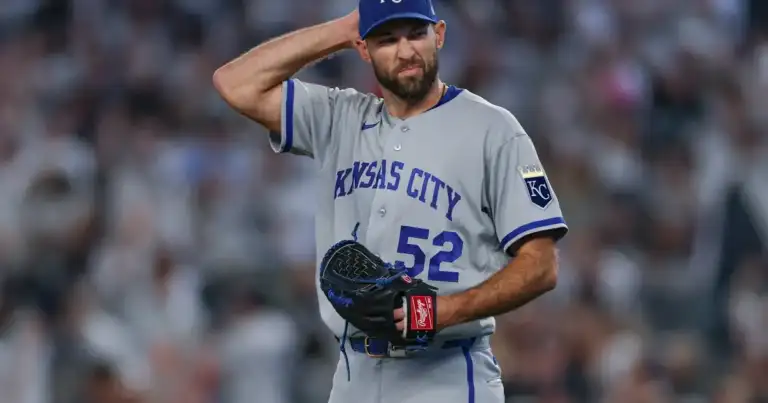

Let’s dispense with the polite fiction: the Kansas City Royals aren’t just losing baseball games; they’re systematically dismantling the faith of their fanbase and, more importantly, devaluing their entire operation. With a pathetic 7-13 record, dead last in the American League Central, this isn’t merely a bad start – it’s a financial hemorrhage, a civic embarrassment, and a stark reminder that ‘rebuilding’ has become a euphemism for ‘perpetual mediocrity’ in this league.
Quatraro’s Hot Seat: A Managerial Merry-Go-Round? Or a Calculated Standoff?
The real question isn’t about the individual players or their latest slump; it’s about the man in the dugout, skipper Matt Quatraro. Is his job safe? In any other organization serious about winning, Quatraro would have been shown the door months ago, his desk cleared before the ink dried on the first losing streak.
His overall record with the Royals stands at a dreadful 67-129 (.342) since the 2025 season. That’s not just one of the worst marks in all of Major League Baseball; it’s an indictment. Yet, he signed a three-year deal in October 2024, a contract that runs through the 2027 season. On paper, that’s security. In reality, it’s a financial anchor.
General Manager J.J. Picollo and owner John Sherman continue to spout platitudes, claiming Quatraro is the guy to develop the “young core.” Spare me the analytics-speak and the tired narrative. This “patience” isn’t just a cover; it’s a smokescreen so thick you could choke on it.
The ongoing downtown stadium project looms large over every front office decision. Firing a manager now, especially one with a guaranteed contract, would signal instability for potential investors and incur a costly severance package. Make no mistake, this isn’t a baseball decision; it’s a purely cynical business calculation, designed to project an illusion of stability.
“We believe in the core of talent we have here. Rebuilds are challenging, and they take time. We’re seeing growth, even if the wins aren’t always there yet. We’re committed to this process.” – J.J. Picollo (Kansas City Star, April 5, 2026)
Yes, the Royals have been patient before, famously with Ned Yost, who eventually brought a World Series title to the city. But this isn’t that. This isn’t a patient build; it’s a perpetual state of affairs, a losing culture that threatens to calcify. The cost of buying out Quatraro’s remaining years is a deterrent, sure, but the cost of continued losing is far higher in the long run, both in fan engagement and franchise value.
The Small Market Shibboleth: Empty Pockets and Empty Stands
Let’s talk brass tacks, because that’s where the rubber meets the road in professional sports. The Royals’ payroll is roughly $105 million, placing them a dismal 24th in MLB. While not the absolute bottom, it’s a far cry from competitive.
This isn’t a “small market” problem; it’s an ownership problem. They hide behind the “small market” label – a tired, classic maneuver – as an excuse to underinvest in the only product that truly matters: the team on the field. Fans aren’t idiots; they see through this charade.
The consequences are already evident. Attendance at Kauffman Stadium is down a significant 8%. People won’t pay good money to watch a bad product, plain and simple. This isn’t just about ticket sales; it impacts concession revenue, merchandise sales, and the overall economic vitality of the surrounding businesses. It’s a direct hit to civic pride and the city’s bottom line.
“We’re just not getting the timely hits. We’re putting guys on base, but we’re not driving them in. That’s the difference right now. We have to execute better in those high-leverage situations.” – Matt Quatraro (MLB.com, April 17, 2026)
Execution, Manager Quatraro, starts at the top. It starts with a front office that actually commits to putting a winning roster together, not just a collection of prospects. This team is a bottom-feeder in runs scored and run differential. The cold, hard numbers don’t lie, and they point directly to a systemic failure, not just a few missed timely hits.
Wasting Generational Talent, Wasting Precious Years
Perhaps the biggest crime in this unfolding tragedy is the squandering of legitimate, generational talent. Players like Bobby Witt Jr. deserve to play for a winner, to compete for championships in their prime. Instead, he’s stuck in this purgatory, a shining star dimmed by the perpetual gloom surrounding him. How long can a player of his caliber endure this without his own patience wearing thin?
We see flashes, certainly. Jac Caglianone is hitting a respectable .271, Carter Jensen has blasted 4 home runs, and Vinnie Pasquantino has driven in 10 RBIs. Maikel Garcia boasts an impressive MLBRating of 115.5.
These are good players, young and capable. But individual statistics, no matter how promising, don’t win championships. Team chemistry, consistent performance, and a coherent, funded strategy do.
You cannot simply trot out a rotation of young guys year after year and call it a “rebuild” for a decade. That’s not building; that’s just losing with a fancy, analytics-approved label.
“It feels good to get a win. We’re fighting every day. We have a lot of young guys, and we just need to keep working hard and stay positive.” – Salvador Perez (Bally Sports Kansas City, April 16, 2026)
Even the venerable veteran, Salvador Perez, sounds like a broken record with his “stay positive” mantra. How long can anyone, let alone a seasoned pro, maintain positivity watching this?
The Royals’ front office can preach patience until they’re blue in the face, but the fans, the city, and frankly, the players themselves, are utterly depleted of it. This isn’t a rebuild; it’s a decade-long stagnation, a masterclass in how to squander prime talent and goodwill.
Until owner John Sherman and GM J.J. Picollo stop hiding behind analytics and ‘development’ and actually commit the capital necessary to compete, that gleaming new downtown stadium won’t be a beacon of civic pride. It’ll be a multi-million-dollar monument to institutionalized mediocrity, a clear indication of a franchise that forgot what winning truly costs – and what losing truly takes.
Source: Google News