
Forget the romanticized narratives of chasing professional dreams. Milan Momcilovic’s dual declaration for the 2026 NBA Draft and the NCAA transfer portal is a calculated, brutal market maneuver – a masterclass in leveraging a broken system for maximum personal gain. This isn’t about professional aspirations alone; it’s a cold, hard market play designed to maximize his leverage, pure and simple, within an NCAA framework that has long been ripe for player exploitation.
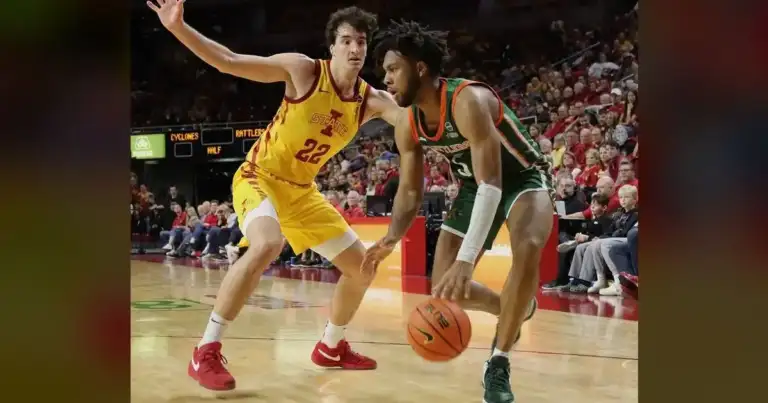
The Iowa State Cyclones forward officially declared for the 2026 NBA Draft and simultaneously entered the NCAA transfer portal on Saturday, April 12, 2026. This decision came swiftly after Iowa State’s impressive, albeit ultimately heartbreaking, run to the Elite Eight, leaving fans and analysts alike reeling.
Momcilovic, a versatile 6-foot-8 forward, was a cornerstone of the Cyclones’ offense, averaging a robust 13.5 points and 4.1 rebounds per game last season. His efficiency was notable, shooting 44.5% from the field and a critical 37.2% from three-point range. His sudden move sends not just ripples, but shockwaves through the very foundation of college basketball, underscoring the seismic shifts underway.
The “Portal Flex”: A Cynical NIL Gambit
Fans aren’t just seeing this; they’re dissecting it for what it truly is: a ruthlessly calculated maneuver. Reddit threads and X users are already coining phrases like “portal flex” – a public display of market power. This isn’t merely about gathering feedback from NBA scouts; it’s a strategic gambit, a high-stakes poker game designed to bait blue-blood programs with promises of significantly larger NIL deals.
Why declare for the draft and enter the portal simultaneously? It’s not just a hedge; it’s the ultimate power play, a strategic double-barrel shotgun blast aimed squarely at maximizing market value.
Momcilovic gets to assess his professional stock against the best in the world. If a guaranteed first-round pick isn’t on the table, he can pivot directly to the highest bidder in college basketball, armed with concrete NBA feedback to bolster his collegiate value.
His estimated NIL valuation was already rumored to be in the mid-six figures – a substantial sum for a college athlete. Now, with this dual declaration, that figure is poised to skyrocket. The analytics are clear: top-tier transfer targets, especially those with NBA potential, are commanding deals well into the seven figures, transforming college sports into an outright bidding war for talent.
This isn’t just about player control; it’s a blatant mockery of any pretense of loyalty. Programs like Iowa State pour resources, time, and belief into developing talent, only to see players treat their commitment as a mere pit stop on the highway to the highest bidder. It’s a transaction, pure and simple, stripping away any romanticized notions of collegiate allegiance.
Iowa State Left Scrambling for Answers
Coach T.J. Otzelberger and the Cyclones now face a massive, immediate hole in their roster. Momcilovic was not just a player; he was a cornerstone, a primary offensive weapon. His consistent scoring and perimeter shooting, particularly from beyond the arc, are incredibly difficult to replace, especially at his size and versatility.
While the team still boasts key returning players like the dynamic point guard Tamin Lipsey and promising forward Joshua Jefferson, losing Momcilovic’s offensive punch is a significant, measurable blow. The analytical challenge for Iowa State is immense: how do you replace 13.5 points and a 37.2% three-point shooter? Otzelberger must now aggressively recruit from the transfer portal, not just for talent, but for a specific skill set that can fill the void Momcilovic leaves.
The emotional toll on the fanbase is palpable. Social media platforms are awash with fans expressing that they are “gutted.” One fan on a popular Cyclone Fanatic forum lamented, “I don’t think I could stand watching him in another college jersey that’d suck.”
This visceral reaction underscores the raw emotion and deep personal investment fans have in roster stability, which is now constantly under threat. The public perception is crystal clear: this is self-serving opportunism, not just a dream chase. It’s a business decision, leveraging a system designed to be leveraged.
“After much thought and discussion with my family and coaches, I have decided to declare for the 2026 NBA Draft and enter the NCAA transfer portal. This was not an easy decision, and I am grateful for my time at Iowa State. I am excited to explore all my options and see what the future holds.”
— Milan Momcilovic (via social media, April 12, 2026)
His carefully crafted statement, released via social media, is the textbook definition of player-speak – polite, grateful, and utterly devoid of the mercenary reality driving this decision. Every player with viable options is now playing this exact hand.
The New Normal: Roster Volatility as a Constant
The “draft-and-transfer” model is no longer an anomaly; it is standard operating procedure. This phenomenon is a direct, undeniable consequence of loosened transfer rules and the explosion of NIL opportunities. Coaches are now forced into a perpetual state of recruitment, not just for high school prospects, but for their own existing players.
The result? Immense, unprecedented roster volatility. Forget building long-term programs or fostering deep team chemistry; every offseason is now a high-stakes, cutthroat recruiting battle for your own existing talent.
The analytics of team building have been completely rewritten, favoring adaptability and immediate impact over slow, organic development. This constant churn also impacts fan engagement, making it harder for supporters to connect with a roster that might look entirely different year after year.
Paradoxically, NBA scouts benefit immensely from this chaos. They get to evaluate players like Momcilovic, who possess a proven college track record against high-level competition. His intriguing versatility and consistent shooting are undeniably attractive traits for the next level.
“Momcilovic has intriguing size for a wing and can really shoot it. He’s got to show more consistency defensively and improve his handle, but there’s definitely a pro skill set there. This process will be big for him.”
— NBA Scout (anonymous, quoted by ESPN, April 12, 2026)
This direct feedback loop fuels the player’s market value, providing concrete areas for improvement. It also gives him a compelling, data-driven reason to consider another college program if the NBA isn’t quite ready, or if a specific college system can better showcase those areas of development.
What’s Next: The Unfolding Saga of College Hoops
Momcilovic’s timeline is now the subject of intense speculation: When will he withdraw from the draft if he opts to return to college? Which programs are already lining up with tempting NIL deals and promises of increased roles, tailored precisely to his NBA feedback? The chess game has begun.
This situation starkly highlights the NCAA’s ongoing struggle with the monster it created. They designed this system, ostensibly for “player empowerment,” and now players are exploiting it for maximum personal gain. And frankly, can anyone blame them for leveraging the very loopholes the NCAA so carelessly created?
This isn’t about the purity of college basketball; it’s about the cold, hard currency of who pays the most. Every player, every coach, and every program now understands this brutal truth. The traditional notion of loyalty is not just dead; it’s been cremated and scattered to the winds of NIL deals and draft projections.
The NCAA built this house of cards, and now the players are gleefully knocking it down, one calculated transfer at a time. Welcome to the new era of college basketball – a chaotic, transactional, and utterly fascinating free-for-all where the only constant is change, and the only true loyalty is to the bottom line.
Source: Google News