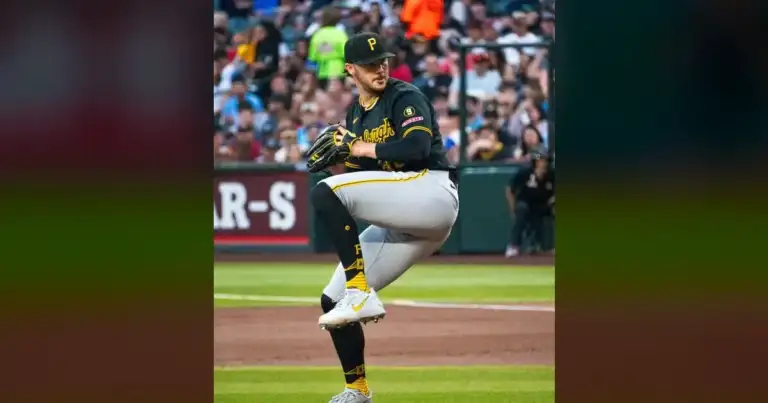
The latest Mets prospect hype job, Nolan McLean’s supposed “one-pitch dominance,” is nothing short of a public relations farce. Anyone with a modicum of baseball sense can see through this spring training nonsense, already being peddled as a sign of future greatness. A single exhibition game, no matter how clean the stat line, does not a dominant pitcher make, especially when the pitcher himself admits his secondary offerings were nonexistent.
On April 3rd, 2026, Nolan McLean, a Mets prospect, pitched four scoreless innings against the San Francisco Giants in an exhibition game. He reportedly threw an overwhelming majority of fastballs, giving up only two hits and striking out five batters as the Mets secured a 5-1 victory. McLean’s own post-game comments, “I was just trying to piece it together,” should be a blaring siren for anyone buying into the hype. That’s not dominance; that’s a pitcher surviving on sheer adrenaline and a healthy dose of luck against a lineup that wasn’t trying to win a World Series in April.
The “One-Pitch Wonder” Delusion: A Relic of Naivety
Let’s dismantle this “one-pitch wonder” fantasy immediately. No major league starter sustains a career with a single effective pitch. Mariano Rivera, the gold standard for a one-pitch marvel, was a closer, working one, maybe two innings, max. McLean is being groomed as a starter, a role that demands a diverse arsenal to face a lineup multiple times. The idea that he can replicate this “dominance” over six or seven innings against a lineup actively trying to hit him is ludicrous.
Mets manager Carlos Mendoza tried to spin it as “encouraging,” but even he had to tack on the crucial caveat: “We still want him to develop his full arsenal.” That is the inconvenient truth this PR machine is desperately trying to bury. The public, for once, isn’t entirely fooled. Social media is already rife with “LOLMets” comments, and rightly so. Many recall McLean’s 2023 WBC outing where, after striking out the side, he promptly gave up two home runs. That’s the real Nolan McLean – flashes of brilliance, followed by stark vulnerability.
The Business of Hype: Inflating Value, Ignoring Reality
This entire “one-pitch dominance” narrative is a meticulously crafted piece of public relations designed to artificially inflate a prospect’s stock. It’s a blatant attempt to distract from the cold, hard realities of player development. Baseball is a game of constant adjustments. Hitters, particularly in the big leagues, will eventually feast on a pitcher who relies solely on a fastball. What happens when McLean faces a lineup that has seen him once or twice? Where are his secondary pitches? Whispers from earlier in spring training suggest he was struggling mightily with them.
This isn’t about raw arm talent; it’s about being a complete pitcher. McLean’s stat line of 4.0 IP, 0 R, 2 H, 0 BB, 5 K is perfectly acceptable for an exhibition game. It means precisely nothing for his viability as a major league starter. His own words,
“I was just trying to piece it together. My off-speed stuff wasn’t really there today, so I just leaned on what was working. It’s a good feeling to get outs, no matter how you do it.”as reported by The New York Post, are damning. He admitted his off-speed pitches were absent. That’s not dominance; that’s a pitcher scrambling, surviving on sheer will and a forgiving spring training environment. This might work against glorified minor leaguers in March, but it’s a recipe for disaster in September, let alone October.
Why This Matters to Your Wallet and the Mets’ Future
The Mets are a big-market team, notorious for spending exorbitant amounts of money. They desperately need tangible results, not fleeting spring training highlights. This kind of manufactured hype can have real, detrimental financial consequences. It can lead to front office executives making ill-advised contract decisions, overpaying for potential that isn’t fully realized. More importantly, it can derail proper player development. Instead of focusing on the arduous, often unglamorous task of refining McLean’s full arsenal, the organization might be tempted to rush him based on a single, anomalous performance.
What about the other Mets prospects, the grinders whose consistent, albeit less flashy, performances are the true bedrock of a successful farm system? Are their efforts being overshadowed by this singular anomaly? This myopic focus on one player’s outlier performance is not only unfair to the other prospects but ultimately detrimental to the organization’s long-term health. The San Francisco Giants hitters were caught off guard; that’s the only logical explanation. They weren’t seeing McLean’s best; they were seeing his only. Any seasoned hitter worth his salt will tell you that a steady diet of fastballs, no matter how hard, becomes predictable and eventually, hittable.
The Analytics Delusion: Ignoring the Obvious
The analytics crowd will be out in full force, trying to spin this into some revolutionary approach. They’ll drone on about fastball spin rates, vertical break, and release points, all while conveniently ignoring the fundamental truth: good hitters eventually hit good fastballs. To truly succeed, a pitcher must keep hitters guessing, disrupt their timing, and offer different looks. That requires a changeup, a slider, a curveball – anything to prevent a hitter from sitting on a single pitch. McLean reportedly threw over 80% fastballs in that outing. That’s not a strategic masterstroke; that’s a glaring limitation.
This manufactured “dominance” is a smokescreen, skillfully deployed to obscure the very real issues facing the Mets’ pitching development. This team needs a deep, versatile pitching staff, not a one-trick pony destined for the glue factory. Even Mendoza, in his quote to MLB.com, couldn’t completely sidestep the truth:
“Nolan showed a lot of grit out there. To go out and dominate a lineup like that with mostly one pitch, it tells you something about his competitiveness and the quality of his fastball. We still want him to develop his full arsenal, but this was a very encouraging outing.”“We still want him to develop his full arsenal” – that’s the bottom line. This was one game, an exhibition at that, and it means absolutely nothing for the long term. It’s a statistical anomaly, not a harbinger of future success.
The Inevitable Crash: Setting Up for Failure
This kind of overblown hype always precedes an inevitable crash. McLean will eventually face major league lineups composed of hitters who have scouted him, who have seen him before, and who will be prepared. What happens then? Does he magically conjure a devastating changeup or a wipeout slider? Or does he get shelled, his “one-pitch dominance” exposed as the flimsy facade it always was? History, that cruel mistress, overwhelmingly favors the latter.
This entire “one-pitch wonder” narrative is actively setting McLean up for failure. It creates unrealistic expectations, burdens him with undue pressure, and frankly, is deeply unfair to the kid. And in true Mets fashion, it’s a perfect encapsulation of their perpetual cycle of hope and despair. The Mets organization needs to abandon these clickbait headlines and focus on solid, fundamental player development. This current trajectory is unsustainable, nothing more than another chapter in the endless saga of “LOLMets” fodder. When will they learn that real success is built on substance, not sensationalism?
Source: Google News