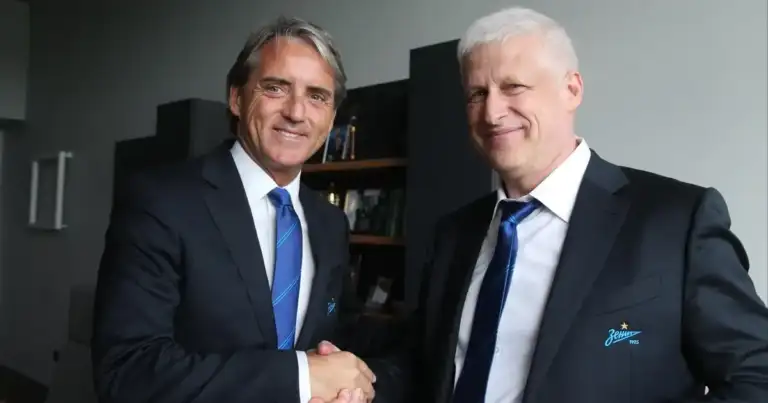

The San Siro, once a cathedral of football, now echoes with the ghosts of management failures, and the latest desperate gamble to silence them involves Roberto Mancini. But can even a manager of his pedigree truly mend the gaping wound left by Paolo Maldini’s brutal ousting, or is AC Milan simply trading one form of chaos for another? This isn’t just about a coaching change; it’s a high-stakes referendum on the very soul of a club, and the financial implications are staggering.
Maldini’s departure in June 2023 wasn’t merely a personnel adjustment; it was a brutal, public rupture. This corporate coup d’état was disguised as a disagreement, but its impact was seismic. The legendary technical director clashed ferociously with ownership, specifically RedBird Capital’s Gerry Cardinale.
Their battle wasn’t over minor tactical squabbles; it was a fundamental war over transfer strategy, club vision, and the very identity of Milan itself. Maldini, the embodiment of Rossoneri glory, fought for footballing autonomy and decisions steeped in tradition. Cardinale, the venture capitalist, demanded a cold, data-driven, Americanized approach, prioritizing balance sheets over silverware.
The legend lost. The suits won. The fallout continues to rock the foundations of Milanello.
The Maldini Meltdown: A Club’s Soul on the Auction Block
Maldini’s exit left a chasm, not just in the technical director role, but in the hearts of every true Milanista. He wasn’t just an executive; he was Milan. His vision resonated deeply with traditionalists who saw football as an art, not an algorithm.
His departure was, for many, a betrayal of Milan’s sacred footballing heritage. It was a clear sign that the club’s soul was being commodified.
The immediate consequence? A rudderless transfer market strategy. Decisions, once guided by Maldini’s unparalleled eye for talent, devolved into a committee-led, data-obsessed process. The results were immediate and visible on the pitch: a disjointed squad lacking cohesive vision.
Players felt the instability, sensing shifting sands beneath their feet. Fans, already bruised by the betrayal, grew restless, their faith eroding with every questionable transfer. Ownership’s “moneyball” approach, prioritizing financial returns over footballing romance, became Milan’s new, chilling mantra.
“It’s a cold, hard business,” they declared. But in Milan, football isn’t just a spreadsheet; it’s a religion, a way of life. RedBird’s perceived desecration of that faith has left an indelible scar.
Mancini’s Mandate: Can a Maverick Tame the Corporate Beast?
Now, the whispers from Milanello turn to Roberto Mancini. He’s a name synonymous with winning, a titan who has managed giants and led national teams to glory. His pedigree is undeniable, his trophy cabinet overflowing.
On paper, he’s the marquee name Milan’s ownership craves to quell fan unrest.
But “calm” is a word that rarely describes Mancini. He is a demanding manager, a volatile force of nature with a personality as strong as his tactical acumen. He’s known for his intensity, his willingness to confront, and his absolute refusal to back down.
This isn’t a man who shies away from a fight; he thrives on it. He’s a winner, yes, but often a tempestuous one, notorious for clashing with club hierarchies. He demands absolute control, believing he deserves it.
As one veteran Italian football journalist, speaking anonymously to Reuters, put it,
“Mancini is a Ferrari. You don’t buy a Ferrari and tell it to drive like a Fiat. He needs the keys, and he needs the road.”
His track record unequivocally shows he thrives with a clear mandate and significant control over sporting decisions. Can he possibly get that at Milan under Cardinale? This is the very same Cardinale who brutally pushed out Maldini for wanting too much power.
This is the fundamental, inescapable conflict. Mancini walking into Milan isn’t about simply coaching a team; it’s about managing a political minefield. He must balance the insatiable demands of a results-hungry, financially-focused ownership with a passionate, often furious, fanbase.
He would be stepping into a hornet’s nest where the sting of past betrayals still lingers.
The Financial Equation: A High-Stakes Bet on a Volatile Genius
Let’s talk brass tacks: the cold, hard numbers that truly dictate the future of any modern football club. Mancini commands a massive salary. Any deal would represent a significant financial investment, easily north of €7 million per season, potentially reaching €10 million with bonuses.
Milan’s ownership, under RedBird Capital, relentlessly preaches fiscal responsibility and a lean operational model. So, is this a football decision, a calculated move for sporting success, or merely a marketing one? Is it a desperate attempt to placate a disillusioned fanbase?
Hiring a name like Mancini brings instant credibility, a headline-grabbing appointment that temporarily appeases a segment of the faithful. But every euro spent on a manager of his caliber is a euro not spent on a star player. This is a critical piece of the puzzle that could strengthen the squad or ease salary cap pressures.
Milan needs more than just a figurehead; they need a visionary who can rebuild a fractured dressing room and instill a winning mentality. This must all happen while operating within the stringent financial confines dictated by Cardinale’s “moneyball” philosophy. Maldini, a club legend, couldn’t manage this impossible tightrope.
Could Mancini, with his own formidable ego and unyielding opinions, truly succeed where a club icon failed?
The underlying issue remains stark: Ownership wants ultimate control. They want their data-driven, financially prudent model to reign supreme, regardless of footballing tradition or sentiment. Any manager, even a proven winner like Mancini, must operate within those non-negotiable confines.
This is precisely where the illusion of “calm” might shatter. Bringing Mancini in isn’t a magic bullet; it’s a high-stakes gamble. He’s a proven winner, but Milan’s problems are far deeper than just the coach on the touchline.
They are systemic. They are about power. They are about identity. Mancini might bring victories; he might even bring some temporary peace to the San Siro.
But true, lasting calm? Not until RedBird Capital truly understands that AC Milan is more than just an asset on a balance sheet. It is a living, breathing entity with a soul, a history, and a passionate heart that beats on the pitch.
This isn’t just a coaching hire; it’s a referendum on the very future of one of football’s greatest institutions. The verdict, I fear, is still dangerously out.
Photo: Wikimedia Commons (query: Roberto Mancini)
Source: Google News