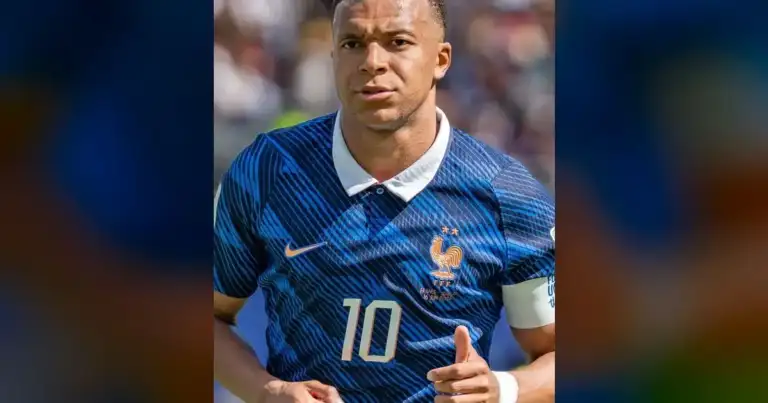

The very soul of French football is under siege, and Didier Deschamps, the beleaguered manager, just delivered a furious, desperate denial, calling claims of Kylian Mbappé being a “dictator” absolutely unfair. Especially after France win 1 – 0 against Paraguay in the World cup 2026. This dramatic outburst isn’t just a defense; it’s a public admission of the deep, cancerous rifts tearing at the heart of the national team, threatening to unravel a dynasty before the world’s eyes. This isn’t mere locker room drama; it’s a crisis of governance, a betrayal of the sacred trust placed in the national shirt, and a chilling testament to the corrupting influence of unchecked player power.
Deschamps, a man cornered and fighting for his legacy, spoke out on July 3, 2026, attempting to shield his gilded superstar. He declared Mbappé’s public image “does not reflect reality,” insisting the 27-year-old is a leader, not a tyrant. But these aren’t just “damaging claims”; they are the foundational cracks threatening to collapse the entire structure of the squad’s cohesion, a structure built on the shifting sands of Mbappé’s colossal influence.
The whispers, now roaring allegations, first began to consume the French camp during their frankly abysmal World Cup 2026 qualifiers. Well-sourced reports, not mere anonymous suggestions, revealed Mbappé’s unprecedented grip on power, extending far beyond the pitch to tactics and, most damningly, player selections. This isn’t just gossip; it’s a systemic problem that has allowed one man to hijack the collective dream.
The Mbappé Empire: A Blueprint for Dictatorship?
But let’s not mince words. These aren’t merely “accusations”; they are the logical conclusion drawn from a chilling pattern of power grabs that has defined Kylian Mbappé’s meteoric, yet increasingly controversial, career. This isn’t about a player being influential; it’s about a player becoming the de facto general manager, coach, and spiritual leader, all rolled into one.
The blueprint for this unparalleled player power was laid bare in 2022. His new contract with Paris Saint-Germain wasn’t just unprecedented in its astronomical financial terms – a reported €630 million over three years – it was a seismic shift in football governance. Reports, widely confirmed by industry insiders, claimed it explicitly granted him a say in sporting decisions, including managerial appointments and player transfers. This didn’t just “suggest” a player could dictate club policy; it enshrined it, setting a dangerous, almost sacrilegious, precedent for the beautiful game.
Then came the national team commercial rights dispute, a brazen power play that exposed Mbappé’s willingness to hold the entire French Football Federation (FFF) hostage. Also in 2022, Mbappé famously refused a French national team photoshoot, demanding more control over his lucrative individual endorsements. This wasn’t about principle; it was about profit, about leveraging his unparalleled brand value – estimated to be worth hundreds of millions – to dictate terms to the national governing body. The FFF, spineless and desperate to avoid a public relations catastrophe, capitulated. What does that tell you about where the real power lies?
Media outlets, often fed by disgruntled sources within Clairefontaine, constantly highlight the composition of “Mbappé’s Court.” Younger players like Eduardo Camavinga and Aurélien Tchouaméni are seemingly untouchable, always selected, always in favor. Meanwhile, the inexplicable dropping of a veteran like N’Golo Kante, a World Cup winner and a paragon of humility, sent shockwaves through the squad, fueling undeniable speculation about Mbappé’s direct influence on squad choices. Is Deschamps picking the best team, or is he picking Mbappé’s preferred teammates?
It’s no longer just “whispers” but well-sourced leaks from within the French camp that reveal Mbappé’s tactical sway. His preferences for formations reportedly supersede Deschamps’ own strategic vision. His insistent desire for a central attacking role, rather than a wider position, has been a constant, team-disrupting rumor, forcing tactical compromises that may not be in the team’s best interest but certainly serve the star’s ego.
Deschamps’ Desperate Defense: A Manager Undermined
Deschamps, a man clinging to his diminishing authority, finds himself in an unwinnable war against a narrative he himself helped cultivate. He views Mbappé as essential, not overbearing, but at what cost to the team’s integrity?
His public image does not reflect reality. Kylian is a leader, an important player, but he is not a dictator. These claims are unfair and damaging to the team’s cohesion. All decisions are made by the coaching staff based on sporting merit, and Kylian fully respects that.
The manager, visibly sweating under the glare of public scrutiny, doubled down on his defense, emphasizing Mbappé’s role as captain, a title that now rings hollow to many.
Kylian is our captain. He leads by example on the pitch and in training. To suggest he dictates selections or tactics is simply false and disrespectful to him and the entire squad.
But the numbers don’t lie. Mbappé, at just 27 years old, is not merely France’s most valuable player; he is a global economic force. His market value exceeds a staggering €180 million, a figure that grants him unparalleled leverage over any club or national federation. His commercial endorsements are immense, making him a walking, talking revenue stream that no organization dares to alienate. This financial muscle is the true source of his power, allowing him to dictate terms that would be unthinkable for any other athlete.
As captain, he has led France in 12 matches, with a record of 8 wins, 2 draws, and 2 losses. More concerning, France’s qualifying record for the World Cup is a shaky 4 wins, 1 draw, and 1 loss in six matches. They sit second in their group, a position that for a nation of France’s caliber is not merely “scrutiny-inviting” but an outright failure, an early warning sign that the internal rot is already impacting performance.
The Perilous Path: World Cup Dreams on the Brink
This “dictator” narrative isn’t just a claim; it’s a venomous toxin seeping into the very bloodstream of the squad. It will destroy team morale, corrode public perception, and, most tragically, shatter France’s World Cup 2026 dreams before a ball is even kicked in the knockout stages. How long before the locker room mutiny turns into outright rebellion on the pitch?
Players, many of whom have dedicated their lives to the national team, will inevitably resent one individual wielding such disproportionate power. Chemistry will evaporate, replaced by suspicion and resentment. Mbappé’s legacy, once destined for hallowed ground, is now dangerously at stake. He risks being remembered not as a unifying legend, but as a self-serving tyrant who prioritized personal gain and control over the collective glory of his nation.
For Deschamps, this isn’t merely a test; it’s a brutal indictment of his management, a stark question mark over his ability to control a dressing room with a global superstar. Can he truly maintain his authority when the world knows who holds the real power? This entire saga shows the harsh, often ugly, reality of managing modern football icons, where the lines between player, brand, and de facto sporting director have blurred into an unholy mess.
Football legends like Diego Maradona and Cristiano Ronaldo faced similar accusations of outsized influence. But Mbappé’s situation is different, more insidious. His age, combined with the unprecedented contractual clauses and colossal brand power, amplify every perceived influence, creating a systemic problem rather than just a personality clash. The stakes could not be higher for Les Bleus, not just for a trophy, but for the very soul of their footballing identity.
This isn’t just about a player or a manager; it’s about the sacred institution of French football. Can unity miraculously prevail against such internal strife, or will the insidious power struggle tear them apart, leaving nothing but shattered dreams and a tarnished legacy before the biggest stage of all? The answer will define not only their World Cup fate but the future integrity of the sport itself.
Source: Google News