
The Atlanta Braves are not just slumping; they’re in a full-blown tailspin, and the recent 7-3 crushing defeat to the Milwaukee Brewers at Truist Park, spearheaded by a dismal outing from veteran pitcher Martin Perez, screams of a franchise losing its grip. This isn’t about bad luck; it’s about a high-priced investment failing to deliver, exposing deeper cracks in a team that was supposed to be a perennial contender. The Braves have now dropped five of their last six games, pushing their once-commanding 46-27 record into precarious territory and squandering their division lead.
Perez’s Costly Collapse: Where’s the Return on $8 Million?
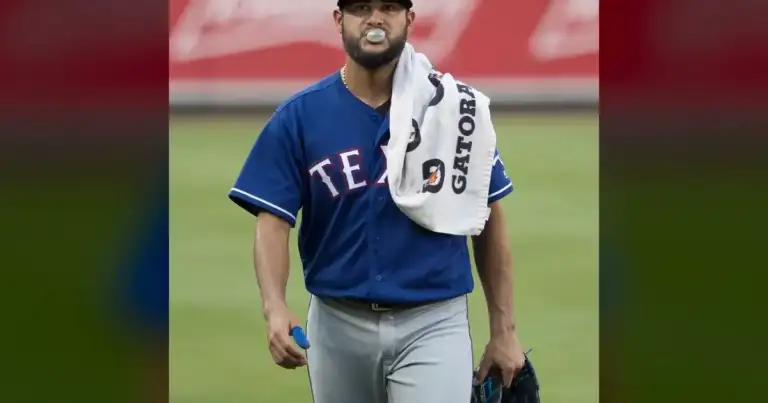
On June 18th, the Braves handed the ball to Martin Perez, a pitcher signed for a hefty 1-year, $8 million, expecting him to be the stopper, the steady hand. What they got instead was a performance that bordered on dereliction of duty. Perez limped through a mere 5.1 innings, surrendering 7 hits and a staggering 5 earned runs. His season ERA now sits at a bloated 4.65, a number wholly unacceptable for a veteran tasked with anchoring a rotation, especially one allowing a crucial three-run homer in the 4th inning that effectively put the game out of reach. Where is the “veteran presence” we were promised? This isn’t just a bad start; it’s an $8 million question mark hanging over the entire season.
The front office made a calculated gamble on Perez, hoping for stability and experience. Instead, they’re getting inconsistency, alternating between flashes of competence and outings where he looks utterly lost. This isn’t complex analytics; this is basic baseball sense. You pay a premium for reliability, not for a pitcher who leaves your bullpen scrambling before the sixth inning. At this rate, the financial implications of this contract extend beyond just his salary; they impact the entire team’s ability to compete and potentially force the front office into desperate, costly moves at the trade deadline.
“I tried to make my pitches, but they hit the ball hard. It’s frustrating when you give your team a chance and it’s not enough. We have to keep fighting,” Martin Perez stated after the loss, a quote that sounds less like a battle cry and more like a concession.
The Miz: A Symptom of Misplaced Priorities
As if the on-field struggles weren’t enough, the Braves decided to parade WWE Superstar The Miz (Mike Mizanin) for a ceremonial first pitch. Let’s be clear: this was not a morale booster; it was a cheap marketing stunt, a glaring distraction from the real problems plaguing this team. Fans shelling out good money for tickets want wins, not celebrity sideshows that trivialize the game.
While The Miz might bring “A-Lister energy” to a wrestling ring, it couldn’t buy the Braves a single run. These promotional spectacles might goose ticket sales for a night, but they do precisely nothing for an anemic offense that has averaged a pathetic 3.2 runs per game over the past week. It’s an insult to the game, to the players grinding every night, and to the fans who care about the outcome. When did the unwritten rules of baseball dictate that entertainment trumps fundamental performance? A celebrity appearance is a band-aid on a gaping wound, and it only serves to highlight the team’s misplaced priorities when the focus should be squarely on getting hits, making outs, and winning ballgames.
“It’s awesome to be here at Truist Park, home of the Braves! I’m bringing the A-Lister energy, and hopefully, that helps them get a win tonight. This is AWESOME!” The Miz declared pre-game, seemingly oblivious to the real struggles unfolding.
Snitker’s Hot Seat and the Looming Financial Reckoning
Manager Brian Snitker is undoubtedly feeling the searing heat from this prolonged slump. His post-game admission, “We just couldn’t get that big hit when we needed it. Martin [Perez] battled, but we left him out there a little too long,” is the classic lament of a manager whose team is underperforming. But how much longer can “battling” be an excuse for losing? The reality is, the Braves’ pitching depth has been decimated by injuries and underperformance, making Perez’s consistency not just critical, but absolutely essential.
If Perez cannot consistently provide quality starts, the front office cannot afford to sit idly by. This isn’t just a coaching hot seat; it’s a test of the entire organizational philosophy. What are the mechanisms for change? Does Snitker get a vote of confidence, or is the team’s slide too steep to ignore? The financial implications of missing the playoffs for a team with the Braves’ payroll and fan base are staggering—millions in lost revenue from ticket sales, merchandise, and broadcast rights. This isn’t “magic” baseball; it’s a desperate team hoping for a miracle, and miracles don’t pay the bills. The front office needs to make tough, business-minded decisions, and fast, before this season completely unravels and leaves the coaching staff in a truly precarious, and likely untenable, position.
Photo: Keith Allison / KeithAllisonPhoto.com
Source: Google News