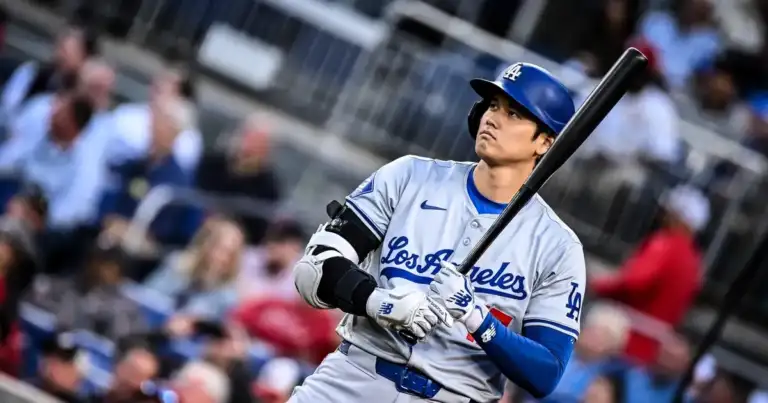

Let’s not mince words. The Los Angeles Dodgers, a franchise built on spectacle and deep pockets, are once again playing fast and loose with the truth, and it’s getting tiresome. For the last 48 hours, the dugout whispers, louder than any carefully crafted press release, have confirmed it: Shohei Ohtani, the $700 million man, is away from the club. The official line? The birth of his second child. Spare me the saccharine sentiment.
Now, I’m not some heartless curmudgeon who begrudges a man his family, but let’s apply a modicum of common sense. Was it not just months ago we were all digesting the news of Ohtani’s first child, with an arrival date conveniently pegged for early 2026? Unless modern medicine has suddenly mastered instantaneous gestation, or the Dodgers’ communications department is operating on a calendar unique to their payroll, something doesn’t add up.
Ohtani’s personal life has always been more opaque than a federal budget. The Dodgers’ tight-lipped, vaguely worded statements don’t foster privacy; they breed suspicion. This isn’t about protecting a player; it’s about meticulously managing the narrative around their most valuable asset, and in doing so, they’re insulting the intelligence of every fan.
The Tabulated Cost of Absense: Seven Hundred Million Dollar Questions
Let’s talk brass tacks, because that’s what this really comes down to. This isn’t some utility infielder taking a bereavement day. This is Shohei Ohtani, the global phenomenon, the man whose contract is so astronomically large it makes even the most hardened Wall Street executives flinch.
Every single day Ohtani is not in the dugout, every at-bat he misses, translates directly into a tangible hit on the Dodgers’ bottom line and a dent in their championship aspirations. You don’t commit $700 million, even with the deferred salary shenanigans, to a player who’s going to be a part-timer, no matter the reason.
While a few days might seem like a drop in the ocean of a 162-game season, for a team with “World Series or bust” etched into its very foundations, every piece of the puzzle matters. And Ohtani isn’t just a piece; he’s the entire damn centerpiece.
The Dodgers are a business, first and foremost. Their investment in Ohtani isn’t merely about his prodigious bat; it’s about the entire global enterprise he represents. His mere presence drives ticket sales, merchandise revenue, and international viewership figures that would make lesser franchises weep.
When he’s not in uniform, that colossal marketing machine slows down, even if only for a fleeting moment. This brief absence, however emotionally understandable, carries a very real, very scrutinizable cost that ownership will be tallying.
And let’s be brutally honest: in the old days, a player played through it. You found a way onto the field. The game, and your commitment to the team, always came first.
Now? Personal matters, however rapidly and mysteriously they seem to materialize, take precedence for these star players. Teams, terrified of upsetting their golden geese, simply roll over and acquiesce.
Managing the Asset, Not the Man
The Dodgers’ continued silence isn’t some noble act of respecting Ohtani’s privacy; it’s a calculated, cold-blooded strategy to control the message. They’ve poured an astronomical sum into this man, and they are absolutely hell-bent on ensuring that every public perception, every news cycle, aligns perfectly with their meticulously constructed brand image.
The vagueness surrounding his absences, the rapid succession of these “personal milestones” – it all screams less like genuine transparency and more like deliberate obfuscation. What do they want? The unadulterated benefit of Ohtani’s unparalleled star power without any of the messy, unpredictable human elements that inevitably accompany it.
It’s not a delicate dance; it’s a cynical manipulation, managing a player who is simultaneously a generational talent and a walking, talking, multi-billion-dollar marketing conglomerate.
Red Marker Verdict:
This whole charade perfectly encapsulates the modern dilemma of managing superstar athletes. Teams are no longer just acquiring a player’s skills; they’re buying into their entire persona, their family life, their very digital footprint.
And with that colossal investment comes the expectation of certain allowances, a level of coddling that would have been utterly unthinkable just a few decades ago. The unwritten rules of baseball, those sacred tenets that once dictated an unwavering commitment to the team, to the game above all else, are being systematically rewritten.
They’re being bent and broken to accommodate the mega-contracts and the global brands. The Dodgers, by staying mum and offering these flimsy explanations, are simply playing the game the new, infuriating way: protect the asset at all costs, even if it means keeping the fans, the very people who shell out their hard-earned money for tickets and merchandise, completely in the dark.
Is this what we’ve come to? A league where the truth is secondary to the balance sheet?
The “birth of a second child” narrative, appearing so suspiciously quickly on the heels of other recent family announcements, isn’t just a convenient excuse; it’s the latest installment in the Dodgers’ ongoing Ohtani PR smokescreen. This isn’t about human decency or personal privacy for the Dodgers; it’s a cold, hard business decision designed to manage their $700 million investment. The vagueness isn’t a courtesy; it’s a calculated move to control the optics of their most valuable asset’s temporary absence, ensuring minimal public scrutiny while maximizing their control over the narrative. They’re selling a story, not just a ballplayer. And as always, the money dictates the plot, damn the fans.
Source: Google News