
Forget the champagne and the smiles in Monaco; McLaren might have hauled in points, but let’s cut the crap: Lewis Hamilton and Max Verstappen were never truly within their grasp. The brutal, undeniable truth is, the chasm to the front isn’t just there, it’s a gaping maw staring McLaren dead in the eyes. Don’t let anyone tell you otherwise.
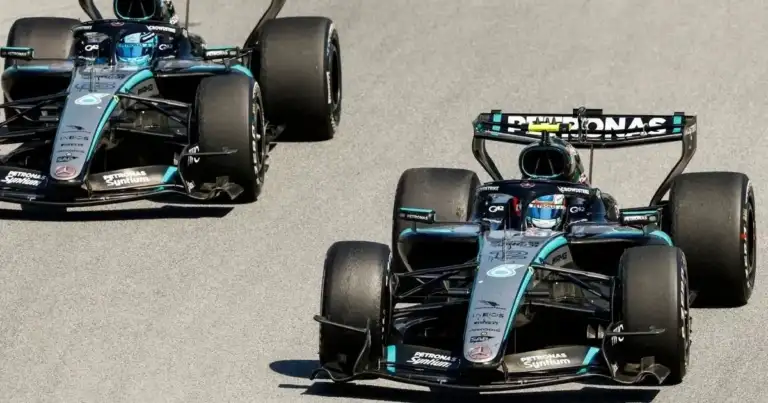
The 2026 Formula 1 Monaco Grand Prix on Sunday, May 25, 2026, was a masterclass in domination from Verstappen for Red Bull Racing, securing his third win of the season. Hamilton, driving for Mercedes-AMG Petronas F1 Team, pulled off a strong second place, showing why he’s still one of the best.
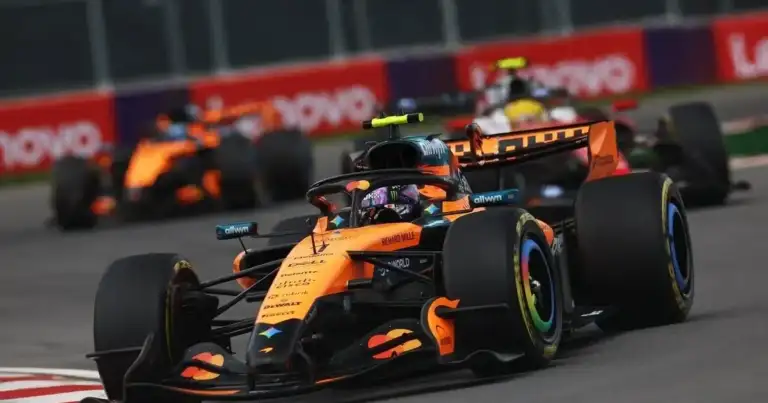
McLaren’s Lando Norris finished third, with teammate Oscar Piastri right behind in fourth. A solid double podium for the Woking squad? Sure. A victory? Not by a long shot.
Despite their best collective result at Monaco in over a decade, the team’s own words are a stark reality check. Team Principal Andrea Stella and Norris both admitted they squeezed every last drop out of their car but simply lacked the ultimate speed to truly contend.
Norris put it plainly, no sugarcoating:
That’s the cold, hard reality check, straight from the horse’s mouth. This wasn’t about strategy or luck; it was about raw, unadulterated pace they just didn’t have.“We’re happy with P3 and P4, but honestly, I’m not sure we had that pace to genuinely fight with Max and Lewis today.”
The Unbreakable Ceiling: Why McLaren Can’t Punch Up (Yet)
The numbers don’t just speak; they scream. Max Verstappen took pole with a blistering 1:10.234. Lewis Hamilton was a mere 0.187 seconds behind him, breathing down his neck.
Norris, in P3, was a whopping 0.452 seconds off pole. Piastri was even further back, 0.510 seconds adrift.
In the unforgiving world of Formula 1, that’s not a gap; that’s a damn canyon. That’s the difference between a contender and a hopeful.
Race pace analysis showed the exact same pattern, a consistent beatdown. Verstappen and Hamilton consistently ran 0.2-0.4 seconds per lap faster than the McLarens in clear air.
This wasn’t a fluke, not a one-off. This was a fundamental, undeniable difference in machinery, setup, and pure, unadulterated performance.
So, what exactly is holding McLaren back from truly challenging for race wins instead of just picking up scraps? It’s a two-pronged attack they can’t defend against.
Low-Speed Corner Performance: The Monaco Problem is a Global Problem
Monaco is a beast, a concrete jungle where only the strong survive. It’s all about tight, slow corners, a relentless test of traction and agility.
And the data screams it: McLaren still struggles here. While their car is a weapon in medium and high-speed sections, it lacks the ultimate traction and stability needed in those crucial low-speed turns where races are often won and lost.
“We’re happy with P3, but we know where we need to improve to catch them,” Lando Norris stated, hinting at these very issues, a frustration barely contained.
Red Bull and Mercedes, especially Verstappen’s precision machine, just hook up better out of the slow stuff. They get the power down cleaner, more aggressively, without losing grip.
This isn’t just a Monaco issue, folks. Many tracks on the calendar have vital low-speed sections.
If McLaren can’t dominate there, if they can’t find that elusive grip and stability, they’ll always be playing catch-up, forever watching the true gladiators disappear into the distance. Are they going to keep making excuses, or are they going to dig deep and fix this Achilles’ heel?
Aerodynamic Efficiency: More Than Just Sticking Wings On
The second major hurdle, the other side of this debilitating coin, is aerodynamic efficiency. On paper, McLaren has a strong aero package.
But Monaco, a circuit demanding maximum downforce, exposed a subtle, insidious weakness. It’s not just about how much downforce you have; it’s about how you generate it, and how efficiently the car slices through the air without creating a brick wall of drag.
Red Bull and Mercedes seem to have found the holy grail, that perfect sweet spot. They create immense downforce without the drag penalty that can plague other teams and bleed precious milliseconds. This allows them to carry more speed through corners and maintain higher top speeds on the straights.
It’s a delicate dance, a razor’s edge balance that McLaren desperately needs to master. They need to refine their aero concept to achieve this across all speed ranges, not just the ones where they already excel.
“We maximized our package, but the reality is, we still need to find that ultimate pace to truly challenge Red Bull and Mercedes,” McLaren Team Principal Andrea Stella confirmed, a subtle admission of a deeper problem.
This isn’t some bolt-on fix, some minor tweak in the garage. This is a deep-seated design philosophy they need to gut and rebuild. They need to unlock that extra gear in the wind tunnel and on the simulator, or they’ll forever be playing second fiddle.
The Battle for Second Best Isn’t Enough for Champions
Let’s be clear: McLaren IS P3 in the Constructors’ Championship. They are the undisputed “best of the rest,” leaving Ferrari eating their dust.
They scored a crucial 27 points at Monaco, a solid haul by any measure. But this team, with its history and its ambitions, has championship aspirations.
Settling for podiums behind the two giants isn’t just insufficient; it’s a concession. You don’t win titles by being the best of the losers.
Verstappen and Hamilton are operating on another level, a different plane of existence. Verstappen’s control in Monaco was absolute, a cold, calculated dismantling of the competition. Hamilton’s experience was key to holding off the chasing McLarens, a masterclass in defensive driving under pressure.
“Another fantastic weekend for the team. The car felt incredible,” Max Verstappen said after his dominant win, a chilling statement of his current superiority.
“A solid P2 is a good step forward for us. McLaren pushed hard, but we managed to keep them behind,” Lewis Hamilton added, a polite acknowledgement that also highlights their ability to manage and contain the threat.
The competition isn’t just fierce; it’s brutal. Mercedes is pushing hard to catch Red Bull. McLaren needs to leapfrog both of them, not just one. Are they up to the fight, or are they content to watch the real battles unfold from a distance?
The Road Ahead: Innovate or Die
McLaren has shown impressive development since mid-2023, credit where credit is due. They’ve secured podiums and even a Sprint Race victory.
But a consistent challenge for Grand Prix wins, the kind that defines true champions, remains elusive. Monaco didn’t just highlight that the journey isn’t over; it screamed that the hardest part is yet to come.
They need to push harder, innovate smarter, and take risks.
The focus must be laser-sharp on those specific technical areas. It’s about more than just incremental gains now; it’s about finding a breakthrough, a game-changer. If they don’t solve the low-speed corner performance and truly optimize their aerodynamic efficiency, they will remain the strongest contender for P3, forever looking up at the two undisputed kings of Formula 1, forever wondering what could have been.
So, what’s it going to be, McLaren? Are you going to keep admiring the view from the third step of the podium, or are you going to stop playing nice and actually throw a punch at the kings?
The clock’s ticking, and the real glory isn’t for those who just show up; it’s for those who dominate.
Source: Google News