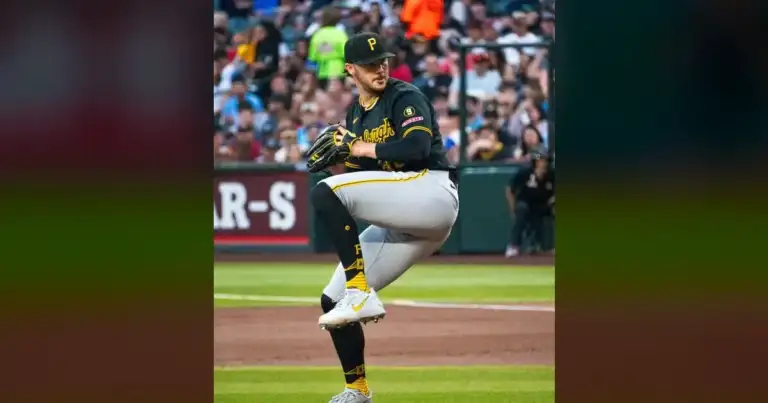
The San Francisco Giants’ massive offseason gamble on Matt Chapman finally showed a flicker of life this past week, but don’t mistake a brief hot streak for a fully justified payroll hit. This isn’t charity, it’s a business, and Chapman’s recent burst against the Arizona Diamondbacks, while welcome, barely begins to cover the tab for a player brought in to anchor the hot corner and provide consistent power. The Giants secured an 8-6 win on May 8, capping off a series where Chapman finally looked like the player they paid for.
Chapman, the veteran third baseman, put on a show in the recent series at Oracle Park. After weeks of hitting around .220, looking lost at the plate, he found his stroke when it mattered.
Chapman Delivers, For Now
Forget your fancy sabermetrics for a moment; the old-fashioned numbers don’t lie for the last three games. Chapman was a different hitter, plain and simple.
- On May 6, he went 2-for-4 with a double and an RBI single. The Giants won 5-3.
- On May 7, he showed some patience, going 1-for-3 with a walk. The Giants lost that one, 7-4.
- Then on May 8, he exploded, hitting 3-for-5. This included a crucial two-run homer and a game-tying double. The Giants secured an 8-6 win.
Over that short stretch, Chapman slashed an impressive .500/.538/.917. He tallied 6-for-12 with 1 home run, 2 doubles, and 4 RBIs. His season average climbed from roughly .220 to about .245. It’s a start, but a long way from the consistent production expected from a player earning his kind of money.
The Weight of the Contract: $54 Million for Consistency
This “turnaround” is a temporary reprieve for the Giants’ front office. They shelled out a substantial $54 million over three years for Chapman, expecting an elite glove and a bat that could consistently drive the ball. His early struggles weren’t just a concern on the field; they were a looming financial headache, putting pressure on the entire organization and raising questions about the wisdom of such an investment.
A productive Chapman is non-negotiable for the Giants’ playoff aspirations. In a brutal NL West, every big bat matters, and every dollar spent needs to show a return. This recent surge validates the investment, at least for a few days, and provides crucial support to a lineup that has often looked anemic.
“Chappy’s been working incredibly hard, and we’ve seen signs of this coming,” Giants Manager Bob Melvin told SFGate after the May 8 game. “Tonight, he really put it all together. His patience at the plate has been exceptional, and he’s back to driving the ball with authority. That’s the Chappy we know.”
For Chapman himself, this surge must feel like a weight lifted. The pressure on these high-paid players is immense. He needs to prove he’s worth the paper his contract is printed on, day in and day out, or that $54 million starts looking like dead money on the books.
“I feel good, I feel comfortable,” Matt Chapman told MLB.com. “I’m seeing the ball better, and I’m just trying to hit it hard. We got two big wins, that’s what matters.”
Old School Adjustments, Not Analytics
So, is this the real Matt Chapman, or just another hot streak from a famously streaky hitter? History suggests he finds his rhythm as the season progresses, often starting slow then heating up by May or June. This isn’t some new analytical breakthrough; it’s a veteran hitter making traditional adjustments.
Even during his slump, many pointed to “underlying metrics” like strong exit velocity. I’ll tell you he was hitting the ball hard; it just wasn’t finding holes. Manager Melvin noted his “patience at the plate,” a sustainable adjustment that’s simply good baseball, not rocket science or some complex algorithm.
Furthermore, other hitters like Jung Hoo Lee and Patrick Bailey also showing signs of life helps. Pitchers can’t just pitch around Chapman when other threats are looming, forcing them to challenge his big bat. That lineup protection isn’t some newfangled concept; it’s how baseball is supposed to work with a cohesive unit.
This isn’t about some fancy new swing coach or a deep dive into launch angles; it’s a professional hitter getting back to fundamentals. He needed to see the ball, hit it hard, and stop trying to do too much. The big money means big expectations, and that $54 million isn’t just Monopoly money; it’s cap space, future flexibility, and the weight of expectation on every swing.
The Giants need this spark to last, as one good series doesn’t make a season, especially with Chapman’s contract hanging over their head. The Giants’ brass needs to see sustained production, or that $54 million starts looking like dead money on the books. This isn’t just about wins; it’s about the future of the franchise and whether they can afford another high-stakes bet.
Photo: Erik Drost
Source: Google News