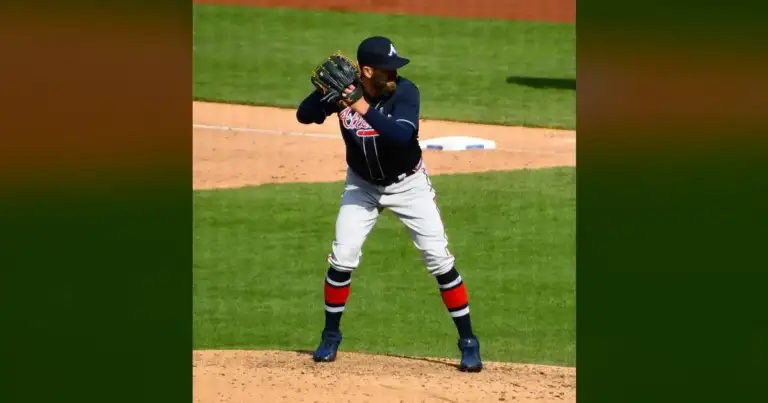

Don’t let the standings fool you. The Atlanta Braves might be sitting atop the National League East with a 20-14 record, but the stench of systemic failure is already wafting through Truist Park. These aren’t just “elephant rumblings”; they’re the sound of a championship window creaking shut, and the front office better be listening.
Their slim lead in the NL East, a deceptive 20-14, masks deeper issues that were brutally exposed during their recent three-game series against the Los Angeles Dodgers. While they salvaged a 4-3 win on May 5th, the damage was done in the preceding games, particularly the humiliating 11-2 drubbing on May 4th.
That series loss wasn’t just a blip. It was a flashing red light, illuminating glaring flaws that threaten to derail their entire season.
Bullpen Woes: A Structural Collapse
The bullpen, frankly, isn’t just a mess; it’s a structural collapse. It’s a revolving door of arms that can’t hold a lead, turning potential wins into agonizing losses. You can stack your lineup with all the power bats money can buy, but if your relief corps can’t get three outs in the ninth inning, it’s all for nothing.
This isn’t about some fancy sabermetric model; it’s about guts, execution, and the basic competence that seems to have evaporated from modern bullpens.
Front offices pour tens of millions into these high-leverage arms. Look at the contracts handed out to guys who can’t even locate a fastball when it matters most. Then they sit back and watch them falter in crucial moments.
What’s the point of investing $100+ million in a strong starting rotation, only to have the bullpen blow every single hard-fought lead? It’s not just a hiccup; it’s a fundamental roster construction failure, a misallocation of capital that screams of front office complacency.
This isn’t a minor hiccup that can be shrugged off. A shaky bullpen drains the starting pitchers, forcing them to push deeper into games, risking injury and accelerated wear-and-tear. That directly impacts their long-term value, their future contract negotiations, and ultimately, the franchise’s financial stability and competitive window. Are we really going to risk a $150 million ace because the guys warming up in the pen can’t throw strikes?
Offense: Potent, Yet Perplexing Inconsistency
The Braves’ offense, on paper, should be a juggernaut, a relentless scoring machine. It boasts big names and even bigger contracts – players like Ronald Acuña Jr. and Matt Olson, who command north of $17 million and $21 million annually, respectively, are expected to produce consistently. Yet, this past series, it was bafflingly inconsistent, capable of hitting bombs one inning and then going completely silent for extended stretches. Where’s the professional at-bat? Where’s the situational hitting?
Fans, who pay top dollar for tickets and merchandise, expect consistent, professional production from these high-priced bats. When it doesn’t happen, when the team strands runners and goes cold, questions aren’t just arising; they’re screaming.
Are they overthinking at the plate, paralyzed by “launch angle” nonsense? Or are they simply trying to hit a home run every single time up, abandoning the fundamental principles of situational hitting? Baseball, I remind you, is about strategy, discipline, and moving runners, not just glorified batting practice.
This kind of offensive inconsistency directly impacts the bottom line. Less exciting, frustrating games lead to less fan engagement, fewer eyeballs on broadcasts, and ultimately, less money flowing into the ownership’s coffers. Make no mistake, this is a business, and owners don’t tolerate underperforming assets, no matter how shiny their “potential” might be.
The High Cost of “First Place, But…”
This “first place, but plenty to fix” narrative isn’t just annoying; it’s exactly what’s wrong with modern baseball’s complacency. It’s a self-sabotaging mindset, a dangerous delusion. You’re winning now, so fix the glaring problems from a position of strength, not from some misguided sense of moral victory or “we’ll get ’em next time.” This isn’t tee-ball.
The front office, specifically General Manager Alex Anthopoulos, needs to act now. Waiting until the trade deadline is not merely a mistake; it’s malpractice. Good, reliable bullpen arms are scarce commodities, and their price tag inflates with every passing week. Every single game lost now, due to a blown lead, pushes the acquisition cost higher later, both in terms of prospects and salary absorption.
What are the actual salary cap implications of needing to acquire a premium closer, a legitimate ninth-inning stopper? What valuable prospects or existing roster assets will they be forced to give up? The cost of inaction is always higher than the cost of a proactive, decisive move. This isn’t a game of chicken; it’s about protecting an investment.
And let’s not forget the dugout. Manager Brian Snitker, despite his past successes, is absolutely on the hot seat, whether he chooses to acknowledge it or not.
Inconsistency from a supposedly “potent” offense and a struggling bullpen points directly to leadership issues within the clubhouse. Is the message getting through? Are players, especially those carrying the biggest contracts, being held accountable for their performance, or is it just “trust the process” until October?
The Red Marker Verdict: Championship Window Closing
This isn’t just about winning a few more games in May; it’s about the finite, unforgiving reality of championship windows. The Braves have the talent, the payroll, and the fan base hungry for more, but if they don’t address these core, structural issues immediately, they are squandering a prime opportunity. Liberty Media, the ownership group, certainly won’t tolerate mediocrity disguised as progress for long when their investment is on the line.
The “rumblings” are no longer whispers; they are a roar echoing through the halls of power. If the Braves’ front office and coaching staff don’t fix these fundamental flaws – the bullpen, the inconsistent offense, the accountability – they’ll find themselves watching the playoffs from home, wondering where it all went wrong. First place in May means absolutely nothing if you can’t close games in October. This isn’t a drill; it’s crunch time.
Source: Google News