
Let’s be unequivocally clear: the narrative that Villanova is “thriving” in the transfer portal is a dangerous delusion. One high-profile commitment does not mend a sinking ship; it merely plugs a single hole while the hull remains riddled with leaks. This so-called “new era” of college basketball isn’t just competitive—it’s a brutal, chaotic bloodbath, and Villanova, despite landing a significant piece, is scrambling for survival, not soaring.
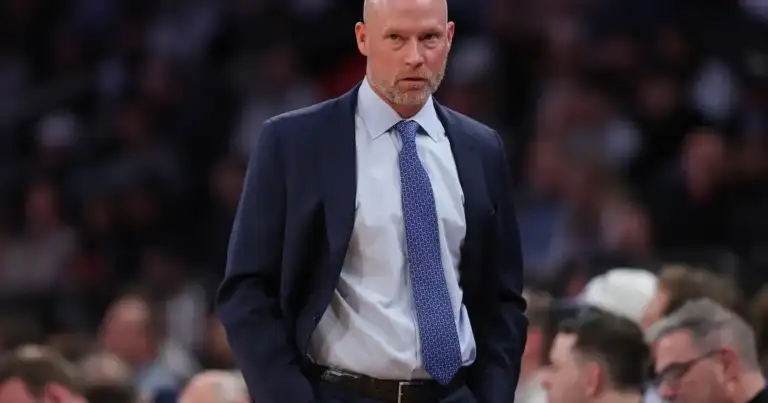
The Wildcats did indeed secure a major talent in Jamal “J-Rock” Dixon, a junior forward from Seton Hall. Dixon’s announcement on Monday, April 20, 2026, was undeniably a win for Coach Kyle Neptune, a moment of desperately needed positive PR amidst a torrent of departures. But let’s not mistake a tactical acquisition for strategic dominance.
Dixon’s Impact: A Statistical Band-Aid on a Hemorrhaging Roster
Dixon’s individual performance is stellar, a data point that cannot be ignored. As a First-Team All-Big East selection, he averaged an impressive 17.8 points, 8.2 rebounds, and 2.1 assists last season, shooting a robust 48.5% from the field.
These numbers scream immediate impact, directly addressing a gaping void in Villanova’s frontcourt. His immediate eligibility for the 2026-27 season is a critical factor, offering an instant infusion of proven talent rather than a developmental project.
Dixon’s public declaration—a concise “Nova Nation, Let’s Rock!” across his Instagram and X (formerly Twitter) accounts—sent ripples through the college basketball landscape. Choosing Villanova over powerhouses like Kansas and Duke is, on paper, a legitimate coup.
Statistically speaking, Dixon’s acquisition is a significant upgrade to their offensive firepower and rebounding prowess. Yet, one player, no matter how talented, does not define the health or future trajectory of a program facing systemic challenges.
The visceral public reaction, particularly from the fanbase, tells a far more accurate story than any carefully crafted press release.
“Villanova ain’t ‘thriving’ in the portal—it’s a goddamn circus of exodus and mediocrity, and fans are torching the narrative as delusional cope.”
That quote, pulled from the digital ether, encapsulates the sentiment perfectly. The “thriving” headline isn’t just PR fluff; it’s a deliberate obfuscation of a deeper, more perilous reality for the Wildcats. They are not merely facing a roster challenge; they are grappling with a catastrophic hemorrhage of talent.
The Exodus Problem: A Program Fighting for its Life
The numbers don’t lie. Villanova saw a staggering eight players depart via the transfer portal. This isn’t just a few bench warmers; this includes critical pieces and future stars like Acaden Lewis and Bryce Lindsay.
To call this “thriving” is an insult to basic arithmetic. This is a program fighting for its very life, desperately trying to maintain relevance.
Losing that many players is not a minor setback; it’s the equivalent of a freight train colliding with the roster, creating massive, undeniable holes that cannot be filled by a single star, no matter how bright.
Coach Neptune, inheriting the monumental legacy of national championship architect Jay Wright, faces an unforgiving landscape. The NIL environment demands constant talent acquisition and retention, a relentless churn that tests even the most established programs.
Dixon is a strong start, a necessary first step, but it is precisely that: one step on a very long, arduous road. This isn’t merely a situation; it’s a stark, brutal reality check on the portal’s unforgiving nature.
Programs lose star talent with alarming ease and are then forced into a frantic, often speculative, scramble to replace it. Villanova is not an exception; it is a prime example of a blue blood caught in this unforgiving cycle.
The Blue Blood Scramble: Brand Power vs. NIL Realities
The competition for talent is fiercer than ever. Even traditional blue bloods like Kansas and Duke, despite their unparalleled brand power and historical success, missed out on Dixon.
This isn’t an anomaly; it highlights the intense, transactional nature of modern college basketball. Every top player is a battleground, and while legacy helps, money, facilitated by NIL, often talks louder.
The predictive models indicate that financial incentives now often outweigh traditional program prestige in many high-stakes transfer decisions.
Villanova’s proclaimed “new era success” feels less like organic growth and more like a carefully orchestrated performance, an attempt to mask a creeping sense of irrelevance in the Big East.
This conference is a meat grinder, a league where every team is relentlessly hunting for talent, and standing still is tantamount to falling behind. The acquisition of Kwame Evans was another “jolt,” another headline designed to inspire confidence.
Yet, when you stack three relatively weak additions against eight significant departures, the equation doesn’t balance. It looks less like strategic rebuilding and more like a desperate, reactive attempt to stay afloat in turbulent waters. The data suggests a negative net talent gain, even with Dixon’s arrival.
The Big East Reality and Unseen Ripples
Villanova’s 21-12 record last season was decent, but it was far from the dominant force Wildcat fans have come to expect. While Dixon’s impressive 17.8 PPG and 8.2 RPG will undoubtedly bolster their frontcourt, and his 34.2% from three-point range offers crucial spacing, can one player truly turn the tide against such a significant roster deficit? My analysis suggests that while Dixon elevates their ceiling, the depth issues remain critical.
Furthermore, the ripple effects of high-profile transfers are not just real; they’re statistically predictable. The unseen impact on existing frontcourt players, who will inevitably see their minutes and roles diminished, is a common consequence.
This can, and often does, lead to further departures down the line, creating a perpetual cycle of roster instability. How will this affect team chemistry and cohesion, elements that are notoriously difficult to quantify but undeniably crucial for success?
Villanova is adapting to the NIL landscape, yes, and they are competing for elite talent. But let’s be crystal clear: they are not “thriving.” They are surviving. They are fighting.
They are trying to claw their way back to former glory, but this monumental task requires far more than one impressive transfer. It demands a holistic, sustained strategy for talent acquisition, development, and retention that Villanova has yet to consistently demonstrate in this new era.
The Real Verdict: Rebuilding, Not Reigning
Villanova’s transfer portal activity is not merely complex; it’s a microcosm of modern college basketball’s brutal realities. Yes, they landed a proven, high-impact scorer in Jamal Dixon—a clear statistical win.
But to ignore the monumental challenge posed by the exodus of eight players is to willfully misunderstand their precarious position. This program is not thriving; it is engaged in an urgent, high-stakes rebuild on the fly, a desperate attempt to patch a sinking ship while contending with a hurricane.
The question isn’t whether Dixon is good, but whether his talent can truly overcome the systemic roster deficiencies. The data, for now, suggests a long, arduous journey ahead. Is this a new era for Villanova, or merely a frantic battle for continued relevance?
Source: Google News