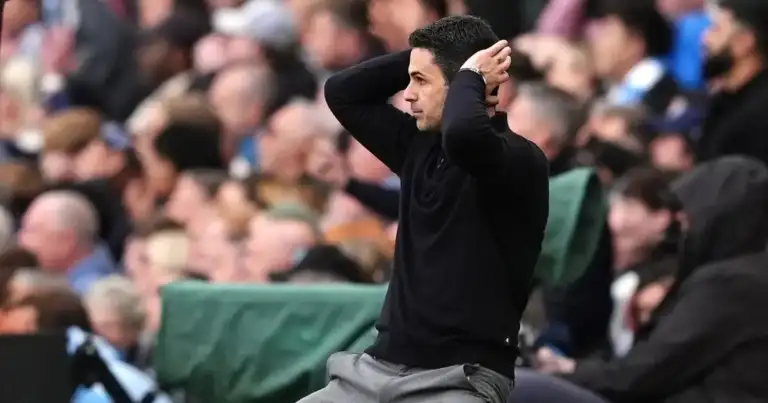

Mikel Arteta’s ‘changes’ are not a strategic masterstroke, but a meticulously crafted illusion, a desperate, cynical attempt to mask Arsenal’s chronic inability to deliver when the stakes – and the financial implications – are highest. One precarious victory, no matter how loudly the PR machine trumpets it, cannot expunge the acrid stench of a season teetering on the brink of yet another monumental choke job, threatening to cost the club tens of millions and years of progress.
The Illusion of Resurgence, The Reality of Collapse
Arsenal snatched a precarious victory from the jaws of despair on April 20, 2026, a result that momentarily hoisted them to 2nd in the Premier League table, a mere 1 point behind the leaders. Their goal difference remains superior, a statistical comfort that belies the profound fragility beneath the surface. The team’s form, a shaky W-L-W-D-W over the last five league games, is hardly the bedrock of champions.
Yet, the usual chorus of media sycophants are already falling over themselves to laud Arteta’s “resilience,” mistaking stubbornness for strength. They highlight the paltry 2 goals conceded in the last 3 league matches as proof of a tactical masterclass, ignoring the tactical cowardice that often precedes such ‘defensive solidity.’
Arteta, ever the high priest of his own narrative, continues to recite the same hollow catechism.
“The character and unity of this team is undeniable,” Mikel Arteta declared on April 20, 2026, a statement dutifully reported by news outlets like Reuters.
Character? Unity? This isn’t an inspiring declaration; it’s a mantra worn thin by repetition, a desperate incantation against the looming specter of failure. It’s what managers say when results paper over cracks, when the truth of their tenure is far less palatable.
The Bitter Taste of Financial & Sporting Reality
Let’s be brutally honest. This club just endured a PSG Champions League semi-final humiliation, losing 3-1 on aggregate. That wasn’t a display of character; it was a spectacular, soul-crushing collapse on the biggest stage, a capitulation that screamed “bottle job” louder than any PR spin could hope to drown out. Fans, the true lifeblood of this institution, are rightly dismissing Arteta’s saccharine pronouncements as “delusion porn.” They see a chilling pattern of “pragmatic snoozefests” and dropped points, a recurring nightmare of unfulfilled potential.
Sources within rival camps don’t just ‘reportedly hate him’; they openly mock his “delusional manager speak,” viewing it as a convenient shield for tactical cowardice that has bled the club dry of its fighting spirit. His “changes” are not about progress; they are about self-preservation, an attempt to cling to power while the club’s foundations erode.
The Crushing Financial Fallout of Failure
The stakes are not merely about pride or fleeting glory; they are about cold, hard cash, about the very financial viability of a global sporting powerhouse. The difference between automatic Champions League qualification and the ignominy of the Europa League isn’t just about prestige; it’s a reported £50-70 million swing in revenue, a chasm that dictates transfer budgets, wage structures, and the club’s very ability to compete for elite talent. Missing out on the Champions League isn’t just a sporting failure; it’s a financial amputation that cripples future ambitions and sends potential world-class signings fleeing to more stable, profitable shores. How can Arteta claim progress when his “philosophy” consistently leaves the club bleeding cash and credibility?
His job is to elevate “very good” to “great,” to transform potential into palpable success. Seven years into his tenure, and we are still asking if he can deliver a title. That is not proof of progress; it is a damning indictment of management, a stark reminder of the millions squandered and the opportunities irrevocably lost.
Who Truly Pays the Price for Arteta’s Narrative?
While Arteta and his coaching cadre bask in the temporary reprieve, the true cost is borne by the very soul of the club: its young, impressionable talent. Players like Bukayo Saka and Gabriel Martinelli, thrust into the intense pressure of a title race for the first time, are buckling under immense mental and physical demands. Arteta’s relentless evangelizing about “character” isn’t inspiring; it’s a crushing weight, a narrative that conveniently absolves management while placing the entire burden of failure on shoulders too young to bear it. This isn’t developing talent; it’s sacrificing it on the altar of a manager’s self-preservation, risking burnout and disillusionment that could haunt their careers and the club’s future for years to come.
The biggest losers are, as always, the fans – once again strapped into an emotional rollercoaster fueled by false hope and managerial platitudes. Rival teams may face a supposedly “resurgent” Arsenal, but the long-term damage to player welfare and fan loyalty is far more profound.
Pundits like Tony Cascarino, speaking on talkSPORT, demand “something different” from this “conservative, pragmatic” approach. YouTube reactors, the unfiltered voice of the modern fan, call recent weeks “embarrassingly lame.” Arteta’s bizarre claim that Arsenal were the best team in the Champions League over “160 minutes” after the PSG loss ignited savage backlash across social media and traditional outlets alike. It was a bizarre, self-serving fantasy, a desperate attempt to rewrite history in the face of undeniable defeat.
His “changes” are a desperate gamble, meant to hype fragile players and distract from systemic issues. But they are backfiring spectacularly in the court of public opinion. Spotting “strange” Amex cheers when City faltered is not momentum; it is mind games, pure theater, nothing more than a desperate plea for external validation.
Arsenal’s title challenge is not merely built on sand; it’s a mirage shimmering over a financial quicksand pit. One fleeting victory cannot mask the structural fragility, the tactical timidity, or the profound leadership vacuum at the top.
The astronomical sums at stake demand more than platitudes and PR spin; they demand accountability. The footballing gods, it seems, have a cruel sense of irony: they offer glimpses of glory only to highlight the monumental cost of chronic failure.
The question is no longer if Arteta will deliver, but how much more will Arsenal sacrifice at the altar of his unproven dogma before the club finally wakes up to the financial and spiritual bankruptcy he is presiding over.
Source: Google News