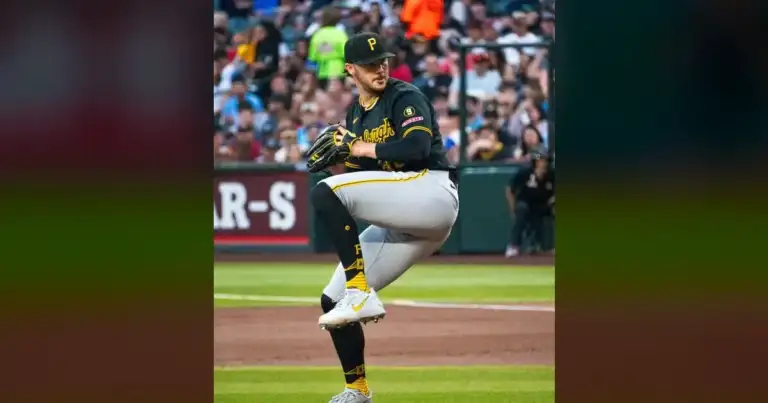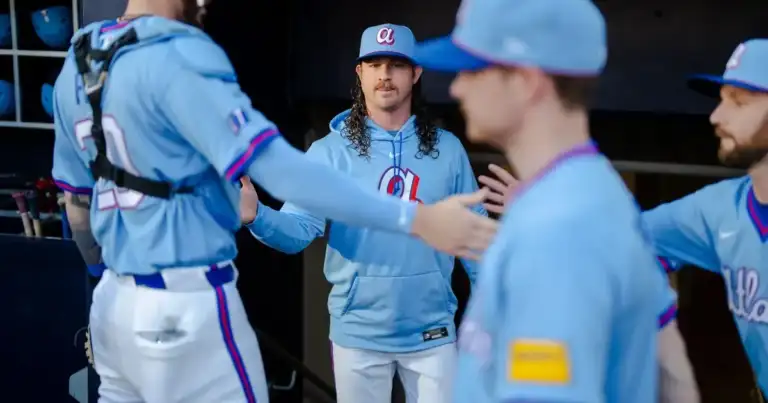

Another series, another abject failure. The Atlanta Braves just got swept by the Philadelphia Phillies, capped by a humiliating 5-2 loss where Grant Holmes served up a performance that would make any old-timer wince.
This sweep isn’t a ‘sign of trouble’; it’s a flashing red light on the Braves’ pitching depth. That depth looks shallower than a kiddie pool when the stakes are this high. For a team with World Series ambitions, this isn’t merely disappointing; it’s an organizational embarrassment.
The Philly Beatdown: A Rotational Implosion
The Braves went into Citizens Bank Park looking to avoid a full sweep. They failed spectacularly, not just on the field, but in their fundamental duty to compete at a championship level. This wasn’t bad luck; this was a systemic breakdown.
On April 17, 2026, the Phillies took Game 1, 6-3. Zack Wheeler pitched like the ace he’s paid to be. Bryce Harper hit a two-run homer, reminding Atlanta what a genuine slugger looks like.
Game 2 on April 18, 2026, saw the Phillies win 4-1. Atlanta’s big bats stayed silent, a recurring nightmare. Spencer Strider, their supposed stopper, gave up three runs, forcing the bullpen into early action – a cardinal sin for any manager worth his salt.
The finale on April 19, 2026, sealed Atlanta’s fate with a 5-2 Phillies victory. Grant Holmes couldn’t stop the bleeding; he merely stood by and watched it gush.
Holmes’s Rocky Outing: A Costly Liability
Holmes was supposed to be the stopper, the reliable arm to prevent a sweep. Instead, he got shelled, offering up a performance that highlights a severe miscalculation in the Braves’ rotational strategy. This isn’t just about stats; it’s about value, about a player failing to earn his keep when the club needs it most.
- He pitched only 4.1 innings, forcing the bullpen into an unsustainable workload.
- He gave up 7 hits and 5 earned runs, inflating his ERA and shrinking his trade value.
- Trea Turner hit a two-run homer off him in the third, a gut punch that shifted momentum irrevocably.
- Bryson Stott’s double in the fifth finally knocked Holmes out, a mercy killing for a pitcher clearly out of his depth.
His record now sits at a dismal 1-3. His ERA ballooned to an alarming 5.40. That’s not a stopper; that’s a liability, a drain on the payroll, and a consistent reason for the front office to lose sleep.
The Braves offense, meanwhile, was pathetic. They scored only 6 runs all series. Their team batting average was a dismal .198.
Six runs all series? A team batting average of .198? Are we talking about a major league lineup or a glorified Triple-A squad?
Is Grant Holmes’s Spot Safe? The Business of Performance
This is the real question after such a performance, and let me put it plainly: No. Not if this organization has any sense of self-preservation.
Manager Brian Snitker might preach patience, but the Braves are a contender, a multi-million dollar enterprise. They can’t wait forever for potential to materialize into results.
Holmes’s 5.40 ERA through four starts isn’t just “alarming”; it’s a direct threat to the team’s playoff aspirations and a poor return on investment. The Braves need more than consistency; they need dominance from their starters.
They have Spencer Strider and Max Fried, two top-tier arms. Beyond that, it’s a crapshoot, a gamble that’s clearly not paying off. That’s a fundamental problem for a team with championship aspirations, especially when you consider the financial commitments to the top of the rotation. Every weak link puts undue pressure on the high-priced talent.
Braves Manager Brian Snitker said, “We just didn’t get it done. Grant [Holmes] battled, but they hit some balls hard, and we couldn’t string enough together. We need to turn the page quickly.”
Snitker’s words are the usual managerial boilerplate, the kind of spin that tries to put lipstick on a pig. But no amount of “turning the page” can obscure the cold, hard truth: Holmes isn’t delivering, and the Braves are paying a premium for substandard work.
This isn’t just about ‘a bad outing’; it’s about the erosion of trust, the strain on the bullpen, and the direct hit to the franchise’s bottom line. Every pitch Holmes throws, every earned run he allows, it carries a financial weight that the Braves simply cannot afford to ignore.
The Bench is Calling: Accountability and the Unwritten Rules
The Braves have options down in Triple-A Gwinnett. Guys like Hurston Waldrep and AJ Smith-Shawver are waiting in the wings, hungry and cheaper. These young arms could provide a spark, a jolt of energy that the current rotation clearly lacks.
Holmes needs to show something, and fast. The unwritten rule of baseball dictates that if you can’t perform, someone else will. It’s a meritocracy, or at least it’s supposed to be.
The upcoming schedule is tough, a gauntlet of division rivals and playoff contenders. Every start matters. Atlanta can’t afford dead weight in the rotation, not when every game has salary cap implications and affects the team’s standing in the cutthroat NL East.
The Phillies, on the other hand, are riding high. They outscored the Braves 15-6, a dominant display that showcased their depth and killer instinct. They look like a real threat, a team that understands the importance of seizing opportunities.
Phillies Manager Rob Thomson boasted, “That was a great series win. Our guys played hard, pitched well, and got the big hits when we needed them. It’s a good way to start a homestand.”
That’s what winning managers say, the kind of confident assertion that speaks volumes about a well-oiled machine. It’s a stark contrast to the Braves’ locker room, which must be thick with the stench of disappointment and the quiet hum of job insecurity.
Baseball is a business, and the Braves’ front office must be watching Holmes closely. His performance impacts the entire pitching staff, forcing other guys to pitch more, leading to fatigue, and ultimately, injuries. It affects the team’s playoff chances, its revenue streams, and its ability to attract and retain top talent.
This sweep by a division rival stings; it’s a wake-up call, a stark reminder that past glory means nothing when current performance is lacking. The clock isn’t just ticking for Holmes; it’s ticking for the Braves’ championship window.
This isn’t a charity. If you can’t perform, there’s always someone else willing to step up, often for a fraction of the price. The unwritten rule of baseball is simple: earn your keep.
Holmes isn’t, and the bill is coming due.
Source: Google News