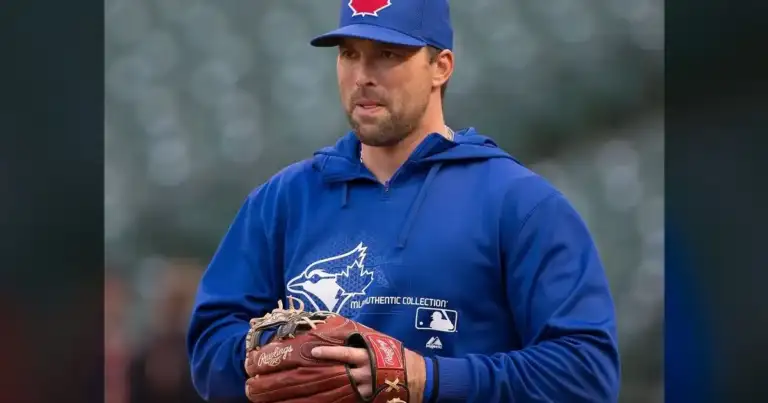

Let’s be brutally honest: MLB analyst Mark DeRosa weeping live on air wasn’t “authentic.” It was a meticulously calculated, manipulative tear-jerker designed to distract us from the often-grinding reality of professional sports and, more cynically, to boost ratings.
This wasn’t about raw, unscripted emotion. It was prime-time emotional exploitation. MLB Network didn’t just pull a fast one; they orchestrated a masterclass in emotional manipulation, and they knew exactly what they were doing every step of the way.
The Art of the Manufactured Moment
The scene unfolded on MLB Network on April 4, 2026. Mark DeRosa, a former MLB player and now an analyst, broke down on live television. The catalyst? The news that his beloved college coach, Mike Gillespie, was being posthumously inducted into the National College Baseball Hall of Fame. Gillespie, a revered figure, had passed away in 2020.
The delivery was equally theatrical. Fellow analyst Greg Amsinger, with a somber gravitas, delivered the news. This was followed by a pre-recorded message from Gillespie’s son, Mike Gillespie Jr. DeRosa, seemingly caught off guard, struggled to compose himself, speaking through tears about the profound impact Gillespie had on his life and career.
Unsurprisingly, the clip didn’t just go viral; it exploded. Millions watched it, generating immense social media traction. Even major outlets like ESPN picked up the story, dissecting the “powerful moment.” To suggest this was an accident or a spontaneous outpouring would be naive at best, disingenuous at worst.
The Unseen Script and the Ratings Game
Do we honestly believe a major network “accidentally” surprises a commentator with such deeply personal, emotionally charged news about a deceased mentor? Please. That’s like believing professional wrestling is unscripted. This was orchestrated down to the last tear. Every choked-up word, every visible tremor, was a ratings boost; every tear, a golden nugget for network executives.
The network’s producers undoubtedly knew DeRosa’s deep, personal history with Gillespie. They understood the immense emotional weight this news would carry for him. They meticulously planned the segment’s delivery, ensuring the maximum emotional impact. The pre-recorded message from Gillespie’s son wasn’t a last-minute addition; it was a calculated component designed to amplify the emotional resonance. This wasn’t a spontaneous moment of raw human emotion; it was a carefully crafted, expertly executed segment of reality television disguised as sports analysis.
This isn’t about genuinely honoring a coach, as noble as that cause might be. It’s about cheap ratings, about generating clicks, about creating viral content. Networks crave these “authentic” moments because they generate buzz, they make headlines, and they keep eyeballs glued to the screen far longer than a breakdown of batting averages ever could.
Why We’re So Susceptible to Emotional Manipulation
We, the audience, are desperate for real human connection. We crave authenticity, especially in a world saturated with curated perfection and filtered realities. So, when a public figure breaks down and cries, we often fall for it hook, line, and sinker. We praise their “vulnerability,” we laud their “bravery,” and we feel a deep, empathetic connection.
But is it truly brave when it’s meticulously set up? Is it genuinely authentic when it’s produced, framed, and broadcast for maximum emotional effect? Or is it simply another form of entertainment, another expertly deployed tactic to pull at our heartstrings and keep us captivated? DeRosa’s tears, however genuine his personal grief, served a very specific, strategic purpose for the network. They humanized the brand, made us feel something, and, perhaps most importantly, made us forget the endless commercial breaks and the often-bland, repetitive sports analysis.
The Exploitation of Grief for Public Consumption
Grief is arguably one of the most personal, messy, and profound human experiences. It’s rarely, if ever, broadcast live on national television without a significant underlying agenda. When it is, we must ask: who truly benefits from this public display of private pain?
MLB Network benefited immensely. They received free publicity, were praised for their “humanity” and “courage” in broadcasting such a moment, and saw a significant spike in engagement. DeRosa, too, benefited, being lauded as “authentic” and becoming the subject of countless memes and discussions, elevating his profile. But what about the sanctity of grief? What about the true, unadulterated memory of Coach Gillespie? Was turning his induction into a televised spectacle, transforming his former player’s very real pain into a ratings event, the best or most respectful way to honor him?
It feels inherently dirty. It feels exploitative. It’s a stark reminder that in our hyper-connected, content-driven world, everything is content now. Even, and perhaps especially, raw human emotion.
The Taboo Truth: Questioning the Narrative
We are consistently told to celebrate these moments, to view them as “powerful” and “moving.” Yet, for many, they evoke a sense of unease, a gnawing suspicion that something isn’t quite right. They compel us to question the very fabric of public authenticity.
This isn’t an indictment of DeRosa’s personal feelings; his grief for his mentor was undoubtedly real. This is about the machine—the media machine that devours emotion, that transforms deeply personal moments into public spectacle, and that ultimately profits from tears. As The Guardian recently noted in a piece on televised emotional displays, “The line between empathy and exploitation has never been thinner.”
It’s time we stopped mindlessly applauding these manufactured moments. It’s time we started asking tougher questions. What is truly authentic in the age of curated content? And what is merely another performance, expertly designed to elicit a specific emotional response and, ultimately, to serve a commercial agenda?
This “emotional news” segment was a calculated move, a brilliant, albeit cynical, piece of programming. It got everyone talking. It got MLB Network trending. And it masterfully leveraged a man’s genuine grief to achieve its objectives. Don’t buy into the hype. It’s all a show.
What’s your most cynical take on a “heartfelt” public moment you suspect was anything but? Share your taboo confession in the comments below.
Photo: Keith Allison
Source: Google News