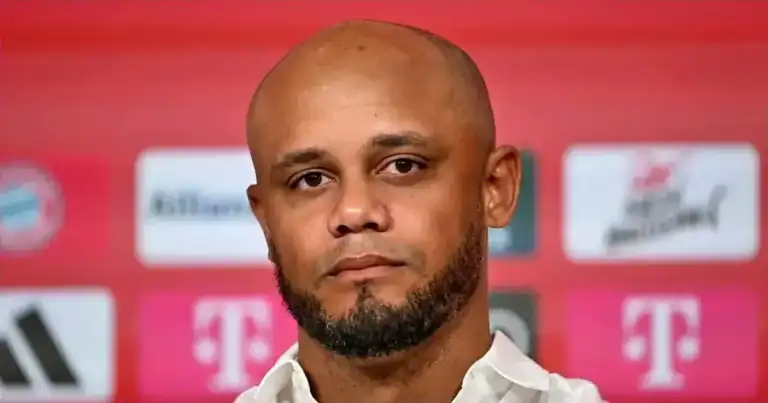

In a move that screams desperation and cynical manipulation, Uli Hoeneß has spun a ludicrous myth: that Pep Guardiola, the footballing deity himself, personally hand-picked Vincent Kompany for the Bayern Munich hot seat. This isn’t just a story; it’s a meticulously crafted piece of propaganda, designed to sanitize a truly baffling appointment and distract from Kompany’s recent, abysmal failure leading Burnley to Premier League relegation.
Hoeneß, the Bavarian patriarch, didn’t just suggest this; he declared, with all the gravitas of a papal bull, that Guardiola supposedly uttered the words, “We could take him blindly.” Let that sink in. “Blindly.” This isn’t trust; it’s a desperate attempt to legitimize a controversial, last-ditch hire by invoking the name of the sport’s most revered tactical genius. Kompany’s Burnley side, let’s not forget, just plummeted out of the Premier League, finishing a pathetic 19th with a mere 24 points – a record of 5 wins, 9 draws, and 24 losses. Yet, Hoeneß wants us to believe Guardiola, the architect of modern football, saw something so profound in that wreckage that he’d stake his reputation on it?
The Guardiola Myth Machine: A PR Masterclass?
This narrative, conveniently leaked to the wires in the last 48-72 hours, is a calculated, almost theatrical, maneuver. Bayern’s leadership, reeling from a disastrous season that saw their 11-year Bundesliga title streak spectacularly implode, needs to quell the brewing storm of fan discontent. What better way to do it than by draping their questionable managerial choice in the shimmering cloak of Guardiola’s endorsement?
This isn’t just about Bayern; it’s a lifeline for Kompany, too. Suddenly, the man who oversaw a Premier League catastrophe is being championed by the sport’s most successful modern manager. It’s a credibility injection, a PR defibrillator for a coaching career that just flatlined in England’s top flight. Instead of a relegated coach, he’s now painted as a visionary, a protégé blessed by the footballing gods. It’s an insult to the intelligence of any fan who follows the game with an ounce of critical thought.
While Guardiola’s “coaching tree” is undeniably vast and impressive, this particular branch feels rotten, grafted onto a desperate situation. Bayern just finished a humiliating second in the Bundesliga. They weren’t just looking for a win; they were looking for a miracle, and they’re trying to sell us a cheap parlor trick instead.
The Cynical Truth: A Scramble, Not a Strategy
Let’s strip away the PR gloss. This “blind trust” revelation is not a breaking story; it’s a cynical rehash, recycled for clicks and designed to obscure a brutal truth. Fans on Reddit and X, those frontline arbiters of footballing sentiment, have already seen through this charade, rightly labeling it “classic Hoeneß revisionism.”
Kompany was never Plan A. He wasn’t even Plan B or C. Bayern’s managerial search was a public, embarrassing spectacle. They were spectacularly rebuffed by Xabi Alonso. They dithered with Julian Nagelsmann. They failed to convince Ralf Rangnick. They were left scrambling, a once-dominant club reduced to begging after the tumultuous Thomas Tuchel era. This Guardiola anecdote didn’t emerge from a strategic vision; it materialized from the ashes of desperation, an attempt to make a bad situation look anything but. As one particularly scathing theory on X posited, “Pep picked Kompany to sabotage rivals from afar.” Another, equally pointed, suggested, “City’s grooming their ex-captain for a prodigal return.” The Manchester City faithful, far from celebrating, are seething, calling it a “soft landing for Kompany’s ego” and accusing Bayern of scavenging for “City scraps.”
The Financial Gamble: A High-Stakes Bet
Kompany has signed a three-year deal, a significant commitment for a club of Bayern’s stature. The financial terms, while undisclosed, are undoubtedly substantial, reflecting the massive investment Bayern makes in its coaching staff. This isn’t pocket change; it’s a multi-million-euro gamble. This makes Hoeneß’s “blind trust” endorsement not just risky, but potentially catastrophic.
What if Kompany falters? What if his Burnley performance was not an anomaly but a harbinger of things to come? The blame, when it inevitably comes, will fall squarely on Bayern’s leadership. Hoeneß’s words, once meant to shield them, will become a bludgeon. This public, almost messianic, endorsement heaps immense, almost unbearable, pressure on Kompany. He was vouched for by a legend; now he must deliver like one. The financial implications of another failed coaching tenure, coupled with the reputational damage, could set Bayern back years.
This entire saga is a masterclass in influence, reputation management, and the cynical art of expectation manipulation. Bayern isn’t just trying to convince fans to accept a controversial choice; they’re using Guardiola’s name as a bulletproof shield against legitimate criticism.
The real questions linger, sharp and unanswered. What profound insight did Guardiola truly possess? Why such an unequivocal endorsement, particularly after Burnley’s dismal showing? Was Kompany the only candidate who received this divine blessing, or merely the only one desperate enough to say yes when all others declined? This isn’t about deep tactical analysis; it’s about raw power dynamics, about club legends pulling strings, about the old boys’ network dictating the future. This isn’t how you build a dynasty; this is how you paper over cracks with increasingly elaborate lies.
Bayern needs stability, sustained success, and a clear, uncompromised vision. They don’t need a fairy tale; they need a coach who wins, period. This whole saga proves one undeniable truth: even at the pinnacle of European football, the game is still dictated by connections, by spin, and by the relentless pursuit of narrative control. Bayern’s leadership is trying to sell us a dream, but the fans, eyes wide open, see the truth. This “blind trust” isn’t a testament to foresight; it’s a glaring, dangerous blind spot.
Source: Google News