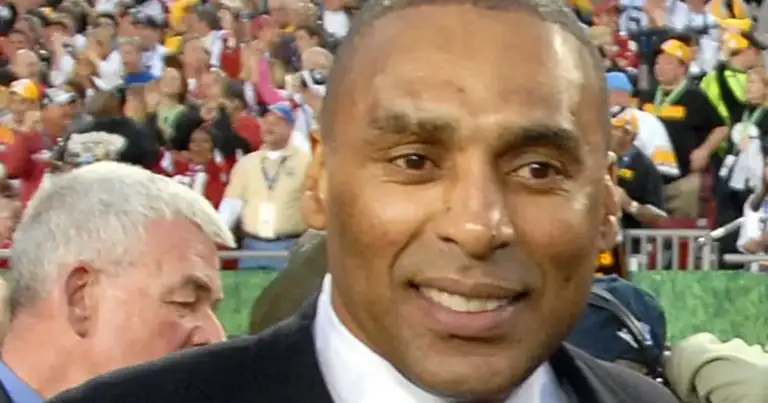

Roger Craig dropping a bombshell during his Hall of Fame speech? That’s the kind of raw drama we live for. But his revelation about a dementia diagnosis is a stark, brutal reminder of football’s ultimate price.
The legendary San Francisco 49ers running back, Roger Craig, 66, didn’t just walk into the Pro Football Hall of Fame in Canton, Ohio, on August 6, 2026; he dropped a truth bomb that echoed through the hallowed halls and straight into the hearts of everyone watching. He publicly disclosed his battle with dementia during his induction speech, a gut-wrenching moment that left the audience—and social media—collectively reeling.
It was TMZ, naturally, that first spilled the tea on the raw emotion. They reported Craig paused, his voice thick with unshed tears, before telling the stunned audience he’d been diagnosed years ago. He didn’t mince words, directly linking his devastating condition to the brutal head trauma suffered throughout his storied NFL career.
The crowd, bless their hearts, rose in a spontaneous standing ovation. This wasn’t just for his gridiron glory, but for the sheer, gut-wrenching courage it took to lay his soul bare on the biggest stage of his life. Can you even imagine the silence in that room?
The NFL’s Big Question: Are They Doing Enough?
Craig’s brave, heartbreaking speech didn’t just put the spotlight back on the NFL; it cranked the wattage up to blinding. The critical question isn’t if the league has programs, but how exactly they’re supporting their former players now – especially those like Craig, facing devastating neurodegenerative diseases.
Because let’s be real, ‘some programs’ doesn’t cut it when someone’s mind is fading. Are they actually enough, or just enough to look good in a press release?
Let’s look at what the league claims it’s doing:
- The NFL Concussion Settlement is a big one. It’s paid out hundreds of millions to former players. This covers diagnoses like Alzheimer’s, Parkinson’s, ALS, and moderate-to-severe dementia.
- Then there’s the 88 Plan. Named after Hall of Famer John Mackey, it helps with medical and custodial care. It’s for players with dementia, Alzheimer’s, or Parkinson’s. Millions in aid have been provided by early 2026.
- The Player Care Foundation (PCF) also exists. It’s backed by the NFL and the NFL Players Association (NFLPA). They offer various services, including medical aid and mental health resources.
- The league also boasts millions in ongoing research. They fund studies into head trauma and player safety. This includes new helmet tech and rule changes.
Sounds impressive, right? A laundry list of initiatives designed to make us all feel warm and fuzzy about the league’s commitment. But for those of us who follow the human cost, these bullet points often feel like bandages on a gaping wound.
The real question isn’t how much money is allocated, but how much actually reaches the players and their families who desperately need it, without jumping through a million bureaucratic hoops.
The Unseen Price of Gridiron Glory
Let’s cut through the corporate jargon: these programs might look good on paper, but for the WAGs, the children, and the players themselves dealing with the daily, soul-crushing realities of dementia, is it truly enough? Roger Craig’s decision to share his truth wasn’t just about his personal battle; it was a loud, defiant call for more, a demand for accountability that reverberated far beyond Canton. This isn’t just a physical decline; it’s the slow, agonizing loss of a person, piece by piece.
His story, sadly, isn’t an isolated incident. It’s just the latest entry in a grim ledger of legends: Mike Webster, Junior Seau, Frank Gifford – names synonymous with greatness, but also with tragic, post-career diagnoses.
This isn’t a new problem the NFL can pretend to be surprised by; it’s a persistent, festering wound that the league has been trying to patch over for decades. The glory, the Super Bowl rings, the endorsements – they often come with a hidden, crushing cost that only manifests when the cheering stops and the lights dim.
Craig’s sentiment, as reported by TMZ, hit hard:
“I stand here today, not just as a Hall of Famer, but as a man facing a new challenge. I was diagnosed with dementia a few years ago, and it’s a part of the game’s legacy that we must confront head-on.”
Of course, the Pro Football Hall of Fame released a statement. You know the drill: acknowledging Craig’s ‘powerful message,’ reiterating their ‘commitment to honoring legacies,’ and ‘supporting the football community.’ Blah, blah, blah.
Actions speak louder than carefully crafted press releases. Always.
Beyond the Headlines: A Family’s Burden
Let’s get real about the collateral damage. A dementia diagnosis isn’t just about the player; it devastates their entire family.
We’re talking about the WAGs becoming full-time caregivers, the children watching their heroes fade, the emotional toll that’s truly immense. The financial strain can be crippling, even with ‘some aid,’ turning once-comfortable lives into a constant struggle.
The relentless, exhausting care, the slow, agonizing loss of the person you love – that’s the real drama, the unscripted, gut-wrenching reality no highlight reel will ever show you. It’s a tragedy playing out in living rooms, far from the roar of the crowd.
The NFL has a responsibility so deep, it should keep their executives up at night. They profit immensely, obscenely, from these athletes – from their bodies, their sacrifices, their very brains. It’s not enough to parade them out for Hall of Fame speeches; they must ensure their golden geese aren’t left to rot once they stop laying those golden eggs.
Let’s not forget the bombshell 2017 study in JAMA that found a horrifying 110 of 111 deceased NFL players had CTE. That’s not just a damning statistic; it’s an indictment. It’s not an anomaly; it’s a horrific, undeniable pattern that continues to unfold.
So, while the league proudly points to its carefully curated programs, we, the fans, the families, and anyone with an ounce of empathy, have to ask: Are these plans truly comprehensive, offering genuine, accessible support? Or are they just expensive PR bandages designed to staunch the bleeding of public opinion?
Are they truly changing lives for the better, or merely ticking boxes to appease public outcry and keep the money machine churning? The optics matter, but the reality matters more.
Roger Craig’s raw, unvarnished courage demands more than platitudes and carefully worded statements. It demands real, tangible support that actually makes a difference in the daily lives of those suffering. It demands an unyielding, proactive commitment to preventing future tragedies, not just cleaning up the mess after the fact.
The NFL has a long, long way to go to truly earn that standing ovation – and frankly, a lot of us are starting to wonder if they ever will.
Photo: Wikimedia Commons (query: Roger Craig)
Source: Google News