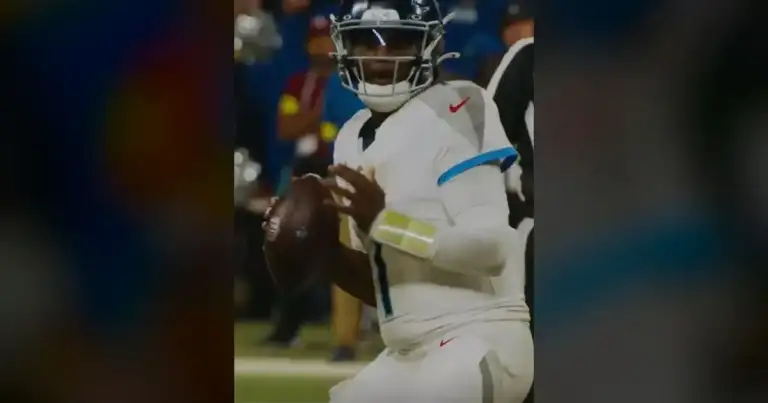

Another spring, another crop of ‘practice phenoms’ lighting up non-contact drills. Spare me the fluff. While Cam Ward and Shedeur Sanders are drawing whispers of greatness at OTAs, let’s cut through the noise: these second-year quarterbacks are walking a tightrope, and their every snap carries multi-million dollar implications for their respective franchises. The real NFL isn’t played in shorts; it’s a brutal business decided in the trenches, where careers and cap space are won and lost.
For the Tennessee Titans, Cam Ward’s reported “increased command” is a whisper of hope in a city desperate for a franchise arm. Head Coach Mike Vrabel, a man who knows the value of grit, has publicly lauded Ward’s “accelerated understanding of our scheme.” Insider chatter suggests Ward is indeed hitting intermediate routes with surgical precision and his pocket presence, a critical trait for survival, has sharpened. But let’s be clear: this is the bare minimum. He’s got to prove it when the bullets are flying and the defensive ends aren’t holding back.
Meanwhile, in Cleveland, Shedeur Sanders isn’t just “turning heads”; he’s turning up the heat on a quarterback room with massive financial baggage. Observers are raving about his exceptional accuracy and poise – traits that don’t just “solidify a backup role,” they threaten to rewrite the depth chart. Offensive Coordinator Ken Dorsey’s praise for Sanders’ “natural leadership and quick decision-making under pressure drills” isn’t just coach-speak; it’s a direct shot across the bow of Deshaun Watson’s monstrous contract. Sanders isn’t just pushing Watson; he’s giving the Browns’ front office a potential out, a strategic piece in a high-stakes game of contractual chess.
The OTA Mirage: Why Practice Isn’t Perfection
Let’s get real. These OTA reports are nothing but smoke and mirrors, a carefully orchestrated illusion. It’s non-contact football, a glorified seven-on-seven where defensive linemen are told to play patty-cake.
There’s no live pass rush, no bone-jarring hits, no NFL-level defensive coordinator unleashing hellish blitz packages. You think a vanilla scheme in May prepares you for the relentless pressure of a September slugfest?
The jump from practice speed to game speed in pads isn’t just a gear shift; it’s like going from a Sunday drive to a drag race with a target on your back. Rookies get a baptism by fire, but the sophomore leap demands consistent composure under siege. Can Ward and Sanders still make those lightning-quick reads, dissecting complex coverages, when the pocket collapses and the wolves are at the door? Or will they revert to deer-in-headlights mode? That, my friends, is the million-dollar question that separates the contenders from the footnotes.
And then there’s the ever-present specter of injury, the lurking beast that devours careers and derails franchise plans. One blindside hit, one awkward fall, one twisted knee, and a promising season – along with millions in future earnings and cap flexibility – can vanish in a puff of smoke. A year on the sideline isn’t just a physical setback; it’s a mental and developmental flatline. For a young arm, especially one on a rookie deal, losing that crucial second year of live reps is a catastrophic blow to their trajectory and the team’s investment.
Let’s be brutally honest: a quarterback is only as good as the five hogs protecting his blind side. You can have the arm of a god, but if the offensive line is a sieve, you’re just a sitting duck. Protection isn’t just paramount; it’s the foundation of any successful offense. Without a cohesive, dominant front, Ward and Sanders won’t be carving up defenses; they’ll be running for their lives, their development stunted by constant pressure and a lack of clean pockets. The trenches dictate everything.
Coaching stability and scheme adaptation? Those aren’t just buzzwords; they’re lifelines for a young quarterback trying to survive the NFL’s shark-infested waters. A new coordinator, a tweaked system, a philosophy change – any of it can send a young QB’s rhythm into a tailspin, forcing them to relearn the playbook when they should be perfecting their craft. Consistency isn’t a luxury; it’s a necessity for growth. The mental grind in this league is a meat grinder, far more punishing than any physical toll. Can these guys handle the constant adjustments, the endless film, the pressure to perform week in and week out?
The sophomore slump isn’t a myth; it’s a gauntlet. The pressure in year two doesn’t just multiply; it suffocates. Expectations skyrocket, every snap is dissected, and the league has a full year of film to pick apart their tendencies. Can they adapt? Can they evolve? Can they learn from every mistake without letting it break their spirit? This isn’t just about arm talent; it’s about the steel between the ears. Mental fortitude, the unwavering belief in your own ability when everything goes sideways, is the ultimate separator in this brutal business.
Money, Momentum, and the Franchise Future
Let’s talk brass tacks. These young arms aren’t just players; they’re multi-million dollar investments, strategic chess pieces in a brutal financial game. Cam Ward, for the Titans, is currently on a cost-controlled rookie contract, likely carrying a cap hit under $5 million for the next few seasons. His success isn’t just “critical”; it’s the lynchpin of their entire rebuild. A hit at QB on a rookie deal frees up tens of millions in cap space, allowing them to fortify the offensive line, add defensive playmakers, or retain key veterans. His failure? It sets them back five years and forces them back into the quarterback carousel, burning draft capital and precious cap space.
If Ward blossoms into a true franchise cornerstone, the Titans secure their future at the most important position in sports. They can build a legitimate contender, allocating significant cap space – perhaps an additional $20-30 million annually – to other roster needs. But if he falters, if he proves to be another swing-and-a-miss, then the Titans are staring down a financial abyss. It’s not just a “setback”; it’s a catastrophic blow to the organization, forcing them to eat dead money, waste draft picks, and plunge back into the QB market, likely having to overpay for a stopgap solution.
Shedeur Sanders, on the other hand, is a strategic weapon in the Cleveland Browns’ arsenal, a ticking time bomb under Deshaun Watson’s colossal contract. He’s not just “elite backup insurance”; he’s a leverage play. His continued growth doesn’t just make him a “potential future trade piece”; it makes him an immediate threat. Every accurate throw, every poised decision from Sanders gives the Browns’ front office more power, more options. He’s not just challenging Watson for the starting job; he’s challenging the very premise of Watson’s $230 million fully guaranteed deal.
Let’s not mince words: Watson’s contract is an anchor, a $230 million fully guaranteed albatross around the Browns’ neck. If Sanders continues to ascend, it doesn’t just “change the power dynamic”; it fundamentally shifts it. The Browns, who are currently handcuffed by Watson’s deal, suddenly gain immense leverage. They can seriously contemplate a future beyond Watson, potentially exploring a trade or even a post-2024 release with a significant dead cap hit, knowing they have a viable, cost-controlled alternative in Sanders. This isn’t just about competition; it’s about financial flexibility and the future of the franchise.
So, what does a real “sophomore jump” look like in this league? It’s not just a feeling; it’s cold, hard data. Historically, we’re talking about a tangible 5-10% bump in completion percentage, a dramatic reduction in turnovers – dropping from double-digit interceptions to under eight is the baseline – and a significant uptick in touchdown production. According to ESPN analytics, true second-year starters see an average 7-10 point increase in their passer rating. These aren’t just arbitrary numbers; they are the benchmarks, the minimum standard for a quarterback truly taking the reins and proving he’s worth the investment.
These aren’t just abstract statistics for fantasy football nerds; they are the undeniable indicators of a quarterback mastering the brutal chess match that is NFL football. They signal a deeper understanding of defensive schemes, a heightened confidence in the pocket, and a ruthless efficiency in execution. This is the cold, hard reality. This is the trench warfare of the mind, and if Ward and Sanders can’t hit these marks, then all the OTA hype is just that: hype.
So, let’s be clear: OTA success is a mirage, a fleeting whisper in the spring wind. It’s a decent first step, but the real work, the gut-wrenching, soul-crushing work, begins when the pads come on, the lights blaze, and 70,000 screaming fans demand results. The trench warfare of a full NFL season, the relentless pressure, the financial stakes – that’s what will truly forge or break Cam Ward and Shedeur Sanders. Everything else is just practice. In this league, practice only gets you so far before the real money talks.
Source: Google News