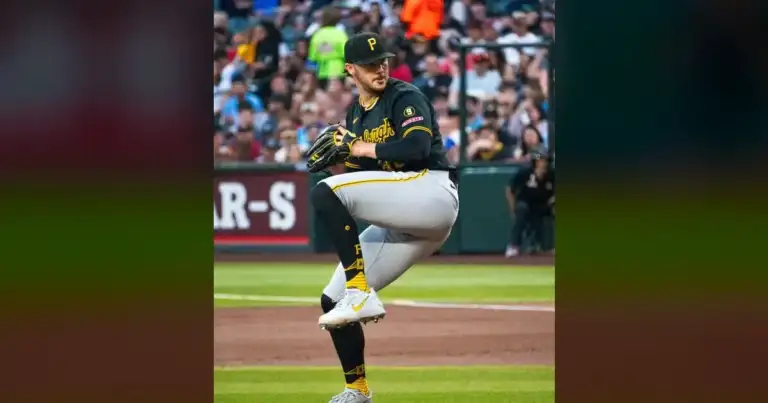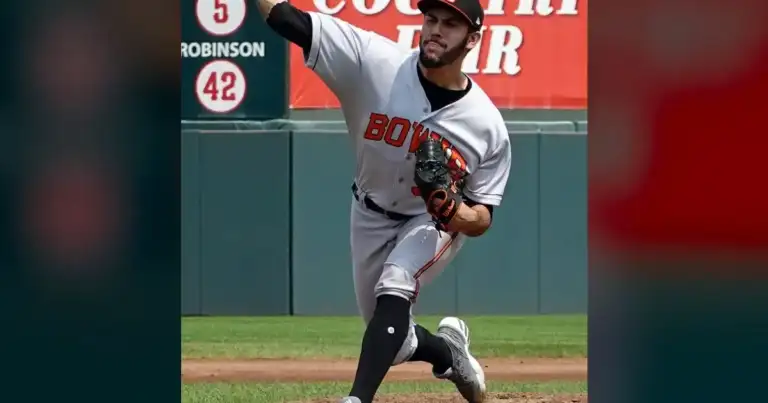

You want to talk about a “Beltway Beatdown”? Forget the political theater. What we witnessed in Baltimore was a baseball beatdown of a different, more insidious kind – a public declaration that the Orioles’ emperor has no clothes, and their pitching philosophy is a house of cards. The Rays didn’t just win 16-6; they exposed a fundamental rot, a tactical retreat disguised as a baseball game, brought to you by the folks who think spin rate trumps guts and command.
16-6. Let that sink in. Sixteen runs. Against a supposed contender. At home. Grayson Rodriguez, who looked less like a “high-ceiling” prospect and more like a batting practice pitcher, lasted a paltry 2.2 innings, surrendering 7 earned runs on 7 hits, including a soul-crushing grand slam, and walking two. For three hours and twenty-five minutes, nearly 29,000 souls sat there, watching the Orioles’ pitching staff unravel like a cheap suit, a spectacle of modern pitching’s hubris.
The Folly of Modern Pitching Development
Rodriguez, a guy with real potential, was pulled before he could even qualify for a loss. One of his shortest outings of the year, sure, but far more telling than any “quality start” statistic. How many times are we going to see these so-called “high-ceiling” arms get absolutely shelled?
The analytics department has them chasing velocity and strikeout numbers over actually learning how to pitch. They talk about “stuff,” about “swing-and-miss,” but when you can’t throw a changeup for a strike or locate your fastball when it matters, all that “stuff” turns into batting practice.
The Rays made batting practice of it, scoring in six different innings. A five-run fifth included a grand slam off a pitcher with “elite spin rates.” Elite spin rates don’t mean a damn thing if the ball keeps finding the bleachers.
You don’t give up a grand slam without a fundamental breakdown in approach, not just execution. Command first, then power – that’s the unwritten rule betrayed here.
This isn’t just about one bad outing for Rodriguez. This is about the Orioles’ entire pitching philosophy, a strategy seemingly designed in a spreadsheet, not on a mound.
They’ve invested heavily in these power arms, chasing the modern ideal of the high-velocity, strikeout machine. But when those arms get tired, or their “A” stuff isn’t there, what’s the fallback? There isn’t one.
It’s a house of cards built on algorithms, collapsing spectacularly when faced with a lineup that simply waits you out and makes you throw strikes. The Rays didn’t need to be geniuses; they just needed to be patient and exploit predictable patterns.
Too many modern pitchers, shackled by data-driven mandates, fall into these. Where is the art of pitching, the subtle change of pace, the dirty slider for a ground ball? Gone, replaced by a desperate chase for the K.
The Financial Fallout of Flat Performance
A game like this isn’t just a blip on the radar; it’s a stark data point that costs money. Every time Rodriguez gets lit up like a Christmas tree, it doesn’t just hurt his ERA; it gut-punches his future arbitration leverage.
It impacts the perceived value of the Orioles’ entire farm system, the very pipeline they’re banking on for sustained success. The front office, with their spreadsheets and projections, is constantly calculating these numbers, projecting future payrolls, trade assets, and free-agent targets.
When a cornerstone young pitcher struggles this mightily, especially in such a public, humiliating fashion, it forces tough, expensive questions. Do they need to spend more on veteran leadership in the rotation, buying proven, albeit older, arms at a premium? Does it make them more desperate at the trade deadline, potentially overpaying for a reliever who might just be another arm chasing velocity, another algorithmic gamble?
This isn’t just about winning or losing; it’s about the cold, hard bottom line. Fan confidence, season ticket renewals, merchandise sales – they all hinge on the perception of a competitive, competent team.
A 16-6 drubbing, especially against a division rival and at home, doesn’t just erode that confidence; it shatters it. It tells the fans that maybe this team isn’t as close as they thought, that the rebuild isn’t quite finished, or worse, that they’re building on a faulty foundation.
For a front office trying to maximize its revenue streams, trying to justify multi-million dollar investments in player development, that’s a problem far beyond the box score. It impacts the franchise’s ability to justify spending and attract top-tier free agents who want to play for a serious contender.
Ultimately, it impacts the team’s overall market value. You can’t sell hope when the product on the field is a disaster.
The whole thing was a clinic in how NOT to manage a pitching staff in the modern game. Too many walks, too many pitches down the heart of the plate when behind, and a complete inability to stop the bleeding. It’s the kind of game that makes you yearn for a grizzled veteran who knew how to pitch to contact, how to get out of a jam with a ground ball, how to manipulate a lineup, rather than constantly chasing the strikeout that never comes. Where are the pitchers who understand the game situation, who can throw a curveball for a strike when they’re down 3-0? They’ve been coached out of existence by the “spin rate” evangelists.
Red Marker Verdict
The Orioles’ 16-6 capitulation wasn’t just a bad game; it was a flashing red light on their entire pitching development strategy, a siren blaring for the front office to heed.
They’re so obsessed with cultivating “power arms” and “swing-and-miss stuff” that they’ve forgotten to teach these kids how to actually pitch in the big leagues – how to command, how to adjust, how to think.
The financial motive to churn out high-velocity, high-strikeout arms is clear, a siren song promising riches. However, the price of neglecting fundamental command and in-game adjustment is a brutal fifteen-run deficit and a serious hit to their organizational pride and future financial flexibility.
They’re playing moneyball, alright, but they’re losing dollars by the bucketload when the product on the field can’t hold water. Until they rediscover the lost art of pitching, these “beatdowns” will keep coming, costing them more than just games.
Source: Google News