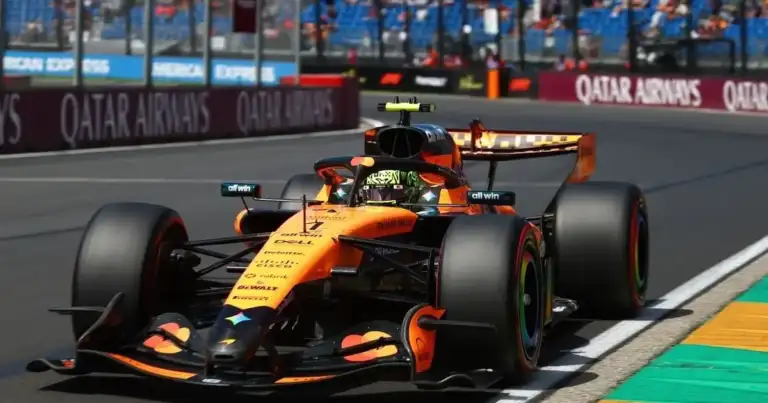

Forget your pit stop drama, your tire strategy debates. McLaren didn’t just drop a bomb on May 14, 2026; they detonated a digital warhead, partnering with Intel Corporation.
This isn’t just another logo slapped on a car. It’s a tech titan storming back onto the F1 grid, demanding a piece of the action. This is about raw data, obscene dollars, and the brutal, relentless pursuit of speed in a sport where milliseconds decide glory or ignominy.
Intel is back in Formula 1, and they’re not here to make friends. They’re McLaren’s new key technical partner in a multi-year strategic agreement designed to do one thing: supercharge McLaren’s performance. If you think this is corporate fluff, you haven’t been paying attention to how F1 is won these days.
What’s Intel bringing to the fight? Their heaviest artillery: advanced processors, AI, and software. We’re talking about weaponizing data analytics, forging simulation superiority, and accelerating aerodynamic development at a pace that should make rivals sweat.
This isn’t some peripheral integration. This tech is going to be woven into the very fabric of McLaren’s operations, from the Woking factory design labs straight to the trackside pit walls. It’s a total digital takeover, and if it works, McLaren will have an unfair advantage.
The Real Impact: Speed or Smoke?
Every gearhead, every fan with grease under their fingernails, is asking the same damn question: How does this Intel partnership actually translate to a faster car on the asphalt? Does it magically shave seconds off Lando Norris’s lap times?
No, not overnight. There are no magic bullets in F1. But the groundwork for a technological revolution has been laid, and McLaren is betting big.
First up, advanced data analytics. Intel’s processors aren’t just powerful; they’re hyper-efficient data crunchers. Telemetry data, that endless stream of information pouring off the car, will be processed faster than ever before.
This means engineers can pinpoint car setup flaws, identify performance bottlenecks, and react with surgical precision during a race weekend. We’re talking about gaining fractions of a second here and there. In F1, a fraction of a second is the difference between a podium and an also-ran, between champagne and bitter disappointment.
Then there’s enhanced simulation and AI. Forget basic computer models. Intel’s muscle means McLaren can run far more complex simulations.
Aerodynamics, tire degradation, race strategy – every variable can be modeled with unprecedented accuracy. This isn’t just about saving money on physical testing; it’s about developing a car in a virtual world that’s so precise, it translates directly to real-world dominance. Every minute detail, every tiny tweak, can be optimized before the car even hits the track. It’s a brutal grind, and AI is the new sledgehammer.
The true genius, or madness, of this deal lies in the integration. Intel’s tech isn’t just a bolt-on; it’s designed to flow seamlessly from the initial design phase to the frantic decisions made on the pit wall.
This rapid, flawless data exchange means faster car upgrades, more agile strategic calls mid-race, and a team that can adapt quicker than its rivals. McLaren has been chasing Red Bull and Ferrari for too long. They need every single edge they can get, and this is their digital declaration of war.
“We are thrilled to welcome Intel back to Formula 1 and into the McLaren Racing family,” said Zak Brown, CEO, McLaren Racing. “Their expertise in high-performance computing and AI is unparalleled. This partnership will be instrumental in unlocking new levels of performance.”
But let’s pump the brakes on the hype train for a second. While Zak Brown talks a big game, real, tangible on-track gains don’t happen with the flick of a switch.
We might see marginal improvements this season, sure. But the full, game-changing impact? That’s 1-2 seasons away, minimum. That’s when new car designs, built from the ground up to leverage this tech, hit the track. This isn’t a sprint; it’s a marathon, and McLaren better be ready for the long haul.
The Digital Arms Race Heats Up
Let’s be brutally honest. The internet is already a cesspool of cynicism. “Another tech giant, another logo,” they whine. “It’s just corporate aisle stacking!” And they’re not entirely wrong.
McLaren’s car already looks like a rolling billboard for Silicon Valley. So, is this genuinely about innovation, or is it just another display of marketing muscle, another check written to keep the lights on?
Pat Gelsinger, CEO, Intel Corporation, certainly talks a big game. He calls F1 the “ultimate challenge,” a perfect proving ground to “demonstrate the power of our technology.” That’s fantastic corporate speak.
But for the average fan, the one shelling out cash for merch and race tickets, it’s just another sticker on the sidepod. They don’t want press releases; they want wins. They want to see McLaren fighting for championships, not just boasting about their new server racks.
The truth is undeniable: this is a full-blown tech arms race. Red Bull has Oracle crunching their numbers. AWS is F1’s official cloud provider, feeding data to every team on the grid.
Intel isn’t just looking for a branding opportunity; they want to demonstrate their chips are superior. They want to prove their AI is sharper. And McLaren? They desperately want to beat Red Bull, Ferrari, and Mercedes.
This isn’t just a partnership; it’s a calculated, high-stakes gamble for both sides, with billions on the line.
The money involved in these deals is staggering. Industry analysts are whispering figures in the tens of millions annually. We’re not just talking about cold hard cash, either.
We’re talking about state-of-the-art hardware, custom software solutions, and a direct pipeline to some of the brightest engineering minds at Intel. McLaren needs that firepower. They need to close the gap.
This Intel deal isn’t just a shot across the bow; it’s a broadside aimed squarely at the competition.
McLaren’s Ultimate Bet: Brains Over Brawn?
This isn’t just about a new sponsor or a shiny new logo. This is McLaren going all-in on the digital battlefield, betting that Intel’s sheer processing power and AI intelligence can give them the undeniable edge they’ve been craving. They’re gambling on data, on algorithms, on the invisible forces that shape modern F1.
The real question isn’t whether Intel’s tech is good. It’s whether McLaren can integrate it faster, utilize it smarter, and exploit its potential better than anyone else on the grid.
Because in Formula 1, the fastest chip doesn’t win the race. The fastest car does. And ultimately, that responsibility, that pressure, still rests squarely on the shoulders of the McLaren team.
Can they turn silicon into silverware, or will this just be another expensive experiment?
Source: Google News