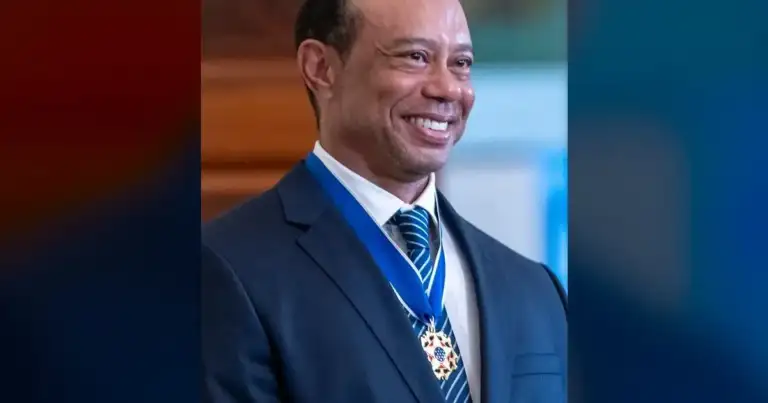

Let’s be brutally honest: Tiger Woods’ latest DUI isn’t just a misstep; it’s a tragic, predictable encore in a long-running drama of self-destruction. The golf icon, found passed out at the wheel with a pharmacy’s worth of pills in his system, isn’t just a cautionary tale – he’s a living, breathing example of how far privilege and denial can stretch before reality finally bites.
Tiger’s Latest DUI: A Script We Know Too Well
Palm Beach County Sheriff’s deputies pulled back the curtain on this latest act. At 3 AM in Jupiter, Florida, they found Woods’ Mercedes-Benz adrift, the man himself reportedly incoherent, his speech slurred, his movements uncoordinated. He “failed” roadside sobriety tests, which, let’s be frank, is probably an understatement. Woods, ever the master of the convenient narrative, claimed he was on a cocktail of Vicodin and Xanax. Convenient, isn’t it? As if those are just innocent little candies.
This isn’t breaking news; it’s a broken record. The internet, predictably, exploded. TMZ broke the story, and the digital pitchforks came out in full force. The public isn’t just tired; they’re exhausted by the endless cycle of scandal, apology, and repeat. It’s less a fall from grace and more a continuous, slow-motion tumble down a very public staircase.
“The post quickly went viral, sparking heated debate across the platform.”
“Critics were quick to point out the obvious contradiction.”
The Perpetual Comeback Kid: When Does the Act Get Old?
Remember 2009? The infamous Thanksgiving crash that blew his carefully curated image to smithereens? The parade of mistresses, the shattered marriage, the “squeaky-clean” facade crumbling into dust? We were told he hit rock bottom. We believed him. Then came 2017 – another DUI, another cocktail of drugs: Hydrocodone, hydromorphone, alprazolam, zolpidem, and THC. A veritable pharmacopeia. He blamed pain. We, the ever-forgiving public, nodded sympathetically. “Poor Tiger,” we thought. “All those injuries.”
But here we are again. Another DUI. More pills. How many chances does one man get before we stop seeing a victim and start seeing a pattern of reckless disregard? The public isn’t just questioning his judgment; they’re questioning his sincerity. Is this a genuine cry for help, or just another chapter in the “woe is me” saga of a man who seems to believe the rules don’t apply to him?
The “Pain Management” Smokescreen: Enough is Enough
Woods’ go-to defense? The “pain management” narrative. Fifteen back surgeries. A body that’s been through the wringer. We’ve heard it ad nauseam. Yes, professional sports are brutal. Yes, athletes endure unimaginable pain. But at what point does “pain management” morph into a convenient excuse for self-medication and dangerous behavior? When does it become a shield to deflect legitimate criticism?
Former PGA pro Mark Lye didn’t mince words. He called for a suspension, citing the PGA’s “morals clauses.” Lye argued, with undeniable logic, that this is Woods’ fourth major incident since 2009. This isn’t a lapse; it’s a lifestyle. The fans on Reddit and X (formerly Twitter) are not buying the victim narrative anymore. They see a cycle: crash, pill-pop, repeat. It’s not about sympathy; it’s about accountability. And frankly, it’s about public safety. What if he had hit someone?
“Tiger’s body is a junkyard, brain’s the tow truck—retire before you kill someone.” – r/golf user, echoing the sentiments of many frustrated fans.
It’s a stark reminder that even with unlimited resources, the best doctors, and an army of enablers, personal responsibility still matters. Woods isn’t some struggling everyman; he’s a multi-millionaire with access to every therapy and treatment known to man. His choices are his own.
The Opioid Crisis and Elite Athletes: A Convenient Distraction?
Woods’ predicament, while uniquely high-profile, does unfortunately shine a light on a darker issue: the pervasive problem of pain management and opioid dependence among elite athletes. They push their bodies to the brink, face immense pressure, and injuries are a given. Opioid prescriptions become the quick fix, the magic bullet to keep them on the field, court, or course. But that quick fix can become a deadly trap.
Many athletes fall victim to addiction, struggling with dependence long after their playing days are over. Woods’ story, in a twisted way, highlights a systemic failure. The sports world demands peak performance, often at the expense of long-term health, and then frequently leaves these athletes to grapple with the consequences. However, we must distinguish. Woods is not a pawn in a larger game; he is a player making his own moves, however self-destructive they may be.
Sponsors: Loyalty or Liability?
Normally, controversy is kryptonite for sponsors. But Tiger Woods isn’t normal. His star power, even tarnished, remains immense. Companies like Nike and TaylorMade have, for years, weathered the storms, clinging to the hope of his next “comeback.” But how many DUIs, how many pill-popping incidents, can even a legend endure before he becomes a brand liability?
Golf Channel pundits, ever so politely, are starting to whisper about sponsors finally bolting. They’re urging him to “fix his health,” which is code for “clean up your act before you drag our brands through the mud.” It’s not just about his swing anymore; it’s about brand safety. It’s about optics. Even his “close friend” Donald Trump’s pity-tweet felt less like genuine concern and more like a clumsy attempt at damage control, a deflection that fooled precisely no one.
Redemption or Ruin: The Final Chapter?
Tiger Woods’ golfing achievements are etched in history. He is, undeniably, a legend. But his personal life, a chaotic mess of scandal and self-inflicted wounds, increasingly threatens to overshadow that legacy. He stands at a crossroads, again. Does he finally face his demons, not with another carefully worded public statement, but with genuine, transformative change?
The golf world watches, the public watches, holding its breath. They want to believe in him, but their patience is wearing thinner than an old golf glove. This latest incident isn’t just a warning; it’s a blaring siren. The “Tiger” we idolize on the course is a carefully constructed persona, a stark contrast to the troubled man off it. And that, dear readers, is a bitter, bitter pill for us all to swallow.
Source: Google News