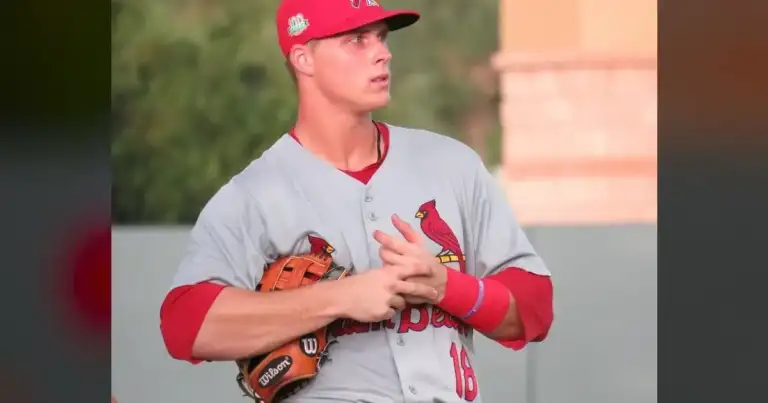

Let’s not mince words: Nolan Gorman’s tenure in St. Louis is circling the drain, and frankly, it’s about time. His bat, or lack thereof when it truly matters, is a luxury the Cardinals, a franchise built on winning, simply cannot afford as they scratch and claw in the NL Central. This isn’t just about a slump; it’s about a fundamental misalignment with the club’s philosophy and, more importantly, a looming financial headache.
The front office, despite what they might say publicly, is facing a critical juncture for 2027. Gorman’s recent performance against the Cubs wasn’t just dismal; it was a flashing red light. A pathetic 1-for-11 with 7 strikeouts in a crucial divisional series? That’s not how you play winning baseball, and it certainly isn’t how you justify future salary demands.
The Power-Strikeout Paradox: A Modern Affliction
His problem isn’t a secret; it’s an open wound for any traditionalist. Gorman can launch a baseball, no doubt, with 21 home runs this season. But what good is a moonshot when you’re batting a putrid .208 overall? His projected strikeout rate for 2026, north of 35%, isn’t just high; it’s an indictment. This isn’t a viable profile for an everyday player on a serious contender; it’s a black hole in the lineup.
This obsession with ‘launch angle’ and ‘exit velocity’ has warped the game, making clubs tolerate these free-swinging, all-or-nothing sluggers. But a real baseball club, one forged in the crucible of tradition like the St. Louis Cardinals, demands more. They need professionals who can put the ball in play, who understand the art of the contact hitter. We need contact in crucial moments, not another futile swing and a whiff with runners stranded on base, watching the game slip away.
Manager Oliver Marmol, bless his heart, attempted to spin gold from straw after that disastrous Cubs series. He offered the standard company line:
“Nolan’s power is undeniable… but consistency is key at this level.”Let’s translate that from corporate jargon: ‘We’re desperate for more, and the clock is ticking.’ It’s a direct message from the top brass: every at-bat is under scrutiny, and the balance sheet is being updated in real-time.
The Money Talks: Gorman’s Arbitration Year Looms Large
Forget the romanticism of the game for a moment; this is about cold, hard cash. Gorman is barreling towards his arbitration years in 2027, meaning the Cardinals are on the hook for a significant pay raise. Can any sensible front office justify escalating the salary of a player whose primary contribution is a 35% strikeout rate and a sub-.210 batting average? That’s not an investment; that’s throwing good money after bad. The unwritten rule of baseball economics is simple: you pay for production, not potential that never materializes.
The Cardinals, currently mired in a middling 59-60 record, are fighting for their playoff lives. They cannot afford a designated liability in the heart of their lineup. The front office, under John Mozeliak, has always preached value and consistent production. Gorman’s current stat line doesn’t just fail to scream ‘long-term investment’; it actively shouts ‘expensive mistake waiting to happen.’ What kind of message does it send to the rest of the clubhouse if you reward such inconsistency?
As one veteran beat writer, who understands the pulse of this club, recently observed:
“The clock is ticking for Gorman… unless he makes significant adjustments.”The brutal truth? Those ‘significant adjustments’ haven’t materialized, and there’s little evidence they ever will. This team, a team built on manufacturing runs and relentless pressure, desperately needs on-base threats, not merely the occasional, isolated home run swing that often comes after two or three empty hacks.
Who Steps Up? The Internal Candidates for 2027 and The Cardinals Way
The beauty of a well-run organization like the Cardinals is that they always have a contingency. If Nolan Gorman’s precarious grip on an everyday spot finally slips, St. Louis isn’t left scrambling. Their farm system, a consistent pipeline of talent, is already churning out viable replacements. This isn’t just ‘healthy competition’; it’s a cold, hard dose of reality for any inconsistent player, veteran or otherwise. The next wave is always coming, and they’re cheaper.
Let’s look at the internal options, the hungry young guns who embody the real Cardinals Way, not this analytics-driven nonsense:
- Thomas Saggese: This kid isn’t just ‘tearing it up’ at Triple-A Memphis; he’s demonstrating a complete offensive profile. Saggese is slashing .315 with 18 home runs and 70 RBIs in 2026. Crucially, he offers defensive versatility at both second and third base. But his true value? He possesses a contact-oriented approach, a skill that’s become a tragically lost art in today’s all-or-nothing game. He puts the ball in play, creates havoc, and doesn’t leave runners stranded.
- Brendan Donovan: Donovan is more than a proven utility player; he’s a professional hitter. His high on-base skills, evidenced by a robust .360 OBP in 2026, are exactly what this lineup desperately needs. His defensive versatility across the infield is invaluable, allowing the club flexibility. While he won’t hit 30 home runs, his consistent contact and reliable glove make him an immediate, tangible upgrade for an everyday role, most likely at second base, effectively rendering Gorman redundant.
- Masyn Winn: Winn is already the undisputed everyday shortstop, a foundational piece. His presence alone dictates much of the infield alignment. While he’s not directly competing for Gorman’s spot, his established role means other positions are fluid, and the organization can focus on filling the gaps with players who fit the mold.
- Victor Scott II: Though primarily an outfielder, Scott’s elite speed and defense put pressure on every position. If the team prioritizes his game-changing defensive prowess and ability to get on base and wreak havoc, it could necessitate shifts that further squeeze out a one-dimensional player like Gorman. It’s about building a cohesive unit, not just collecting power bats.
The Cardinals’ fundamental philosophy demands a balanced offensive attack. They crave players who get on base, relentlessly move runners, and play fundamentally sound defense. Gorman, despite his occasional towering blast, simply doesn’t align with that vision right now. His abysmal .295 on-base percentage isn’t just ‘not good enough’; it’s a detriment to any serious offensive strategy. It’s a black mark on the ledger.
Let’s be clear: the St. Louis Cardinals have never shied away from making the tough, financially prudent decisions. This isn’t a franchise that clings to ‘upside’ when consistent, tangible production is absent. They’ve cut ties with power-hitting infielders before – players with similar statistical profiles – when more reliable, more complete options surfaced from within or via trade. The ‘Cardinals Way’ isn’t some romantic ideal; it’s a pragmatic, winning philosophy built on fundamental baseball, not highlight-reel home runs that often mask gaping holes in a lineup.
This team’s very DNA screams for reliable contact, for players who can deliver in the clutch, who understand situational hitting. Gorman’s 7 strikeouts in a single, pivotal three-game series against a division rival aren’t just a blip; they are a glaring, neon sign. The writing isn’t just on the wall; it’s etched in stone, visible from Busch Stadium to the front office suites. His future in St. Louis beyond 2026 isn’t just bleaker; it’s virtually nonexistent.
The verdict is in. It’s time for the Cardinals to cut bait, to sever ties with a player who, despite his raw power, has become an expensive liability. They have ready, capable, and financially sensible replacements waiting in the wings, players who embody their winning philosophy. Nolan Gorman isn’t just an inconsistent hitter; he’s a luxury this team, fighting for every dollar and every win, can no longer, and frankly, should no longer, afford. The business of baseball dictates a change, and the Cardinals would be foolish not to heed it.
Source: Google News