
Forget the champagne and the roar of the crowd; the 2026 British Grand Prix at Silverstone was an absolute robbery, a total farce that proved F1’s Safety Car rules are not just broken, they’re a damn joke.
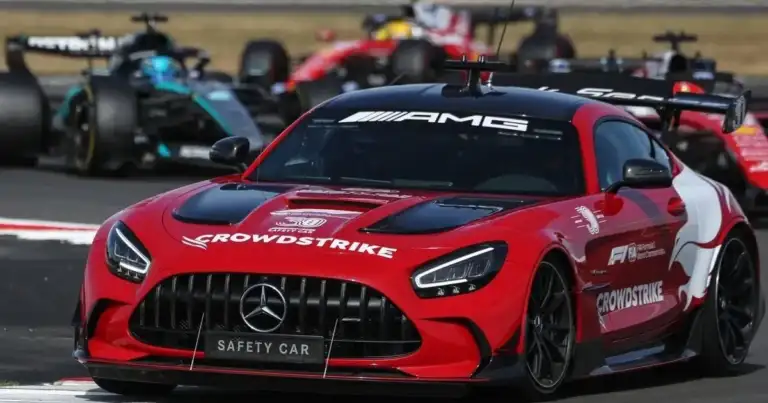
A late crash froze the action, and like clockwork, the race director — in their infinite wisdom — deployed the Safety Car on Lap 49 of 52. This wasn’t a safety measure; it was a death blow to any chance of a thrilling showdown, a gut punch to every fan watching.
The Silverstone Sham: A Robbery in Broad Daylight
The culprit? A collision between Haas driver Nico Hülkenberg and Alpine’s Pierre Gasly at Stowe Corner. Standard stuff, right? But with just three laps left, the Safety Car emerged, and the bizarre ritual of lapped cars unlapping themselves began. It’s a procedure designed to clear the track, but in practice, it just eats up precious racing time.
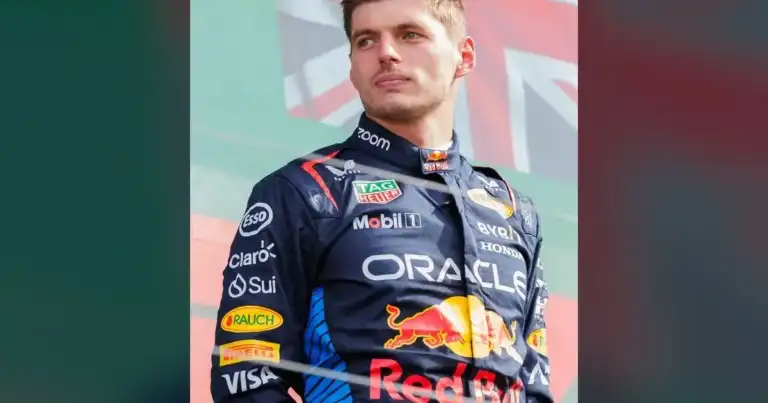
But here’s the kicker: the clock ran out. The race finished behind that damn Safety Car, turning what should have been a nail-biting sprint to the flag into a pathetic parade. Max Verstappen, who had been leading comfortably, took the win, but let’s be honest, even he must have felt the victory was hollow, a trophy won by default, not by daring.
Other drivers? They were flat-out robbed. Mercedes’ George Russell, fighting tooth and nail for a podium, had his battle snuffed out. McLaren’s Lando Norris, with pace to burn, watched helplessly as his chance to gain crucial spots evaporated.
The FIA, predictably, trotted out their usual, pathetic ‘safety issue’ excuse, claiming there wasn’t enough time to restart. Let’s be clear: that’s not just tired, it’s a bald-faced lie designed to cover their own incompetence and a blatant disregard for the spectacle.
Even the drivers, usually so diplomatic, couldn’t hide their disgust.
“It’s a shame for the fans and for us drivers not to have a proper race finish. We push so hard for 50-odd laps and then it just ends like that. We need to look at this.” – George Russell, speaking to Sky Sports F1
“I think the FIA needs to have a proper conversation about how to end races. We want to race to the flag, not behind a Safety Car. It’s frustrating when you feel like you had more to give.” – Lando Norris, quoted by BBC Sport
Verstappen, ever the pragmatist, played it cool. “Of course, you always want to finish under green, but the rules are the rules,” he shrugged. “Safety is always the priority.” Easy for the man standing on the top step to say, isn’t it? When you’re the one benefiting from a neutered finish, ‘safety’ suddenly sounds a lot like ‘convenience’.
Abu Dhabi Deja Vu – A Pattern of Failure
This isn’t some isolated incident; it’s a recurring nightmare. The 2021 Abu Dhabi Grand Prix, a championship decider that ended in similar, scandalous chaos, should have been the wake-up call. It sparked massive rule changes, specifically updating Article 48.12 (now 55.12) to mandate all lapped cars unlapping themselves. The promise? To prevent a repeat. The reality? It clearly, spectacularly, failed.
The British GP isn’t just proof the problem still exists; it’s a screaming siren. The debate shouldn’t even exist: should F1 prioritize some rigid, by-the-book procedure, or should it guarantee a racing finish for the millions of fans worldwide? The answer is so blindingly obvious it’s insulting to even ask. We don’t shell out our hard-earned cash to watch a damn parade lap! The FIA needs to yank its head out of the sand. Their current rulebook isn’t just leading to an anticlimax; it’s actively sabotaging the sport’s greatest moments.
Red Flags: The Only Way to Deliver a Real Finish
So, what’s the solution? It’s not rocket science. The biggest question now is simple, yet the FIA continues to dance around it: Will F1 finally grow a spine and adopt a “red flag first” policy for late-race incidents? This isn’t radical; it means red-flagging races, clearing the track, and guaranteeing a proper standing restart. No more limping to the finish line.
The mechanism is already in their toolkit! The 2025 Monaco Grand Prix, a race notorious for its procession-like nature, proved it works flawlessly. A multi-car pile-up was cleared under a red flag, allowing for a thrilling, heart-stopping restart. It works. The drivers, the ones actually risking life and limb, want it. Legends like Lewis Hamilton and Fernando Alonso have been vocal proponents, because unlike the bureaucrats, they actually understand what the fans, the lifeblood of this sport, truly crave.
The FIA’s ‘safety’ argument? It’s not just weak; it’s a flimsy smokescreen. Red flags don’t compromise safety; they enhance it. They allow marshals to clear the track thoroughly and safely. They give teams a chance to prepare for a proper standing start. This ensures safety and delivers a racing finish. It’s not artificial drama; it’s pure, unadulterated common sense staring them in the face.
Yes, red-flagging takes a few extra minutes. Cars have to return to the pits, the track needs to be pristine. So what? A brief pause is a small price to pay for a legitimate, adrenaline-fueled finish. It builds tension, creates undeniable drama, and most importantly, it gives the fans exactly what they shelled out their hard-earned money to witness: racing, not a funeral procession.
The Fan Betrayal – A Rip-Off at Silverstone
Fans aren’t just ‘fed up’; they’re furious, and rightly so. Social media exploded with righteous indignation. Nobody, absolutely nobody, wants to see a race conclude behind a Safety Car. It’s not just an anticlimax; it’s a blatant rip-off, a betrayal of trust that cheapens the entire event and leaves a bitter taste in the mouth of every loyal follower.
This isn’t just about hurt feelings; it has real consequences. This kind of gutless ending impacts viewership, decimates fan engagement, and ultimately, lowers sponsorship value. F1 isn’t just a sport; it’s a multi-billion dollar entertainment product. It must deliver excitement, drama, and a definitive conclusion. Procedural endings aren’t just boring; they’re a death knell for passion, a slow, agonizing bleed for the sport’s very soul.
This sport prides itself on blistering speed, cutting-edge technology, and unparalleled drama. Yet, it can’t manage to deliver a clean, decisive finish when it matters most. This isn’t a minor glitch; it’s a fundamental, glaring flaw that makes F1 look utterly incompetent, a bureaucratic mess more concerned with ticking boxes than delivering thrills. It makes the racing less compelling, less meaningful, and frankly, less worth watching.
Time For Action – Or Face the Consequences
The outcry after the British GP isn’t just noise; it’s a roar that cannot be ignored. This issue isn’t ‘hot’; it’s a raging inferno, and it damn well better be at the top of the agenda for the next F1 Sporting Working Group meeting. Teams aren’t just allowed to propose rule amendments; they must demand them. The FIA can’t just ‘listen’; they must act decisively, or face the wrath of a betrayed fanbase.
The sport needs a crystal-clear, non-negotiable policy: if an incident happens late in the race, you throw the damn red flag. Period. Clear the track. Reset the field. Give us a standing start, wheel-to-wheel, white-knuckle racing, and let the drivers settle it on the track, not behind a glorified pace car.
Anything less isn’t just a disservice; it’s a gutless cop-out, a monumental slap in the face to every single loyal fan who invests their time, money, and passion into this sport. F1 cannot, under any circumstances, afford another anticlimactic ending like Silverstone. The stakes are too astronomically high for the sport’s future, for its very credibility. It’s time for the FIA to stop hiding behind the convenient shield of ‘safety’ and finally, unequivocally, put the racing first. Give us the finish we deserve, or watch your sport slowly bleed out. The ball’s in your court, FIA. Don’t screw it up again.
Source: Google News