
The roar of the crowd, the glint of Lord Stanley’s Cup, the sheer delirium of victory – it wasn’t just a championship celebration in Carolina. It was a declaration. The Hurricanes’ “jock and nerd alliance” didn’t merely win; they rewrote the very playbook for hockey success, delivering a blueprint that will send tremors through every front office in the league. This isn’t a fleeting trend; it’s a monumental shift, a thunderclap confirming that brains and brawn, meticulously melded, forge an unstoppable force.
The Carolina Hurricanes didn’t just ‘lift’ Lord Stanley’s Cup; they hoisted it aloft as a symbol of revolution. Their triumph was the culmination of relentless years spent perfecting a strategy so audacious, so forward-thinking, it defied conventional wisdom. Under the visionary leadership of General Manager Don Waddell and the fiery guidance of Head Coach Rod Brind’Amour, they forged an unholy, yet undeniably potent, blend of old-school hockey grit and cutting-edge data analytics.
This “jock and nerd” model is no longer merely ‘the talk’ of the NHL; it’s the gospel. Post-championship dissections of their triumph reveal a masterclass in execution. This team didn’t just play; they orchestrated. They married relentless, bruising physicality with the sharpest edge of sports science, creating a system built not just for a single glorious moment, but for an era of sustained dominance. Can any other franchise truly claim such a profound philosophical foundation?
The Brind’Amour Paradox: From Warrior to Wizard
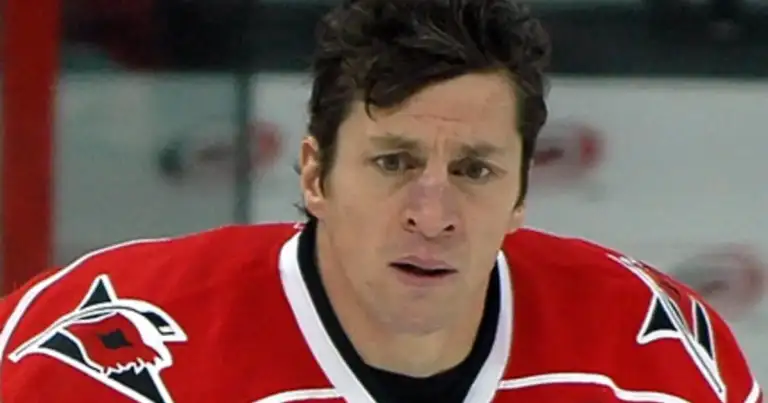
Rod Brind’Amour, a legend forged in the crucible of NHL battles, a former Selke Trophy winner, was the quintessential “jock.” He played with an intensity that bordered on the feral, a two-way dominance that left opponents gasping. Yet, this same warrior now stands as the undisputed architect of the NHL’s most analytically advanced champion. Is there a greater paradox in the annals of hockey history?
His system is a beautiful, brutal beast. It demands high-intensity forechecking, a suffocating defensive responsibility, and a relentless pursuit of the puck. But crucially, it leverages advanced metrics for everything. From player deployment to intricate line matching, from critical in-game adjustments to understanding fatigue, data isn’t just a tool; it’s the compass. This hybrid model doesn’t just challenge traditional hockey philosophy; it shatters it, leaving the old guard scrambling to pick up the pieces.
Brind’Amour himself, ever the pragmatist, articulated this evolution to ESPN in June 2026:
“We preach hard work, accountability, and playing the right way. But ‘the right way’ evolves. We’re always looking for an edge, whether it’s in the gym, on the ice, or in the data we analyze. It’s about giving our guys every tool to succeed.”
That quote isn’t just a soundbite; it’s a manifesto. It’s the philosophy that transformed a team into a dynasty.
Data Doesn’t Lie: Carolina’s Unassailable Edge
The Hurricanes don’t just win; they dominate the numbers. Their consistent supremacy in key analytical categories isn’t merely supportive of the “jock and nerd” thesis; it’s irrefutable proof.
- Corsi For % (CF%): Consistently among the league’s elite, a testament to their suffocating puck possession.
- Expected Goals For % (xGF%): Regularly sky-high, demonstrating their uncanny ability to generate high-danger scoring chances from relentless pressure.
- Forechecking Pressure: Unmatched across the league, they lead in offensive zone time, turning opponents’ breakouts into nightmares.
- Penalty Kill Efficiency: Their data-driven, aggressive PK isn’t just good; it’s consistently elite, a weapon rather than a weakness.
GM Don Waddell, the quiet force behind the scenes, confirmed this strategic direction to The Athletic in June 2026, pulling back the curtain on their meticulous approach. “We’ve built this team with a clear vision: high-character players who fit our system,” Waddell declared. “Analytics don’t just help us identify those players; they provide a profound understanding of how they perform within our intricate structure, revealing synergies others simply miss.”
This isn’t merely about crunching numbers; it’s about a profound organizational investment. The Hurricanes didn’t just dabble in sports science; they plunged headfirst, investing heavily in a dedicated staff. Video coaches and data analysts aren’t siloed; they’re embedded, working directly and seamlessly with the coaching staff, a symbiotic relationship that few rivals can boast. This commitment isn’t just ‘clear’; it’s etched into the very DNA of their operational structure, a living, breathing testament to their belief in the process.
Blueprint or Anomaly? The NHL’s Great Reckoning
So, is this truly the new blueprint for NHL success, a path for all to follow? Or is Carolina’s triumph a unique, unrepeatable anomaly? Let me be unequivocal: this is absolutely the blueprint, but make no mistake, it’s a blueprint etched in blood and sweat, one that will be agonizingly difficult to copy.
Yes, many NHL teams now boast analytics departments. But how many truly integrate them, not as an afterthought, but as the very bedrock of their strategy, much like the Hurricanes? The enduring partnership of Waddell and Brind’Amour fostered a rare consistency, allowing their revolutionary philosophy to evolve, mature, and finally, blossom into a championship. That kind of deep-rooted, philosophical alignment isn’t something you can simply download overnight; it’s earned through years of shared vision and unwavering commitment.
Moreover, the Hurricanes’ system demands a specific, almost mythical, type of player. They require high-motor, defensively responsible athletes who possess both the physical fortitude and the intellectual curiosity to thrive. These aren’t just players; they are disciples, individuals who must buy into a demanding, high-pace, relentlessly precise style of hockey. Does every team possess the scouting infrastructure, the cultural gravitas, or indeed, the sheer courage to find and cultivate such a unique breed of athlete? I doubt it.
Sebastian Aho, a Hurricanes forward who embodies this ethos, spoke to NHL.com in June 2026, offering a glimpse into the locker room’s mindset. “It’s a demanding system, no doubt, but it works,” Aho affirmed. “We trust the coaches, and we trust the process. We know the data supports what we’re trying to do.” That trust, that unshakeable belief in the methodology, is not merely everything; it’s the invisible glue binding their jocks and nerds into an unbreakable whole.
The Old Guard’s Last Stand?
This Stanley Cup victory is more than a definitive statement; it’s a thunderous pronouncement. Analytics are no longer a niche tool, a statistical curiosity for the curious few. They are a core, indispensable component of championship teams, the very oxygen of modern hockey success. The days of relying solely on “gut feeling,” on the tired clichés of “old-school hockey,” are not just numbered; they are drawing to a rapid, ignominious close. Teams clinging to outdated philosophies will not merely fall behind; they will be left in the dust, relics of a bygone era. This is the new era of hockey, a brutal, beautiful symphony that demands both the raw, physical grind of the warrior and the sharp, intellectual edge of the wizard. Adapt, or perish. The choice is yours, NHL. The Hurricanes have shown the way.
Photo: Wikimedia Commons (query: Rod Brind’Amour)
Source: Google News