
Let’s get one thing straight, folks. When you call yourself “Money” Mayweather, when you’ve built an entire career, an entire empire, on flashing stacks of cold, hard cash, on showing off private jets and diamond-encrusted watches, there’s an unspoken contract with the public.
That contract says you’re not just rich; you’re financially invincible.
So when news drops that Floyd Mayweather Jr. has allegedly been fleeced out of a mind-boggling $175 million, you don’t just raise an eyebrow. You spill your damn coffee.
This isn’t some back-alley poker game gone wrong.
This is a lawsuit, filed by the man himself, claiming he was suckered into a sophisticated, fraudulent investment scheme.
A hundred and seventy-five million dollars.
That’s not pocket change, even for a guy whose estimated net worth hovers north of $450 million.
This is a significant chunk of change, enough to make anyone, even TBE, feel the sting.
The question isn’t ‘if’ he lost it, the question everyone’s whispering behind cupped hands is, ‘How the hell did MONEY Mayweather let this happen?’
The Illusion of Invincibility Crumbles
For years, Floyd has projected an image of absolute control, especially when it comes to his finances.
He’s the guy who literally counted out millions on TV, the one who famously negotiated his own deals, cutting out the middlemen to maximize his take.
He’s supposed to be the financial guru of the fight game.
But this $175 million black eye exposes a brutal truth: the showman persona of “Money” Mayweather was a brilliant marketing strategy, but it was always just that – a strategy, never a guarantee of actual financial acumen when the cameras weren’t rolling.
Here’s the reality nobody wants to talk about: high-net-worth individuals, especially celebrities, are prime targets.
Why? Because they’re perceived as deep pockets, often too distracted by their own fame or too trusting to dive into the granular details of complex financial instruments.
They delegate.
And in the world of high finance, delegation without rigorous, independent oversight is a gaping vulnerability.
Modern scams aren’t some Nigerian prince email.
They’re intricate webs of shell corporations, charismatic fraudsters, and promises of astronomical returns that prey on the desire for more, even when you already have it all.
Floyd, for all his street smarts in the ring, was utterly unprepared for the financial predators operating in bespoke suits.
More Than Just a Bad Investment
This isn’t just about a bad bet; it’s about a fundamental crack in the ‘Money’ myth.
Remember his past skirmishes with the IRS?
Settling a $22.2 million tax debt in 2017 should have been a screaming siren, a blaring warning that managing vast wealth isn’t just about earning it, it’s about protecting it.
Yet, here we are, facing an alleged loss almost eight times that amount.
This isn’t an isolated incident; it confirms a pattern, a glaring vulnerability that sophisticated fraudsters are all too keen to exploit.
The public perception is a savage beast.
For a man who built his entire brand on flaunting his wealth, on being the ultimate winner in and out of the ring, this lawsuit is a devastating blow to his reputation.
It’s not just about the money; it’s about the erosion of the mystique.
When you live by the “Money” sword, you risk dying by it, too.
This isn’t just a cautionary tale for celebrities; it’s a stark reminder that the biggest shows of wealth can often mask the biggest financial blind spots.
Trust, loyalty, and a desire for exclusive opportunities can be weaponized against anyone, no matter how famous or how rich they claim to be.
Floyd Mayweather Jr. allegedly got scammed out of $175 million. This isn’t just a bad investment; it’s a colossal miscalculation from someone who built his brand on financial dominance. The “Money” persona was a show, not a strategy.
The defendants, of course, will deny everything, claiming legitimate but risky ventures, or that Floyd knew the score.
That’s the predictable playbook.
But regardless of the legal outcome, the damage to the “Money” brand is already done.
It’s a brutal reminder that even the biggest names can be played, not with a left hook, but with a handshake and a promise of untold riches.
Red Marker Verdict: The hypocrisy here is glaring. Floyd Mayweather built his entire persona on being the ultimate financial shark, flaunting cash as a symbol of his untouchable dominance. This $175 million alleged scam is the ultimate “bad beat,” exposing that the emperor of excess had no clothes when it came to genuine financial oversight. This isn’t about being a victim; it’s about being outmaneuvered in a game he thought he mastered, and now he’s scrambling to salvage his brand and his bank account. The real motive for the alleged perpetrators was simple: exploit a cash cow. For Floyd, it’s about trying to glue back together a shattered illusion of financial genius. The “Money” persona was always a show, and now we see the gaping cracks in the stage.
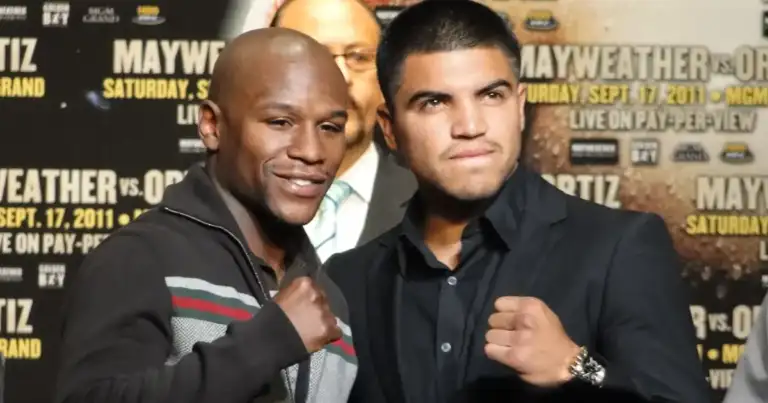
Photo: Wikimedia Commons (query: Floyd Mayweather Jr.)
Source: Google News