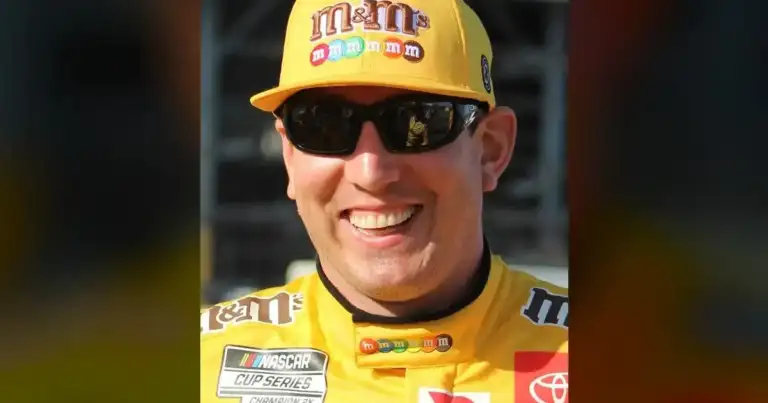

The entire racing world just got hit with a gut punch that’ll leave a permanent scar. Two-time Cup Series champion Kyle Busch, a man who lived and breathed gasoline fumes and controversy, is gone. Dead at 41 years old.
His sudden passing isn’t just a shock; it’s a goddamn alarm bell screaming through the halls of NASCAR.
Busch, “Rowdy” himself, a once-in-a-generation talent, was admitted to a local hospital earlier this week. What put him there? Not a fiery crash at 200 mph, nor a brutal hit on the track.
No, the official line is a “routine simulator test.” A simulator. Reports, vague as hell, talk about a sudden medical emergency that spiraled out of control.
The official confirmation came down like a hammer blow. Statements from Richard Childress Racing (RCR) and NASCAR, sterile and somber, did little to quell the immediate, raw disbelief. The racing community isn’t just shocked; it’s reeling, furious, and demanding answers.
The exact cause of death? Undisclosed. That’s the part that makes my blood boil.
The timeline is chillingly swift: from a “routine” test to hospitalization between 72 to 96 hours ago, to a legend gone. The racing world isn’t just grappling with loss; it’s drowning in a sea of unanswered questions and unsettling silence.
What the Hell Happened?
Let’s cut through the corporate BS. How does a 41-year-old, peak-athlete like Kyle Busch, a man who wrestled 3,500-pound machines for a living, just drop dead after a simulator session?
This wasn’t some high-speed, carbon-fiber-shattering wreck. This was supposed to be a safe, controlled environment. What kind of “medical emergency” hits that hard, that fast, in a place designed for virtual safety?
The secrecy surrounding the cause of death isn’t just unsettling; it’s a damn insult to every fan, driver, and crew member who ever watched Busch race. “Undisclosed” isn’t good enough.
The racing community doesn’t just need answers; it deserves them. We need to know what took down one of the sport’s titans when he wasn’t even on a real track.
Kyle Busch was a lightning rod. You either loved him or you hated his guts, but you couldn’t ignore him.
His talent was undeniable, a raw, aggressive force of nature behind the wheel. Two Cup Series championships, over 60 wins across all three national series—Cup, Xfinity, and Truck—that’s not just a record; that’s a legacy etched in fire. He was a future Hall of Famer, no question, and now that future is just… gone.
This isn’t just a personal tragedy for the Busch family. This loss rips a gaping, bloody hole in Richard Childress Racing. It devastates sponsors who poured millions into the No. 8 car.
It rattles the entire Cup Series landscape. This isn’t just about mourning a legend; it’s about the brutal business of racing taking a direct, devastating hit.
A New Kind of Fear on the Grid
The immediate, cold-blooded question hanging over every team garage is: Who the hell steps into that No. 8 car now? RCR has a championship-caliber void to fill, and their season just got torpedoed. But beyond the immediate scramble, there’s a deeper, more chilling fear settling in.
Every team owner, crew chief, and driver is watching this with a knot in their stomach. Driver health has always been paramount, a constant concern.
But a death after a simulator? That’s an entirely new beast, a silent, unseen predator that just stalked a legend. It’s a fear that whispers, “If it can happen to Rowdy, it can happen to anyone.”
Drivers push their bodies to the absolute brink. They endure insane G-forces, suffocating heat, and mental strain that would break lesser men. They sign up for the danger of the track.
But simulators? Those sterile boxes are supposed to be safe havens, places for practice, not places where careers—and lives—abruptly end. This isn’t just a freak accident; it’s a terrifying anomaly that demands scrutiny.
This tragedy blows the lid off routine medical checks. Are they enough? Is something being fundamentally missed in how we assess these athletes?
The sport can’t just issue platitudes; it must address these fears head-on. NASCAR might be a tough business, and its drivers might be modern-day gladiators, but this reminds everyone, in the most brutal way possible, that they are painfully, terrifyingly human. The illusion of invincibility just shattered into a million pieces.
The Deafening Silence and the Demand for Truth
The lack of transparency here isn’t just deafening; it’s suspicious. “Sudden medical emergency” is a corporate smokescreen, a phrase designed to shut down inquiry, not inform.
When an icon like Kyle Busch dies so unexpectedly, especially under such bizarre circumstances, speculation doesn’t just run wild; it becomes the only narrative available. That’s what happens when facts are withheld, when the public is treated like mushrooms, kept in the dark and fed BS.
His family absolutely deserves their privacy, no one disputes that. But the sport, the fans, the other drivers—they demand clarity.
This isn’t just a private, personal tragedy; it’s a motorsports earthquake, a seismic event that shakes the very foundations of how we perceive driver safety and the sport’s accountability. The public has a right to understand the risks, known or unknown, that their heroes face.
NASCAR has always been about the thrill of speed, the edge of danger. This death adds a new, chilling layer to that danger.
It’s a silent, unseen threat that struck off the track, but it hits just as hard, perhaps even harder, because it’s so utterly inexplicable. It defies everything we thought we knew about racing risks.
The racing world will mourn. They will remember his fiery passion, his incredible skill, his unforgettable wins. But beneath the tributes, a single, burning question will persist, echoing through every garage and grandstand: “WHY?”
The silence from NASCAR and RCR isn’t just fueling suspicion; it’s creating a vacuum that conspiracy theories will rush to fill. The sport can’t afford to let that happen.
They need to provide real answers,
Source: Google News