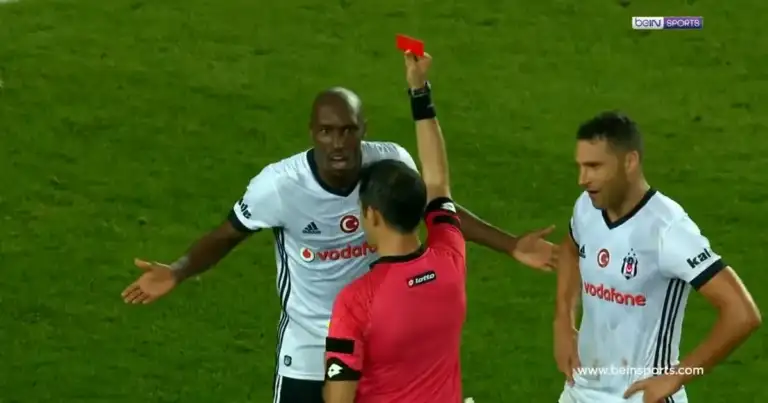

FIFA has not just lost its mind; it has declared war on the very essence of the beautiful game. Forget tactical genius and raw emotion; now, players face the ultimate sporting execution – a direct red card – simply for covering their mouths on the pitch. This isn’t football; it’s a dystopian pantomime orchestrated by the global game’s supposed custodians.
The International Football Association Board (IFAB), that shadowy council dictating the laws of football, has stamped this ludicrous, draconian rule into effect. It’s a direct assault, targeting any player who dares to keep their words private from prying officials or the ever-watchful, lip-reading cameras.
The Transparency Farce? Or Just Control?
This landmark decision isn’t some distant threat; it’s active immediately. It will loom large, a dark cloud over every match, but its true, devastating impact will be felt on the grandest stage of all: the upcoming 2026 FIFA World Cup across North America. Imagine the chaos, the careers shattered, the nations heartbroken, all because of a covered mouth.
IFAB, in its infinite wisdom, claims this is all about transparency and curbing dissent. They audaciously suggest players are hiding abuse or tactical secrets. Lukas Brud, the IFAB Secretary, is the public face backing this heavy-handed, utterly detached approach, spewing corporate platitudes that ring hollow on any football pitch.
“This amendment is about ensuring fair play and transparency. When players deliberately obscure their mouths, they are often attempting to hide dissent, abuse, or tactical discussions that could give an unfair advantage. Referees need every tool available to manage the game effectively. This is not about stifling communication, but about ensuring it’s conducted within the spirit of the laws.”
But let’s be brutally real: players cover their mouths for tactical discussions. They do it to protect the intricate choreography of set-piece calls. Sometimes, it’s just an unconscious habit, a nervous tic, or a simple desire for privacy in a world where every move is scrutinized. FIFPRO, the global players’ union, is not just worried; they are rightly incensed by this unprecedented intrusion into player autonomy.
“We are concerned about the implications for player privacy and the potential for subjective interpretation. Players often cover their mouths for legitimate tactical reasons or out of habit. To introduce a direct red card for this, especially before a World Cup, places immense pressure on players and could lead to unfair dismissals that impact careers and national pride.”
A red card, let’s not forget, isn’t a mere slap on the wrist. It can cost a team vital points, millions in prize money, and cruelly, World Cup progression itself. It’s an apocalyptic penalty for a gesture that, until this moment of madness, was as normal and innocuous as tying a shoelace.
Clown World Logic and the “Vinicius Rule”
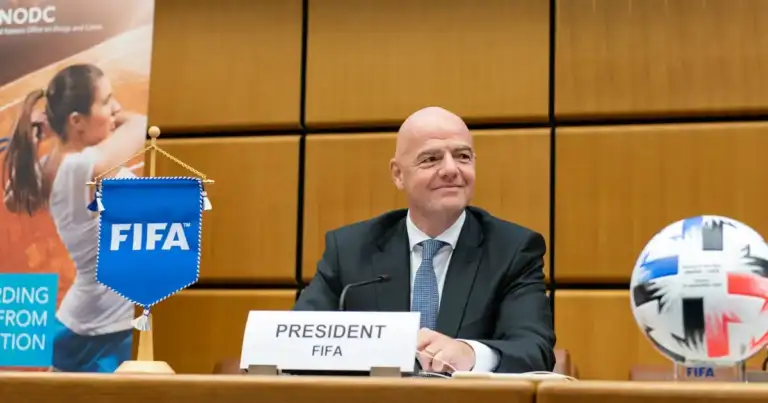
The global football community, from the terraces to the digital sphere, is already tearing this apart. Social media, with its brutal honesty, is rightly dubbing it “clownworld virtue-signaling” from FIFA President Gianni Infantino and his cronies. It’s a performative gesture designed to distract from real issues.
Some are even sneeringly calling it the “Vinicius Rule.” The cynical whisper is that it’s designed to “protect” certain high-profile stars who “allege” slurs, yet, in moments of confrontation, might themselves obscure their mouths, creating a convenient narrative of blocked evidence. The hypocrisy, if true, stinks to high heaven.
Remember Germany’s national team? In the 2022 World Cup in Qatar, they famously covered their mouths in a powerful, unified protest against FIFA’s own rainbow armband ban. No red cards then, right? No immediate dismissal for a collective act of defiance against FIFA’s moral policing. Yet now, a private word to a teammate could end a player’s tournament? The double standards are nauseating.
Now, suddenly, it’s a “racism patrol,” supposedly. But FIFA is masterfully dodging real, endemic problems like rampant stadium chants and systemic discrimination. Instead, they choose to police how players communicate with each other, focusing on symptoms rather than causes. It’s a classic misdirection, a cheap parlor trick.
This is pure performance art, a theatrical display of faux toughness. It’s FIFA desperately trying to project an image of control and moral superiority, especially with the 2026 World Cup heading to North America. The hosts in the US, Canada, and Mexico, with their heightened sensitivities to “woke” optics, are clearly driving Infantino’s grandstanding. He’s playing to a specific audience, sacrificing the game’s soul in the process.
A Referee’s Impossible Task
The biggest, most glaring question hanging over this entire farce is simple: will this rule even be consistently enforced? Or will it become another tool for subjective chaos?
It demands a referee judge a player’s intent. How, in the heat of a World Cup final, do you prove someone deliberately hid their mouth to conceal something nefarious, rather than out of habit or a momentary lapse? It’s completely subjective, an impossible burden to place on officials already under immense pressure.
This adds yet another layer of impossible judgment for officials, transforming them into mind-readers and lip-reading detectives. A seasoned Premier League manager, speaking anonymously to Reuters, hit the nail squarely on the head, expressing the exasperation felt across the professional game.
“It’s another layer of complexity. We tell our players to communicate clearly, but also to protect our tactical information. Now, they have to worry about a red card just for talking to a teammate. It’s going to be a nightmare for referees, and it will change how we prepare for set pieces and substitutions.”
Every single decision will be under intense, microscopic scrutiny. Especially in high-stakes World Cup matches, where the smallest call can alter history. VAR, that much-maligned technological marvel, will struggle profoundly with this. How can a video replay possibly prove intent? How can a slow-motion frame capture the malicious thought behind a covered mouth? It’s a fool’s errand.
Players, however, are not stupid. They are adaptive, ingenious creatures of the pitch. They will find new ways to communicate discreetly – subtle glances, coded hand signals, or simply becoming less expressive altogether. Either way, the “transparency” FIFA craves will remain as elusive as a ghost, replaced by a new layer of calculated secrecy.
Historically, rules against dissent or perceived misbehavior often fail in their grand ambition. Some referees are notoriously strict, others notoriously lax. This will inevitably create a confusing, infuriating patchwork of enforcement across different leagues and continents. It will make the game more confusing, more contentious, and certainly not clearer.
The Blade’s Take: More Control, Less Football
Let’s call this what it truly is: this isn’t about fair play. It’s about FIFA grabbing more control, an insatiable hunger to police every interaction, every whispered word on the pitch. It’s about empowering officials to make game-changing calls based on a whim, a guess, an interpretation of a gesture that means nothing.
It’s a perverse gift to broadcasters and lip-reading experts, turning the beautiful game into a surveillance state. But more importantly, it’s a colossal slap in the face to player privacy, to natural human expression, and to the organic flow of the game. FIFA is sacrificing the very integrity of football for superficial optics and an illusion of absolute control.
This rule will lead to unmitigated chaos, not clarity. It will be inconsistently applied, sparking endless debate, controversy, and accusations of bias. The 2026 World Cup, a tournament that should be a celebration of skill and passion, now risks being remembered for absurd red cards, for moments of ludicrous injustice, rather than incredible goals and heroic performances. FIFA needs to tear up this ludicrous mandate immediately, before they irrevocably ruin the sport we love, transforming it into a sterile, soulless spectacle.
Photo: Wikimedia Commons (query: World Cup cards)
Source: Google News