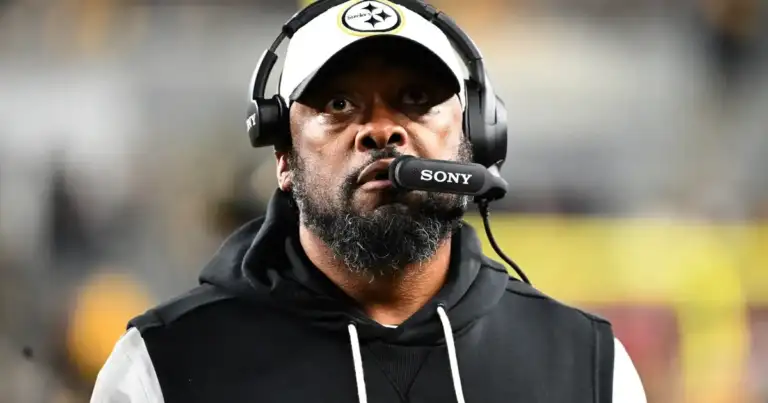

Forget the whispers and the soft-pedaled narratives. Mike Tomlin didn’t just “commit” to the Pittsburgh Steelers; he put the franchise in a chokehold and demanded his due, revealing the cold, hard truths that pushed him to the brink. This wasn’t some polite negotiation; this was a bare-knuckle power play, forcing the Rooney family to stare down the barrel of losing their ironclad leader.
In a post-NFL Draft press conference on April 26, 2026, Tomlin publicly declared his “unwavering commitment” to the Steelers. That was the headline for the casual fan. But for those of us who live in the trenches of this business, the real story, the one simmering like a forgotten boiler, was precisely why that commitment was ever in doubt, and what it cost the Steelers to secure it.
Tomlin’s Gambit: The Price of Disrespect
Tomlin’s public commitment wasn’t a gift; it was a strategic flex, a calculated move to reassert his authority. Insiders know the coach felt a creeping, cancerous sense of being underappreciated by significant segments of the Pittsburgh fanbase and, more critically, the local media. This wasn’t a sudden bruise; it had been festering for the last three years, creating a real rift that threatened to tear the foundation of the franchise apart.
He emphasized his deep investment in the team’s direction, highlighting his relentless work developing new talent like Drew Allar and nurturing the existing core. Tomlin made sure to publicly acknowledge his strong, almost familial relationship with the Rooney family, a bedrock of the franchise’s legendary stability. But don’t be fooled by the pleasantries.
The “unfinished business” of a Super Bowl wasn’t just a talking point; it was the ultimate leverage. He stated,
“We’ve got work to do, and I’m here to do it.”
That’s not a plea; that’s a declaration. It’s code for: “Pay me what I’m worth, back my vision without question, or I’m gone.” Losing Tomlin would leave the Steelers holding the bag in a league that chews up instability.
What kind of message would that send to the locker room, to potential free agents, to the very identity of the Steelers?
The Contract Crunch: A Massive Extension, Massive Implications
This drama wasn’t about hurt feelings; it was about cold, hard cash and unadulterated power. Tomlin’s current deal expires after the 2026 NFL season. That ticking clock fueled every ounce of speculation, every whisper of discontent. The Steelers, a franchise built on continuity, simply could not afford a lame-duck coach, especially one with Tomlin’s unparalleled resume – a Super Bowl ring and 19 consecutive non-losing seasons, an achievement unmatched in modern NFL history.
The Steelers have a clear, almost ritualistic playbook here. They typically extend Tomlin’s contract with one year left on the clock, often before training camp even begins. His last extension in April 2024 kept him through 2026. This public commitment, extracted under duress, now clears the runway for a massive new deal. We’re talking a 3-5 year extension, pushing his annual salary well north of $15 million. This isn’t just a raise; this is a coronation, placing him squarely among the NFL’s elite coaching earners, right where he belongs after two decades of consistent, gritty leadership.
To put that in perspective, only a handful of coaches command such a premium – names like Sean Payton, John Harbaugh, and Kyle Shanahan. This isn’t just pocket change; it’s a significant organizational expenditure.
While coaching salaries don’t directly hit the player salary cap, they represent a massive commitment of resources. Art Rooney II, the Steelers President, has always been Tomlin’s staunchest backer, his consistent support making an extension almost inevitable.
The only real question was the price and the terms. Tomlin just answered that by revealing his true, non-negotiable worth.
Impact on the Trenches and the Franchise’s Future
This commitment, backed by a looming, eye-watering pay raise, sends an unmistakable message throughout the league: stability reigns in Pittsburgh. Players, especially those in the trenches like linemen Spencer Anderson and Dylan Cook, along with every new draft pick, know precisely who their general is. There will be no leadership vacuum, no uncertainty at the top.
This isn’t just about morale; it impacts player retention and recruitment. Top-tier talent, the kind that wins championships, wants to play for a respected, stable coach and a franchise that doesn’t constantly churn its leadership. Tomlin provides that, even if some armchair GMs grumble about playoff droughts.
The Steelers have only had three head coaches since 1969. That continuity isn’t just a quirk; it’s their identity, their competitive advantage in a league built on chaos. Tomlin’s unique record of 19 consecutive non-losing seasons underscores his consistent ability to wring every ounce of effort from his rosters. That’s invaluable.
The Price of “Unfinished Business” is Paid in Lombardi Trophies
Tomlin’s move was a masterclass in leverage, a tactical triumph. He expertly used the murmurs of discontent and his expiring contract to secure his future, his power, and his financial standing. The Steelers organization understood the stakes better than anyone. Losing Tomlin would have been a catastrophic blow, not just to their stability and culture, but to their very identity as a franchise.
But make no mistake, this new contract and immense financial commitment come with a brutal, clear expectation. The “unfinished business” isn’t a suggestion; it’s a mandate.
Tomlin just bought himself more time and more power, but he also painted a giant target on his own back. Now, he must deliver that next Super Bowl.
The bill for “unfinished business” has been paid in cash and loyalty; now, it’s due in Lombardi hardware. The clock isn’t just ticking; it’s screaming.
Source: Google News