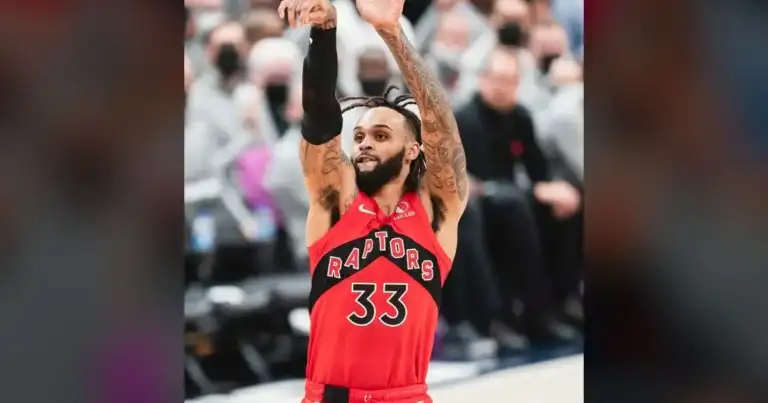

Darius Acuff’s decision to declare for the NBA draft after a single, record-shattering season at Arkansas isn’t just a player move; it’s a stark, data-backed indictment of an outdated fan narrative. This isn’t about loyalty; it’s about leverage, and Acuff just demonstrated the new blueprint for maximizing value in modern college basketball.
The freshman phenom made his intentions crystal clear, igniting an immediate and often brutal backlash. Fans are already roasting Arkansas for celebrating a player who bolts after a solitary, albeit record-setting, year. It’s a classic case of public opinion turning toxic, fueled by a fundamental misunderstanding of the modern athlete’s incentives.
The Acuff Effect: Stats vs. Sentiment
Acuff’s numbers this past season weren’t just good; they were undeniable, a statistical anomaly for a freshman. He put up an incredible 23.5 points per game and dished out 6.4 assists per game. He didn’t just lead the SEC in both scoring and assists; he dominated it, a feat so rare for any player, let alone a first-year talent, that it screams future NBA impact.
His shooting was electric, hitting 44% from three-point range. This kind of elite production, coupled with his electrifying performance in the NCAA Tournament that earned him the prestigious Bob Cousy Award, solidifies his standing as a lottery lock. Any analytical mind knows these are not numbers to be ignored.
Yet, the public reaction is less about his undeniable talent and more about the optics. “Lmao projected lottery pick after ONE YEAR? Y’all mad when transfers dip but cheer this?” one Reddit user scoffed. That comment alone racked up 2.3k upvotes, a clear indicator of the widespread, often contradictory, sentiment.
The hypocrisy here is not just palpable; it’s glaring. Fans demand loyalty from players, but only when it suits their team’s narrative.
When a star player leaves for the pros, it’s “chasing a dream.” When a role player transfers for more minutes, it’s “disloyal.” Is it any wonder fans feel betrayed when their emotional investment clashes so violently with the cold, hard calculus of a player’s career trajectory?
The Calipari Clone and Draft Smoke
The discourse around Acuff’s declaration is thick with cynicism, and frankly, a good deal of outdated thinking. Some critics are quick to label him a “Calipari clone,” drawing parallels to one-and-done stars like Derrick Rose or John Wall.
These players often leave after just one season, sometimes following deep Elite Eight runs, establishing a clear precedent for early departure. The implication is clear: Acuff is another mercenary, using the college system as a stepping stone.
This isn’t a knock on his talent, but a critique of the system itself. The fans feel used, and they’re not shy about saying it. But is it fair to brand a player a “mercenary” for making a rational career decision?
Others are questioning the “projected lottery pick” status with outright disbelief. “Acuff’s stats fake—44% from three as freshman? Juice protocol or deepfake highlights,” one viral X meme joked.
This kind of skepticism highlights a deeper mistrust, but it also ignores the statistical outliers that define truly elite talent. To dismiss Acuff’s 44% three-point accuracy as ‘fake’ or ‘juice protocol’ is to ignore the statistical anomalies that define elite talent.
This isn’t a glitch in the matrix; it’s proof of his undeniable skill, a skill that NBA scouts are certainly not ‘joking’ about.
Is this declaration pure hype? Is it “draft smoke” orchestrated by his camp or even by Coach Calipari? The idea is that a strong declaration, even if premature, can boost a player’s perceived value.
It forces teams to take notice, even if the player’s stock isn’t fully solidified. This isn’t mere speculation; it’s a calculated maneuver, a strategic play in the high-stakes chess match between player, agent, and NBA front offices.
One X user quipped, “Cal’s selling smokescreens; Acuff’s No. 6 slot tanks if Arkansas flames out now.” This suggests a strategic play, not just a simple decision. It’s about leveraging perceived potential, a move that is as old as professional sports itself.
The Reality of Modern College Hoops
Let’s be brutally honest. College basketball isn’t what it used to be, and clinging to that nostalgia is detrimental to understanding the modern game.
The romanticized ideal of a four-year collegiate journey, once a cornerstone of the NCAA narrative, has become an anachronism for elite talents like Acuff. The NBA is the ultimate goal, and the path there is getting shorter, more direct, and increasingly transactional.
Acuff’s decision, while controversial to some, is a profoundly logical one in this landscape. He dominated the SEC. He proved his scoring and playmaking ability beyond a shadow of a doubt.
Why risk injury or a sophomore slump when your draft stock is undeniably at its peak? The data supports his choice.
The “loyal seniors grinding four years” narrative, while emotionally resonant, doesn’t pay the bills. It doesn’t secure generational wealth.
NIL deals are merely appetizers, and multi-million dollar NBA contracts are the main course. Expecting a player to prioritize sentimental loyalty over generational wealth is not just naive, it’s financially irresponsible for the player. Acuff is making a business decision, plain and simple, and it’s one that any savvy individual would make.
The fans’ anger is misdirected, a symptom of a larger systemic issue. They’re mad at the system, not necessarily the player.
They want their stars to stay, to build a legacy, but the incentives are all pushing players out the door faster. This isn’t a moral failing on Acuff’s part; it’s an economic inevitability within the current structure of collegiate and professional basketball.
The Unspoken Truth: A New Paradigm
The real takeaway here is the gaping, unaddressed chasm between fan expectation and player reality. Fans invest emotionally in these college teams, seeing players as extensions of their university pride.
Players, especially those with NBA aspirations, see it as a temporary, albeit crucial, stop on their career path. This isn’t merely a broken relationship; it’s a fundamental misunderstanding of the modern athlete’s incentives, a chasm that widens with every NIL deal and every early draft declaration.
Acuff’s declaration isn’t just about his future; it’s a stark reminder of how transactional college basketball has become. The outrage, the accusations of hypocrisy, the conspiracy theories — they’re all symptoms of a broken relationship.
This isn’t about loyalty; it’s about leverage. Acuff has it, and he’s using it to his maximum advantage.
So, what’s the solution? For fans, it’s a harsh but necessary recalibration of expectations. For the NCAA, it’s an existential crisis demanding a new model.
But for players like Darius Acuff, it’s simply the game, played by new rules, where leverage trumps loyalty every single time. Get used to it, or get left behind.
Source: Google News